


What Claude for Teachers Actually Does
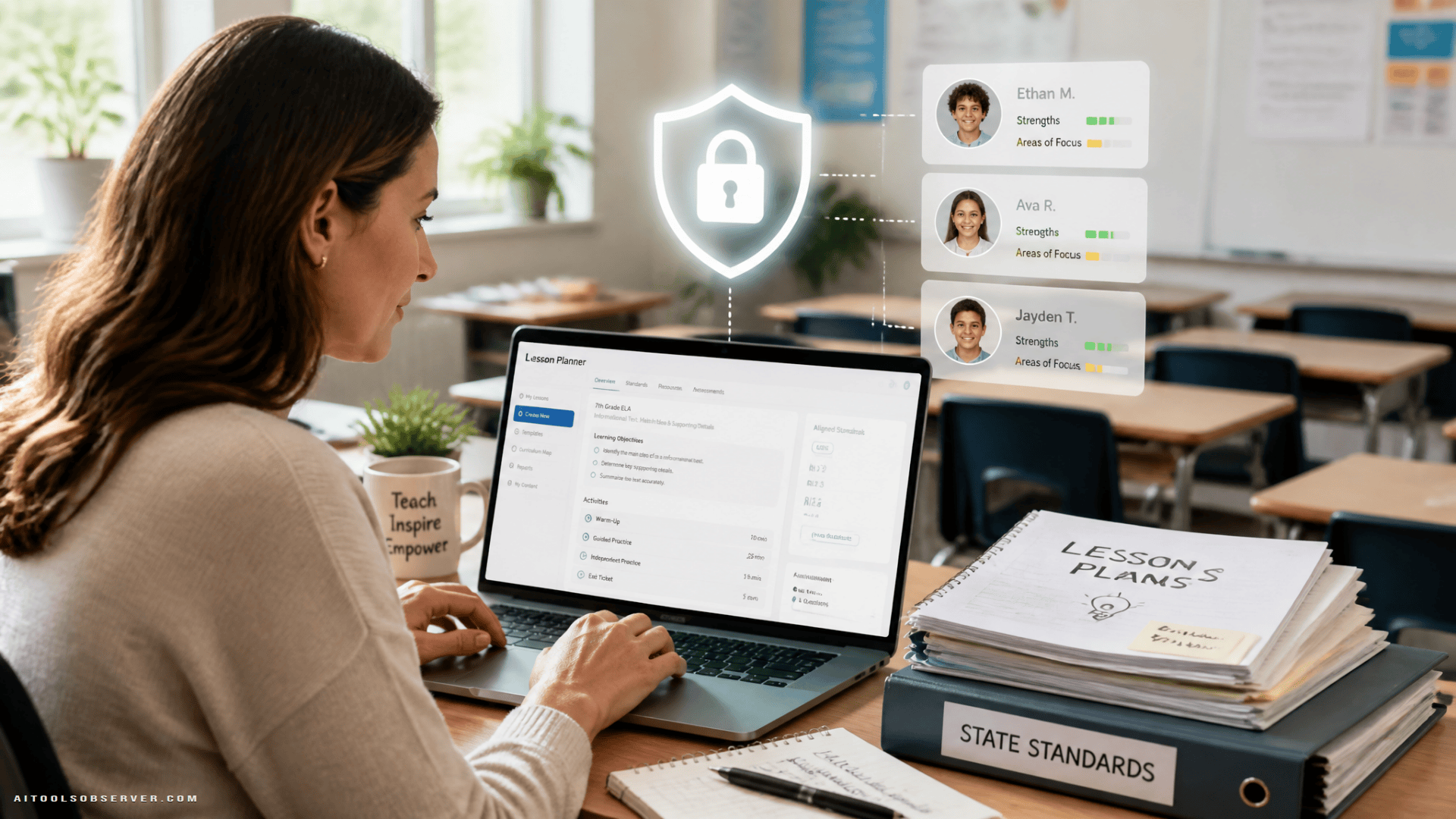
The tool aims to reduce the gap between what teachers plan and what students need. According to Anthropic, it can incorporate academic standards from all 50 states into lesson planning. Teachers can pull in past assessment data, assignments, and previous lesson plans, then ask Claude to generate individualized materials for specific students.
Drew Bent, education lead at Anthropic, described a common frustration: teachers already use AI for lesson plans, but the output often misses the content they are required to cover. Claude for Teachers is designed to align directly with high‑quality instructional materials and differentiate instruction—ideally while the teacher is off the clock.
The assistant is strictly teacher‑facing. Anthropic’s consumer Claude product has an age restriction for under‑18s, and that remains in place for the education version as well.
Privacy Commitments That Break From the Norm
Privacy remains the sharpest criticism of AI in schools. Anthropic is attempting to address that directly. The company states that conversations between teacher accounts and the assistant will not be used for AI training. Student information is protected in a manner designed to comply with the federal Family Educational Rights and Privacy Act (FERPA). Terms of service are written in plain language, a deliberate move after years of opaque click‑through agreements in ed‑tech.
The American Federation of Teachers (AFT) is collaborating with Anthropic on privacy practices that the union calls a potential “gold standard.” Notably, the AFT is also working with OpenAI and Microsoft on similar standards but has not extended that partnership to Google.
AFT President Randi Weingarten said in Anthropic’s release that the commitment to these principles matters because the tool is built “by and for educators.” Her stance reflects a delicate balance: while pushing for teacher‑facing AI adoption, she has also called for a complete ban on student‑facing AI in elementary grades.
The Crowded Field: OpenAI, Google, and Khanmigo
Claude for Teachers lands in a market that is already taking shape.
- Google Gemini recently secured a deal with Utah to bring its AI tools to every K‑12 school in the state, promising personalized instruction capabilities for educators.
- OpenAI has been marketing ChatGPT to teachers with dedicated training and integrations, and the AFT is actively working with the company on best practices.
- Khan Academy’s Khanmigo positions itself as a tutor bot for students, but founder Sal Khan has also highlighted teacher‑facing planning features.
What sets Claude apart at launch is the explicit focus on state‑by‑state academic standards and the integration of existing student data into lesson differentiation—features that the competitors have approached differently or less centrally.
The Tension Behind the Adoption Numbers
Teacher use of AI is climbing: surveys from Education Week show 61% of teachers used AI in some capacity in 2025, up from 32% the year prior. Yet adoption numbers collide with a parallel movement. Parent‑led campaigns against screen time have pushed large districts to re‑evaluate technology contracts. Critics like Daniel Buck of the American Enterprise Institute warn that outsourcing teacher thinking to AI risks weakening classroom community and academic outcomes.
Anthropic’s answer is to draw a bright line: the tool is for teachers, not students. Whether that distinction holds up in actual classroom practice—and whether privacy promises survive scrutiny across thousands of schools—will determine if Claude for Teachers becomes a utility or just another logo in a crowded procurement deck.
What to Watch Next
The Detroit pilot starting next school year will be an early signal. It will test not just whether the tool works technically, but whether it shifts teacher practice and well‑being in measurable ways. If the data supports that, Claude for Teachers could raise the bar for what a free, privacy‑first classroom AI looks like. If it doesn’t, the cycle of hype and caution will continue—with teachers caught in between.









Comments (0) No comments yet
Want to join this discussion? Login or Register.
No comments yet. Be the first to share your thoughts!