


What’s Actually in the Marketplace
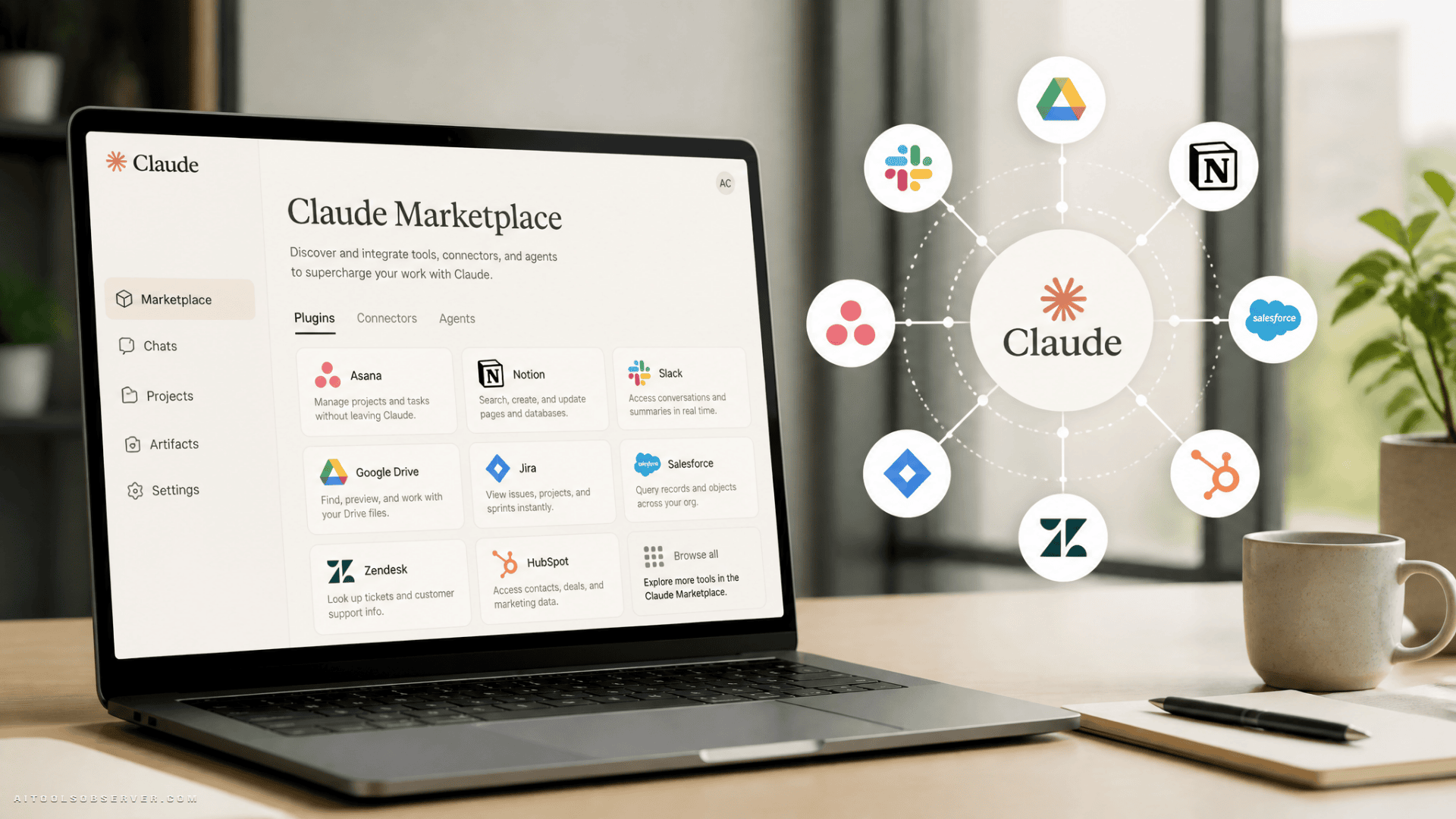
The marketplace isn’t just a list of Anthropic-built add-ons. It pulls in integrations from companies like Atlassian, Google, Microsoft, Notion, and Salesforce — names that enterprise teams already depend on daily.
Beyond connectors and plugins, the marketplace also lists Claude-powered agents and products from partners including CrowdStrike, Cursor, Harvey, Legora, Lovable, and Snowflake. These are purpose-built tools that run on Claude under the hood, giving buyers a faster path to deploying AI in specific workflows without building from scratch.
There’s also a consulting and systems integration layer. Accenture, Boston Consulting Group, and Deloitte are listed as partners for organizations that need hands-on help deploying Claude at scale. That’s a smart addition — enterprise AI adoption often stalls not because of the technology, but because of the implementation gap.
How It’s Built to Grow
Anthropic is keeping the marketplace open to outside developers, which is the key structural difference from what OpenAI attempted. Developers can build and publish connectors and plugins using Model Context Protocol (MCP) and Agent Skills. Companies selling Claude-powered software can apply to have their products listed directly.
The goal, according to Anthropic, is straightforward: make it easier for teams to find tools that already work with Claude, and give developers a direct channel to reach Claude’s existing user base.
That two-sided dynamic — buyers discovering tools, builders reaching buyers — is what makes or breaks a marketplace. The 2,000+ listings at launch suggest there’s already enough supply to make browsing worthwhile.
The OpenAI Comparison Is Worth Paying Attention To
When OpenAI launched its GPT Store, the initial excitement faded quickly. Discovery was difficult, quality was inconsistent, and the ecosystem never quite cohered into something enterprise teams could rely on.
Anthropic appears to be aware of that precedent. By allowing open publishing from developers and anchoring the marketplace with recognizable enterprise partners from day one, it’s trying to avoid the ghost-town problem that plagued early AI app stores.
Whether that strategy holds depends on how well Anthropic manages quality, discoverability, and developer incentives over time. A marketplace with 2,000 listings is only useful if users can find what they need quickly and trust what they find.
Who Should Pay Attention
- Enterprise teams already using Claude who want to extend it into tools like Salesforce, Notion, or Google Workspace without custom development work
- Developers building on MCP who now have a structured distribution channel to reach Claude users directly
- Companies evaluating Claude for the first time — the marketplace gives a clearer picture of what’s already possible without starting from zero
- IT and ops leaders who need deployment support — the consulting partner listings make this more than just a self-serve tool directory
The Practical Takeaway
Claude Marketplace is worth bookmarking if you’re already in the Claude ecosystem or actively evaluating enterprise AI tools. The combination of major SaaS integrations, purpose-built agents, and consulting partners in one place reduces the research time that usually comes with AI adoption decisions.
The real test isn’t the launch — it’s whether the marketplace stays current, grows its catalog meaningfully, and makes discovery easy enough that teams actually use it rather than defaulting to Google searches and Reddit threads. For now, it’s one of the more structured AI tool hubs available, and that alone makes it worth exploring.










Comments (0) No comments yet
Want to join this discussion? Login or Register.
No comments yet. Be the first to share your thoughts!