



Two Candidates, Two Philosophies
Becerra, the former California Attorney General and U.S. HHS Secretary, leans into a government-led model. His platform pairs AI adoption with transparency requirements, human oversight, worker protections, and public AI infrastructure investment through CalCompute. He wants AI to improve permitting, benefits delivery, and public health — with guardrails attached.
Hilton, a British television host turned Republican candidate, frames California’s tech sector as a victim of its own regulatory appetite. His pitch: create a California-flavored DOGE, streamline permitting, and make the state more attractive for technology investment and jobs.
Both say they want California to remain the AI capital. They just disagree on what that requires.
The Data Center Problem Neither Is Fully Addressing
Here’s where it gets interesting. Voters in Monterey Park passed a data center moratorium with 87% support. Public sentiment on data centers — driven by energy use, environmental concerns, and neighborhood impact — is shifting fast, and from both sides of the aisle.
Yet both candidates’ platforms lean toward building more data centers, not fewer. Hilton wants easier permitting. Becerra wants predictable regulatory policy and wants data centers to pay their energy costs. Neither platform squarely addresses the growing public opposition.
That gap between candidate positioning and voter concern is one to watch as the campaign evolves.
AI in Government: One Candidate Goes Deeper
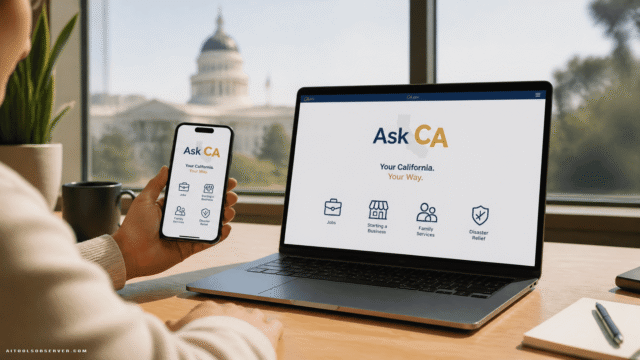
California has already deployed its own AI assistant, Poppy, and signed a discounted agreement with Anthropic to use Claude across state operations. Becerra has been specific about using AI to streamline government services — housing applications, permitting, public benefits.
Hilton’s platform focuses more on reducing bureaucracy than on how government itself should adopt AI tools. That’s not necessarily a hard no — it may simply reflect different priorities. But the contrast is visible.
Regulation vs. Transparency: A Nuanced Split
It’s tempting to map this onto a simple “regulate vs. deregulate” frame, but the reality is messier.
Becerra’s response to AI bias isn’t a ban — it’s transparency. His platform emphasizes disclosure about how automated decisions are made, not blocking automation outright. That’s a more pragmatic position than it might first appear.
And national Republicans aren’t uniformly anti-regulation either. Florida’s attorney general sued OpenAI. The White House engaged seriously with AI safety frameworks. The party-line framing doesn’t hold up cleanly at the state level.
Don’t Sleep on the Attorney General
One underrated factor: whoever wins the attorney general race will have significant independent power to enforce existing AI laws, join federal lawsuits, and decide how aggressively to pursue tech companies — regardless of who sits in the governor’s office.
Attorney General Rob Bonta has already been active on AI oversight. The next AG could continue that posture or pull back. And since AGs are independently elected, ambitious, and not always aligned with the governor even within the same party, the governor’s AI agenda is only part of the picture.
What This Means for AI Watchers
California sets the tone. Its regulatory decisions ripple into procurement standards, compliance requirements, and product development choices for AI companies nationwide. The outcome of this race won’t just affect state IT departments — it’ll shape the environment in which AI tools are built, sold, and governed.
If you’re tracking AI policy as part of your tool evaluation or procurement process, this race is worth following closely. The regulatory climate California chooses in 2026 has a way of becoming everyone else’s problem — or opportunity — by 2027.













Comments (0) No comments yet
Want to join this discussion? Login or Register.
No comments yet. Be the first to share your thoughts!