


What Happened in Memphis
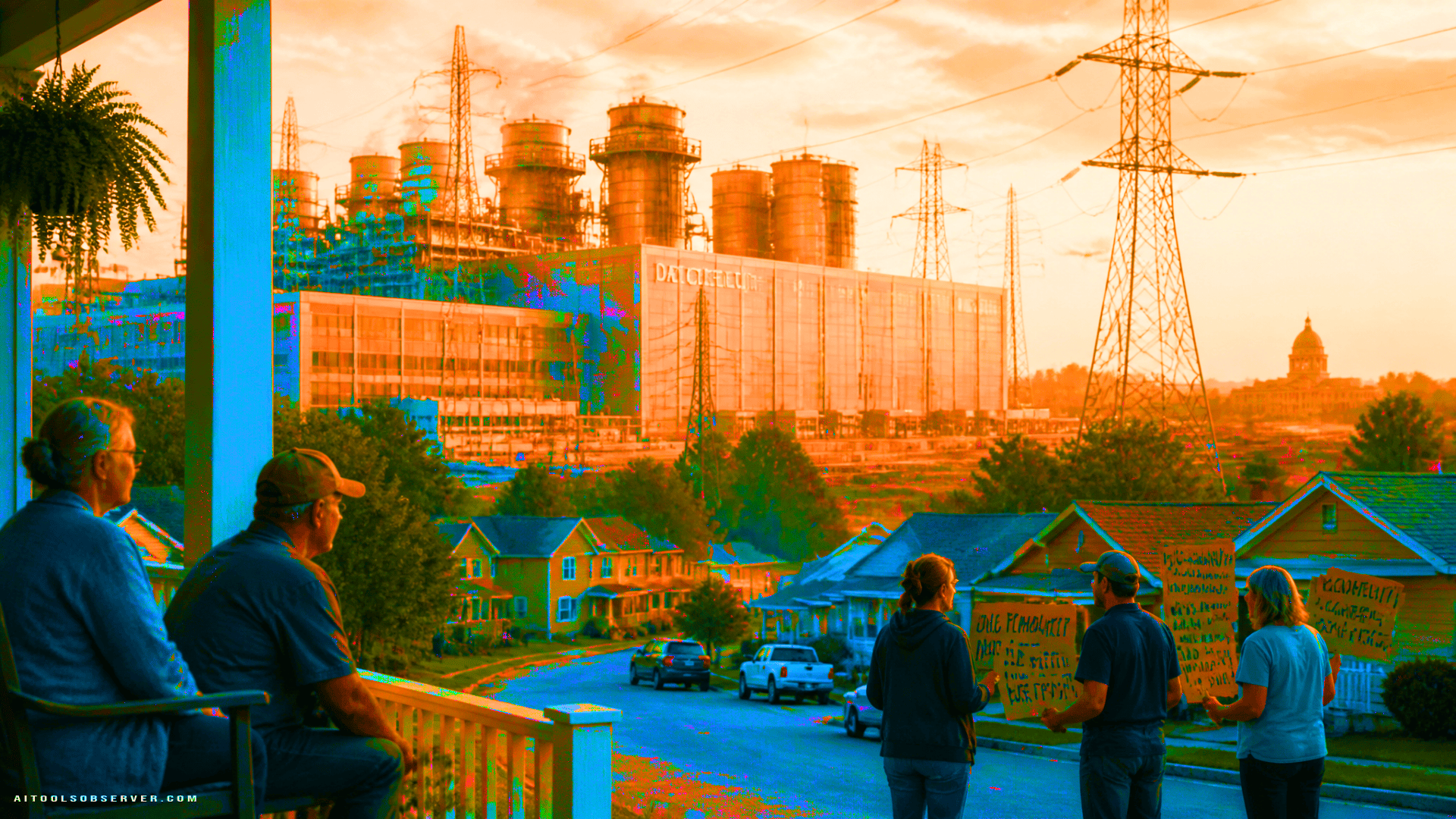
SpaceXAI, the AI division acquired by Elon Musk’s defense contractor SpaceX in early 2026, built its first Colossus data center in just 122 days. The company has since acquired over 1,100 acres in Greater Memphis for data centers and supporting energy infrastructure, including natural gas-burning turbines used to power the facilities.
Residents near the sites—particularly in Southaven, Mississippi, and Whitehaven, Tennessee—report persistent noise from the turbines, rising utility bills, and concerns about air quality. Many say they were never consulted before construction began.
The turbines in question can emit thousands of tons of smog-forming nitrogen oxides per year, according to manufacturers’ specifications. The Southern Environmental Law Center and Earthjustice, representing the NAACP, filed a federal lawsuit in April alleging violations of the Clean Air Act—specifically, that SpaceXAI operated dozens of turbines without required permits or pollution controls.
SpaceX has argued the turbines are temporary and that permitted replacements with pollution controls are planned.
The Legal and Regulatory Cascade
Memphis is no longer a local story. It has become a reference point in policy debates and courtrooms across the country.
Key developments triggered or influenced by the Memphis situation:
- New York enacted a one-year moratorium on AI data centers construction in July 2026.
- New Jersey passed legislation requiring data center operators to bear a fair share of electricity costs rather than shifting them to residents and businesses.
- Southaven residents filed a proposed class action lawsuit against SpaceX in June, alleging public nuisance from Colossus II noise. Neighbors of Microsoft’s Fairwater Data Center in Wisconsin filed a similar suit shortly after.
- Communities in Olive Branch and Jackson, Mississippi updated their zoning laws, explicitly citing the Memphis situation as a cautionary example.
- Utah saw a state Senate president lose his primary election after backing a data center project—two other local officials who supported the same project also lost.
The U.S. Department of Justice intervened in the NAACP lawsuit, arguing that SpaceXAI’s technology is used in military operations and that the suit threatens national and economic security. That intervention itself signals how entangled AI infrastructure has become with federal interests—and how that entanglement complicates community-level legal challenges.
The Structural Problem Hyperscalers Now Face
The Memphis controversy is not an isolated failure of community relations. It reflects a structural tension that every hyperscaler building at scale must now navigate.
AI data centers require vast land, enormous power draw, and significant water for cooling. Once operational, they employ relatively few people and do not always generate substantial local tax revenue relative to their footprint and impact. SpaceXAI paid $25 million in taxes in its first year—making it the second-largest taxpayer in Shelby County—but residents report that promised infrastructure, including a water recycling plant, has not materialized on schedule.
A Gallup poll from May 2026 found that seven in ten Americans oppose data center construction in their local area, with nearly half strongly opposed. That level of public resistance is not a communications problem. It is a siting, permitting, and community engagement problem—one that will affect timelines and costs for Microsoft, Meta, Google, OpenAI, and others with large buildout plans underway.
Even Musk acknowledged the dynamic plainly: “There are very few people who want a power plant in their backyard.”
The Environmental Justice Dimension
The communities most affected in Memphis are predominantly Black. Attorneys and advocates argue that SpaceXAI and similar companies are systematically locating infrastructure in areas that have already absorbed decades of industrial pollution.
Abre’ Conner of the NAACP Center for Environmental and Climate Justice described this pattern as “deepening the sacrifice zones that many of these community members have been fighting to get out of for so long.”
The NAACP published a community protection guide in January 2026 and a framework for companies seeking to avoid the conflicts that emerged in Memphis. Whether hyperscalers adopt such frameworks proactively—or wait for litigation to force the issue—will likely determine how smoothly their buildout pipelines proceed over the next several years.
What This Means for the AI Infrastructure Buildout
The Memphis Colossus controversy has demonstrated that speed-first, community-later data center development carries compounding costs: legal exposure, regulatory intervention, reputational damage, and operational constraints.
For hyperscalers and AI infrastructure investors, the practical takeaways are becoming clearer:
- Permitting risk is real and rising. State-level moratoria and updated local zoning laws are no longer hypothetical. They are active constraints in multiple jurisdictions.
- Community opposition can reach federal courts. The NAACP lawsuit and DOJ intervention show that data center disputes can escalate quickly into complex federal litigation.
- The “move fast” model has a documented downside. Colossus was built in 122 days. The legal and regulatory fallout is now measured in years.
- Environmental justice scrutiny will intensify. Siting decisions that concentrate infrastructure in already-burdened communities are drawing organized, well-resourced opposition.
The companies that treat community engagement and environmental compliance as front-loaded costs—rather than obstacles to be managed after the fact—are better positioned to avoid the pattern Memphis has established.
The Colossus controversy is not the end of AI data center expansion. But it has made clear that the terms of that expansion are being renegotiated, community by community, courtroom by courtroom, and statehouse by statehouse.







Comments (0) No comments yet
Want to join this discussion? Login or Register.
No comments yet. Be the first to share your thoughts!