



What happened
According to the available context, a Chinese industry regulator warned that code embedded in certain versions of Claude Code could allow the tool to transmit sensitive user location and identity-related information to Anthropic’s servers without user consent.
The regulator described the issue as a severe cybersecurity threat and urged users and institutions to check their systems immediately. Its guidance was direct: uninstall the affected version or upgrade to a newer secure version where the relevant code has reportedly been removed.
The warning also went beyond software updates. Organizations were advised to strengthen network traffic monitoring to reduce the risk of unauthorized data leakage.
That matters because this is not just a product bug story. It is being framed as a data security, compliance, and cross-border information flow issue.
Why this is bigger than one coding tool
Claude Code is an AI coding assistant. By design, tools in this category often sit close to highly sensitive assets:
- source code
- internal documentation
- system architecture
- API keys and secrets
- employee identifiers
- customer-related logic or data references
When a tool operating in that layer is accused of transmitting location or identity-related information, security teams don’t treat it as a minor telemetry dispute. They treat it as a possible exposure path.
That is especially true for enterprises operating across borders, where data residency, employee privacy, vendor access, and software approval policies are already tightly controlled.
Anthropic’s response, and what it suggests
A Claude Code engineer said the behavior was tied to an experiment launched in March. Based on that statement, the purpose was to reduce account abuse from unauthorized resellers and help protect against model distillation.
The same response said stronger mitigations had since been implemented and that the relevant mechanism was being rolled back in a subsequent release.
That response is important for two reasons.
First, it suggests the behavior may not have been presented internally as a malicious backdoor, but rather as an anti-abuse control. Second, it shows how quickly defensive product decisions can become governance problems when they affect identity, location, or network-level signals in sensitive markets.
For enterprise buyers, intent is only part of the story. What matters just as much is disclosure, user consent, control, and whether data handling matches internal policy.
Why China reacted strongly
There are technical concerns here, but the regulatory backdrop matters too.
Anthropic blocks access for users and companies in China it considers adversarial, yet some users reportedly still access products through VPNs or third-party routes. In that context, any code that appears to identify user origin, location, or related signals can be interpreted not just as an abuse defense, but as a cross-border monitoring and enforcement mechanism.
That creates a sharper political and compliance edge than a typical software update issue.
The result is predictable: regulators frame it as a security threat, enterprises tighten internal policy, and AI teams get caught in the middle trying to keep developer velocity without creating policy risk.
The Alibaba ban raises the stakes for enterprises
One of the clearest signals in this story is that Alibaba reportedly told employees the use of Claude Code would be banned due to security concerns.
Even if your company is not operating in China, that kind of internal ban matters. Large enterprises often set the tone for how security leaders evaluate AI coding assistants more broadly.
When a major company moves from caution to prohibition, other organizations tend to ask similar questions:
- Do we know exactly what data this tool sends?
- Is there undocumented telemetry?
- Can we verify traffic behavior ourselves?
- Are developers using it outside approved channels?
- Do we need a temporary rollback or restriction?
This is how isolated security news becomes a category-wide procurement issue.
What risk AI teams should focus on right now
The biggest mistake is treating this as only a geopolitical headline. The more useful lens is operational risk.
2. Cross-border data flow risk
If information is transmitted to external servers, compliance teams need to know what is moving, where it is going, and under what legal basis or vendor terms.
This becomes more urgent for multinational companies, regulated sectors, and teams handling government, financial, healthcare, or proprietary research data.
3. Shadow AI expansion
When official access is blocked or limited, users often turn to VPNs, third-party access, or unmanaged workarounds. That creates a second layer of risk: tools are now being used outside approved controls, while security teams have even less visibility.
4. Version drift
The regulator’s guidance specifically points to uninstalling affected versions or upgrading to a secure release. That highlights a common enterprise problem: teams may not know which version is installed where, especially for fast-moving desktop or developer tools.
What to do if your team uses Claude Code
You do not need to overreact, but you do need to be concrete. If Claude Code is in use anywhere in your organization, this is a good time to move from casual adoption to controlled review.
Immediate actions
- Inventory where Claude Code is installed
- Identify versions currently in use
- Review whether any usage occurs through unmanaged devices or VPN-based access
- Check outbound network traffic associated with the tool
- Confirm whether developers have used it with sensitive codebases, credentials, or internal systems
- Update to the latest secure version if your policy allows continued use
- Pause usage in higher-risk environments until security review is complete
Questions security and IT should ask
- What exact data does the tool transmit during normal operation?
- Are location, device, account, or identity-related signals included?
- Is data collection documented clearly enough for legal and compliance review?
- Can traffic be restricted, proxied, or monitored?
- Can the tool be segmented away from sensitive repositories?
- Does current vendor approval still hold under this new information?
Questions engineering leaders should ask
- Is this tool essential, or merely convenient?
- What internal coding workflows depend on it today?
- What is the fallback if access is restricted?
- Are developers aware of what they should not paste, sync, or expose to AI assistants?
This is really an AI governance test
The broader lesson is not “never use AI coding tools.” It is that AI tooling now belongs inside the same governance conversation as cloud software, endpoint security, and data loss prevention.
If a coding assistant can touch proprietary code and send signals externally, it is no longer just a developer preference. It becomes a governed enterprise system.
That means mature teams should have:
- approved-use policies for AI developer tools
- data classification rules for prompts and code exposure
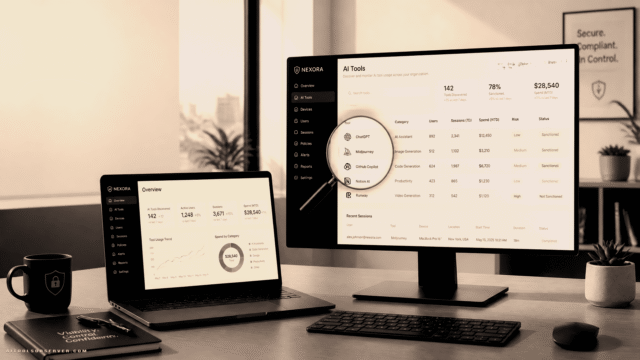
- network monitoring for external AI services
- vendor review processes that include telemetry and data handling
- rollback plans when security concerns emerge suddenly
The companies that handle this well are not the ones banning everything by default. They are the ones that know exactly what is installed, what it can access, and what happens when vendor behavior changes.
What this means for the AI coding assistant market
This incident could affect more than Claude Code.
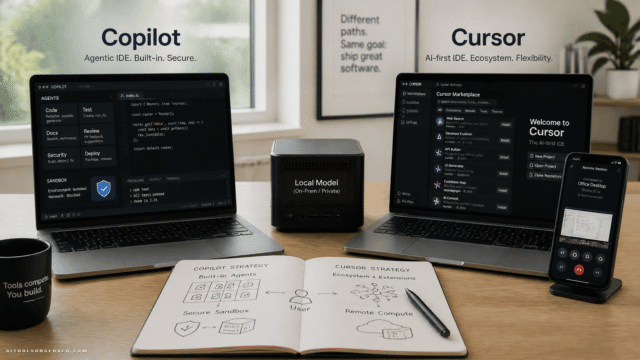
Enterprise buyers are already comparing AI coding assistants on output quality, workflow fit, and pricing. Security posture is now becoming a more visible buying factor, especially for teams in regulated sectors or international organizations with strict compliance exposure.
Expect more scrutiny around:
- telemetry transparency
- on-device versus cloud processing
- admin controls
- auditability
- network behavior
- data residency options
- enterprise policy enforcement
In other words, “does it help developers move faster?” is no longer enough. The next question is “can security and compliance teams live with it?”
The practical takeaway
If your team uses AI coding assistants, use this moment to review them like any other sensitive enterprise software.
Check versions, inspect traffic, verify what data leaves your environment, and make sure your AI policy covers developer tools specifically. The fastest teams are not the ones that adopt blindly. They are the ones that can keep shipping even when a tool suddenly becomes a security review.











Comments (0) No comments yet
Want to join this discussion? Login or Register.
No comments yet. Be the first to share your thoughts!