


What the Shutdown Actually Affects
Firebase Studio absorbed Project IDX, Google’s earlier browser-based workspace, before launching in preview on April 9, 2025. Its original proposition was a unified experience combining natural-language app building, coding workspaces, and deployment—serving both prompt-driven builders and developers who wanted direct control.
That integration is now being unwound. Google’s preferred replacements divide the work Firebase Studio combined:
- Google AI Studio — browser-based, centered on prompts and app generation, using components of Antigravity‘s agent harness
- Antigravity — desktop-oriented, aimed at developers who want closer control over local tooling
The choice is not simply about features. It concerns where developers work and how much they want to interact directly with implementation details. Neither product is a neutral drop-in replacement for every former Firebase Studio user.
The Migration Is Broader Than a File Export
Google provides project migration guidance, and developers can export their source files. That is the starting point, not the finish line.
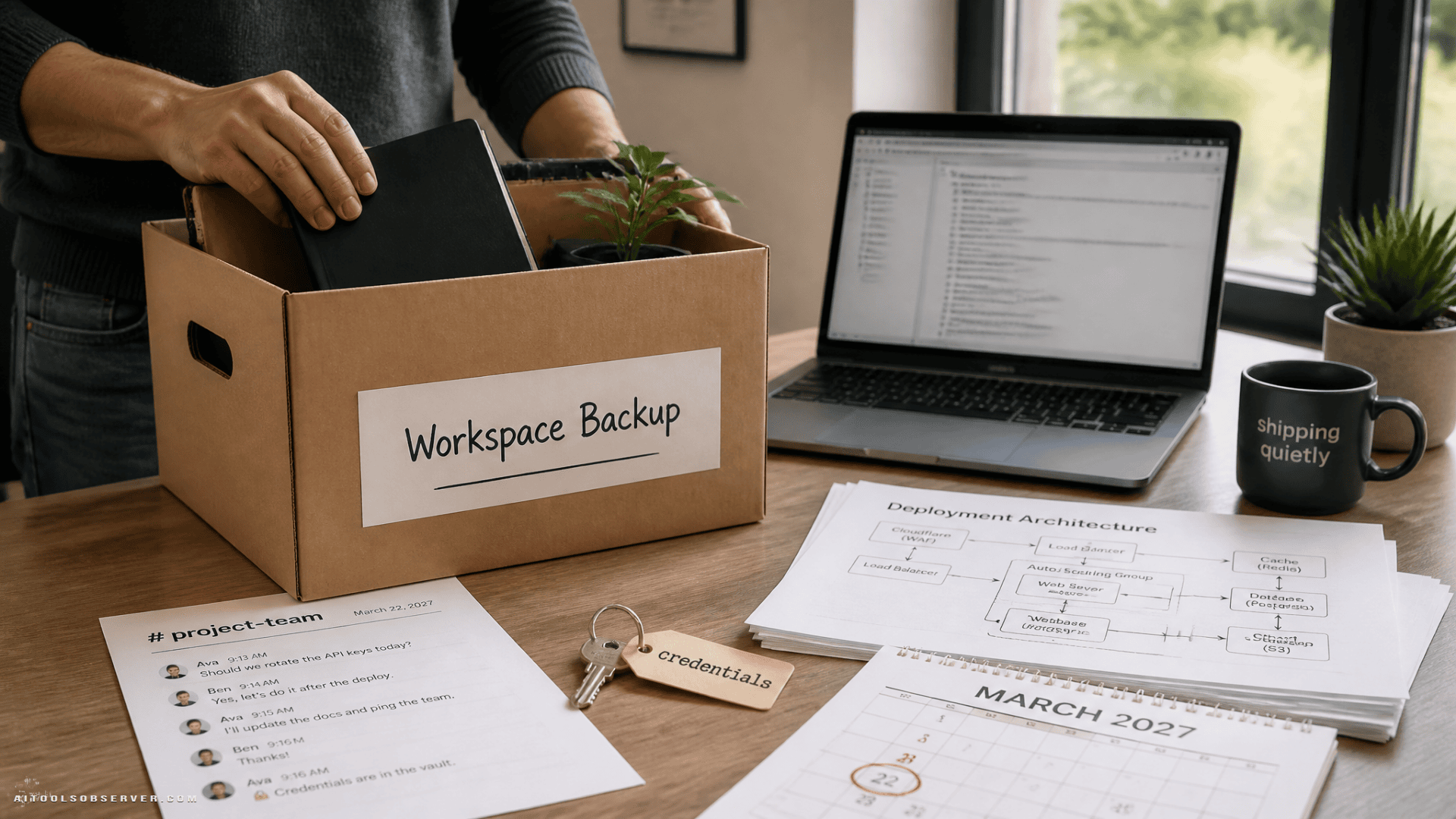
Several categories of working context sit outside a standard code archive:
Agent chat history is not included in the exported archive. For projects where significant portions were built through prompts, those conversations may contain the reasoning behind workarounds, abandoned approaches, or requirements that the final code only partially expresses. Losing that record does not break the application immediately. It makes the next change harder to evaluate correctly.
Credentials and configuration require explicit attention. A replacement environment can open a project correctly while still lacking the configuration needed to complete a production release. That is a migration gap even when the editor and agent appear functional.
Deployment paths introduce a separate decision. Google documents options for preserving an existing App Hosting address alongside a Cloud Run route that represents a different hosting arrangement. Combining a workspace migration with an infrastructure change expands the scope of what needs to be verified—and makes failures harder to diagnose.
Workspace data will be permanently deleted at shutdown. Developers should not assume the old environment remains accessible as a fallback. Independent, verified preservation of all necessary material is the responsible baseline.
The Right Test for Migration Success
A completed import is not evidence of continuity. The useful test is operational: can the team understand a maintenance request, make the change, verify the behavior, and publish it through the new arrangement?
That test should use a representative task—an ordinary defect fix or a routine feature change—rather than a clean-slate demonstration. An impressive generation demo does not establish whether a team can reproduce its daily maintenance work in the new environment.
For organizations with multiple maintainers, the bar is higher. A durable migration gives the next person enough context to continue, including decisions that never became obvious from the source code alone. Architectural choices, release instructions, known limitations, and the reasons behind unusual configuration—this material supports handoffs and should be preserved in a searchable, accessible form before the deadline.
Evaluating the Alternatives
Google’s consolidation argument is coherent: fewer overlapping products create a clearer starting point for new users. Existing users experience the same decision differently, having already organized work around the retiring environment.
The broader market offers additional options. Tools like Cursor provide agent capabilities—codebase search, file editing, terminal access, error handling—with browser access available through cloud agents. The meaningful differences between competing environments emerge not in feature lists but in how AI coding tools handle real project complexity: how changes are exposed, how interruptions are managed, how context is preserved across sessions.
Google retains a plausible advantage among developers already using its infrastructure. Familiarity reduces the new knowledge a team must acquire. That advantage, however, still needs to appear in actual migration results, not just in product positioning.
A forced transition creates a moment when developers reconsider assumptions they previously left alone. That is an opportunity for Google to demonstrate retention through continuity—and an opening for rivals if the replacement workflow repeatedly requires rebuilding context.
What to Do Before March 2027
The deadline is real, but it does not require treating every Firebase application as an emergency. The practical obligation is narrower and more specific:
- Identify which applications depend on Firebase Studio as their active development environment
- Preserve agent chat history, credentials, deployment instructions, and architectural context independently
- Choose a replacement environment based on actual workflow fit, not demonstration quality
- Complete a full maintenance cycle—change, verify, release—in the destination environment before the shutdown date
- Ensure every authorized maintainer can operate the new workflow, not just the original builder
The shutdown turns a usually hypothetical question—how much work does it take to leave this tool?—into an immediate responsibility. Teams that answer it through a verified maintenance task will be in a measurably better position than those who confirm only that their files transferred successfully.







Comments (0) No comments yet
Want to join this discussion? Login or Register.
No comments yet. Be the first to share your thoughts!