



Epic Stopped Hiding It — And That’s Revealing in Itself
Six months ago, Fortnite players accused Epic of sneaking AI-generated art into the game. Strange signage. A character with nine toes. A clock face with numbers that made no sense. Epic stayed quiet.
Now they’ve released a video openly demonstrating how generative AI tools are embedded into their Unreal Engine workflow — covering buildings, characters, skins, and game assets. The shift from denial to demonstration is significant. It signals that AI integration in AAA game development has crossed a threshold: it’s no longer a secret to protect, it’s a process to normalize.
The question is whether normalization is the same as validation.
What the Workflow Actually Looks Like

The video shows two tools in action: GenMedia and Nano Banana, an AI image generator and editor.
Here’s the basic loop:
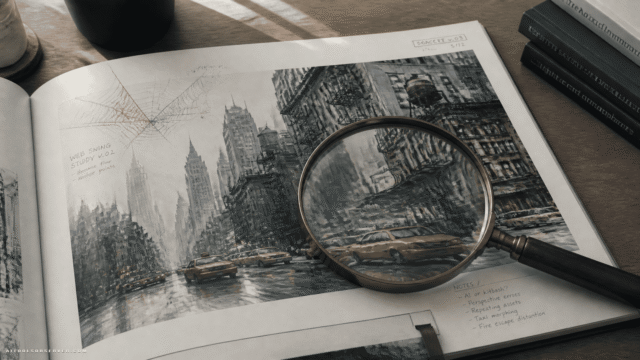
An artist creates original work — a character sketch, a building model — then feeds it into the AI tool with a text prompt. The AI returns a version that looks polished at a glance. But look closer and you’ll find additions that weren’t requested: an extra belt pouch, a skeleton decoration, a glove that didn’t exist, distorted window shapes, structural changes to signage.
The artist then manually corrects the AI’s errors. Then the process repeats further down the pipeline.
Epic frames this as a time-saver with quality controls built in.
All along the way there are continual reviews before anything makes it into our games,
the company states. That sounds reassuring until you realize the reviews exist specifically because the AI keeps introducing problems that need fixing.
The Core Tension: Does It Actually Save Time?
This is the honest question at the center of the debate, and the answer is genuinely complicated.
If an experienced artist says that identifying and correcting AI errors is faster than building every detail from scratch, that’s a legitimate workflow argument. Generative AI can compress certain stages of production — rough rendering, texture generation, perspective adjustments — in ways that are hard to dismiss.
But the pipeline Epic is showing isn’t a clean acceleration. It’s a loop of create, corrupt, and correct. Every pass through the AI introduces a layer of randomness that someone has to audit. At scale, across hundreds of assets, that audit burden compounds fast.
The deeper risk isn’t inefficiency. It’s the error that slips through. The AI-generated mistake that survives every review and ships inside the game. Given that Fortnite has already had documented incidents — the nine-toed character, the broken clock face — this isn’t a hypothetical concern. It’s an established pattern.
1,000 Layoffs. Then an AI Showcase. Read That Sequence Carefully.
Three months before this video dropped, Epic Games laid off 1,000 employees. The company cited financial mismanagement at the leadership level.
Now they’re publicly demonstrating how generative AI tools help fewer artists produce more content faster.
You don’t need to be cynical to connect those dots — you just need to be paying attention. The pattern is consistent with what’s happening across the broader tech and creative industries: AI adoption accelerates following workforce reductions, and the remaining employees absorb more output pressure with fewer resources.
Epic’s framing positions GenAI as a creative aid. The structural reality suggests it’s also a headcount justification. Both things can be true simultaneously, and that’s exactly what makes this moment worth analyzing rather than dismissing.
What This Signals for the AI Tools Ecosystem

Epic’s disclosure matters beyond Fortnite. It’s a data point about how large creative organizations are actually integrating generative AI — not as a replacement for human creativity in one clean swap, but as a messy, iterative layer inserted into existing workflows.
A few patterns worth tracking:
AI Tools Are Being Embedded, Not Bolted On
GenMedia and Nano Banana aren’t external apps artists open in a separate window. They’re integrated into the Unreal Engine pipeline. This is the direction the market is moving — AI capabilities baked into the tools professionals already use, not standalone products competing for attention.
Error Correction Is Becoming a Core Skill
The workflow Epic showed requires artists to be fluent in spotting AI artifacts, hallucinated details, and structural distortions. That’s a new skill set. Studios that train for it will ship cleaner work. Studios that don’t will ship the nine-toed character.
“Good Enough Faster” Is the Real Value Proposition
Epic isn’t claiming AI makes better art. They’re implying it helps them reach a shippable standard more quickly. That’s the honest pitch most AI tool vendors are making, even when they dress it up in language about creativity and empowerment. Understanding that distinction helps you evaluate any AI tool more clearly.
Provenance and Originality Are Active Concerns, Not Afterthoughts
Epic explicitly mentions tracking provenance and respecting originality in their workflow. That’s not marketing language — that’s legal and ethical infrastructure being built in real time. Any studio or creative team adopting AI tools right now needs a similar framework, or they’re accumulating risk they haven’t accounted for.
The Honest Takeaway for AI Adopters
Epic’s video isn’t a success story or a cautionary tale. It’s a live case study in what early-stage AI integration actually looks like inside a major production environment: useful in patches, unreliable in specifics, and dependent on skilled human oversight to function at all.
If you’re evaluating AI tools for your own creative or development workflow, this is the frame that matters. Not does it work? but what does it break, how often, and how much does fixing that cost?
The studios and teams that will get the most value from generative AI aren’t the ones who adopt it fastest. They’re the ones who build honest feedback loops around it — tracking where it saves time, where it introduces errors, and what the real net cost looks like across a full production cycle.
Epic is learning that in public. You can learn it on your own terms, with lower stakes, if you pay attention to what they’re showing you.













Comments (0) No comments yet
Want to join this discussion? Login or Register.
No comments yet. Be the first to share your thoughts!