



Why detection tools are under pressure
A few years ago, many AI outputs were easier to spot. Text sounded stiff. Images had obvious glitches. Video and audio often broke under closer inspection.
That advantage is fading. Modern generative models produce cleaner outputs, fewer visible artifacts, and more convincing style mimicry. As quality improves, detection shifts from obvious pattern spotting to probabilistic judgment.
That creates a practical problem. Users want a clear answer: real or fake. Most detectors can only offer confidence signals, not certainty.
The result is a trust gap:
- Generators are getting easier to use
- Synthetic content is spreading across more channels
- Detection confidence is often imperfect
- The cost of a wrong call can be high
A false negative can let misinformation spread. A false positive can wrongly accuse a student, creator, or publisher. In many use cases, both errors are expensive.
The market is moving from “AI detector” to “trust infrastructure”
The phrase “AI detector” sounds simple, but the category is fragmenting.
Some tools focus on AI-written text. Others analyze images, audio, or video for synthetic signals. Some emphasize provenance and authenticity, trying to track how content was created and edited rather than guessing after the fact. Others sit inside moderation, brand safety, or enterprise governance workflows.
That shift matters. Detection alone is rarely enough. A stronger approach usually combines several layers:
- Source verification
- Metadata or provenance checks
- Model-based detection
- Policy enforcement
- Human escalation for edge cases
This is one reason the category is becoming harder to compare. Two vendors may both claim to detect AI, while solving very different problems.
A school worried about AI-assisted cheating does not need the same workflow as a newsroom verifying breaking footage. A marketing team trying to prevent brand misuse has a different requirement again.
Why text detection remains especially messy
Text is one of the hardest areas for confident detection because human and AI writing increasingly overlap.
A polished AI draft can look natural. A non-native speaker using simple phrasing may get flagged unfairly. A human writer using grammar tools or AI-assisted editing can create text that sits in a gray zone.
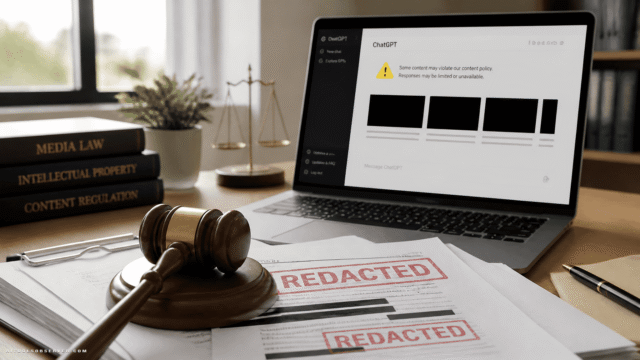
This has big implications for education and publishing. Many organizations want a simple enforcement tool, but text detection often works better as a signal than a verdict.
In practice, useful text review usually asks broader questions:
- Was AI likely used in drafting?
- Does the writing style shift abruptly?
- Are there signs of fabrication or shallow synthesis?
- Can the author explain the reasoning behind the work?
That is less convenient than a binary score, but it is closer to reality.
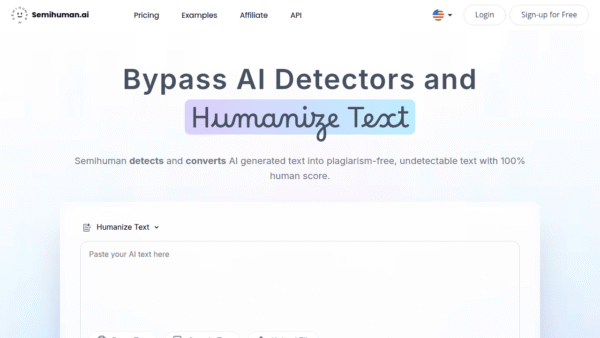
This dynamic is especially visible in debates over AI-assisted cheating.
Deepfake detection is a race against speed, not just accuracy
With images, audio, and video, the issue is not only whether a fake can be found. It is whether it can be identified quickly enough to matter.
A fake political clip, manipulated interview, or synthetic celebrity endorsement can spread fast. Even when platforms or fact-checkers catch it later, the first wave often does the most damage.
This is where detector performance meets distribution dynamics. A tool can be technically strong and still fail in real-world trust and safety if the review loop is too slow.
For teams evaluating tools, speed matters as much as raw detection claims. So does where the tool fits:
- Before publishing
- During platform upload
- Inside social monitoring
- In post-publication investigations
- In legal or compliance review
The best detector on paper may be the wrong choice if it cannot operate where risk appears first. Tools such as Deepfake Detector reflect how this category is increasingly tied to response timing as much as technical analysis.
Generative AI is also learning from detectors
Every mature detection category creates incentives for evasion.
Once creators know what detectors look for, they can adapt. They may edit outputs, compress media, paraphrase text, add noise, re-record audio, or combine tools to reduce detectable patterns. Even ordinary transformations can make detection harder.
This is why the arms race framing fits. Generative AI does not need to become perfect to weaken detectors. It only needs to become “good enough” to slip through often enough.
That pushes the market toward more resilient methods, including provenance and authenticity systems that focus less on forensic guessing and more on verified creation history. These approaches have their own limitations, especially when content moves across platforms or loses metadata, but they point to an important trend: prevention and traceability may be more durable than after-the-fact detection alone.
Trust is now a workflow problem
One mistake companies make is treating AI detection like a standalone purchase. In reality, trust breaks across workflows, not categories.
A detector may identify likely synthetic content, but then what?
Do you block it automatically? Send it to review? Add a warning? Request source files? Compare it with known originals? Escalate to a policy team? Log the decision for compliance?
Without those next steps, even a capable tool creates noise instead of clarity.
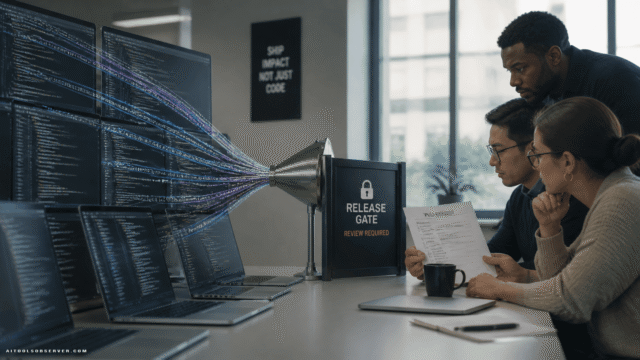
That is why buyers are starting to look for systems that support operational trust, not just model output scoring. The real value often comes from how well a tool helps a team decide and act, including questions of governance.
The education use case shows the limits clearly
AI-assisted cheating is one of the most visible detection debates because the stakes are personal and immediate. Teachers want fairness. Students want not to be falsely accused. Institutions want workable policies.
The challenge is that modern writing workflows are already blended. Students may brainstorm with AI, rewrite by hand, use editing tools, or translate ideas across languages and formats.
In that environment, pure detection has limits. Better institutional responses often include:
- Clear rules about acceptable AI use
- Process-based assessment
- Draft history or oral defense
- Assignment design that rewards original thinking
- Detection as one input, not sole evidence
This matters beyond education. It shows a broader lesson for any buyer: if a tool is being asked to solve a policy problem by itself, it will probably disappoint. The risk of creating artificial understanding is part of the concern.
Media and politics raise a different kind of risk
In journalism, public affairs, and elections, the core issue is less about authorship and more about timing, reach, and public trust.
Synthetic media can distort breaking events, impersonate public figures, and muddy already fragile information environments. Even when false content gets exposed, the damage often persists because uncertainty itself becomes the weapon.
This puts pressure on organizations to build verification habits before a crisis hits. Waiting until viral misinformation is already circulating is usually too late.
For teams working in high-trust environments, the better question is not “Can a detector catch everything?” It is “How do we reduce the time between suspicious content appearing and a credible verification decision?”
What buyers should look for in AI detection tools
If you are comparing this category, ignore broad promises and focus on fit.
A useful evaluation starts with a few practical questions:
1. What type of content are you actually reviewing?
Text, image, audio, and video are different problems. Some tools cover multiple formats, but depth often matters more than breadth.
2. Is the output a signal or a decision?
If a tool gives probability scores, confidence bands, or risk flags, that may be more honest than one claiming certainty. The key is whether your team knows how to use those signals.
3. Where does it sit in your workflow?
A detector that works only in manual review may not help if your risk starts on social channels, student submissions, or user uploads.
4. How does it handle edge cases?
Look closely at multilingual content, edited files, compressed media, and human-AI collaboration. These gray areas are often where trust breaks down.
5. What happens after detection?
The best tools support decision-making, documentation, moderation, and escalation. Detection without action design is incomplete.
What is likely to change next
The category appears to be moving in three directions at once.
First, detection will remain necessary, especially for open-web content where provenance is missing or stripped away. Forensic analysis is not going away.
Second, authenticity systems will likely gain more attention. Verified source history, creation records, and content credentials are appealing because they reduce reliance on guesswork. They are not universal solutions, but they address a real weakness in detector-only strategies.
Third, organizations will become more selective about use cases. Instead of asking one tool to solve every trust problem, buyers will map different risks to different controls.
That is a healthier market signal. It suggests the industry is moving away from simplistic “AI or not” claims and toward more realistic trust design.
So, can detectors keep up?
Yes, but not in the way many people hope.
Detectors can still help protect trust and content authenticity in 2025, especially when used in context. But they are unlikely to deliver permanent, universal certainty against rapidly improving generative AI.
The more useful view is this: detection is becoming one layer in a broader verification stack. It works best when paired with provenance, policy, human judgment, and fast operational workflows.
If you are evaluating tools in this space, do not ask which detector is perfect. Ask which combination of signals helps your team make faster, fairer, and more defensible decisions. That is the standard that will matter as the arms race continues.













Comments (0) No comments yet
Want to join this discussion? Login or Register.
No comments yet. Be the first to share your thoughts!