


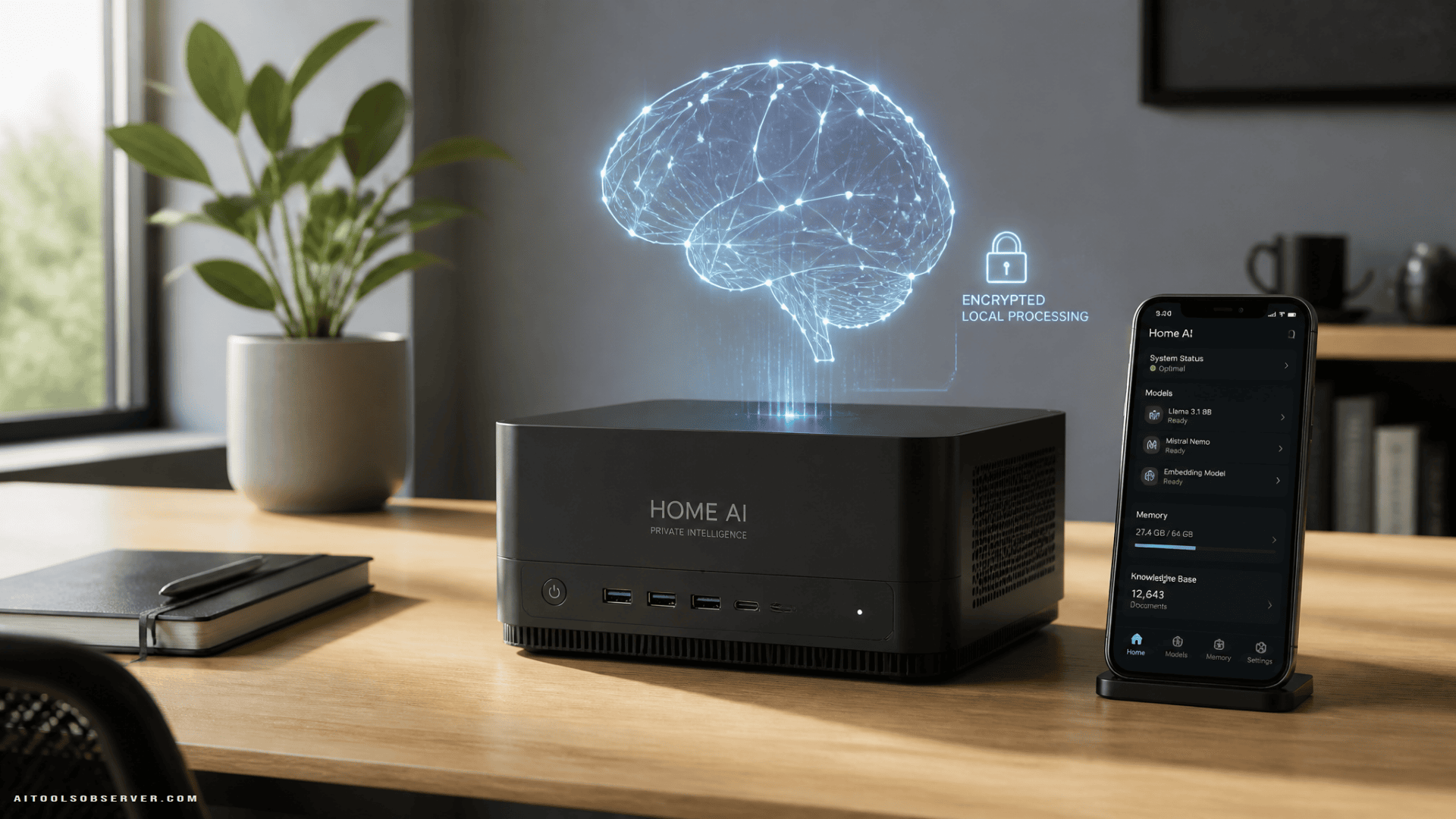
What Ghost Core is
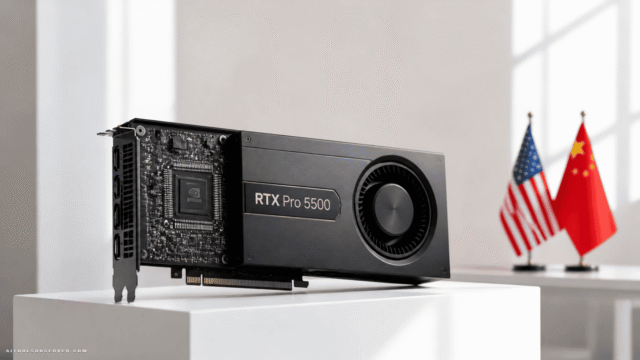
Core is positioned as a personal AI computer for always-on agent workflows. It ships with an Nvidia RTX Pro 4000 SFF Blackwell GPU and comes with local model support, including preinstalled Qwen and Gemma models.
The system appears designed to act as a centralized “brain” for a user’s digital life. Based on the available description, that includes desktop activity, apps, and connected devices, with agents that can observe context, remember information, and take actions on the user’s behalf.
Ghost also frames Core as a screenless device. Users access it through an app, with voice mode available through that app rather than through the hardware itself.
Why this launch matters
There is already a market for running local models on consumer hardware. But doing it well usually requires time, hardware knowledge, software configuration, and tolerance for rough edges.
Ghost’s pitch is that Core removes that friction. Instead of asking users to assemble a GPU, install model runtimes, manage dependencies, and design their own agent environment, it offers a prebuilt system where the hardware, software layer, models, and update path are bundled together.
That matters for three groups in particular:
- privacy-conscious users who do not want personal AI memory living in the cloud
- early adopters who want persistent agents without building the stack themselves
- professionals exploring always-on automation in a more controlled environment
The larger significance is strategic. If AI agents become more useful when they are continuously available, context-rich, and deeply integrated with a person’s digital life, then the underlying compute location becomes a product decision, not just an implementation detail.
The core value proposition: local, private, persistent
Ghost is emphasizing three promises.
First, local execution. The description suggests that models and personal memory run on the device rather than relying primarily on remote inference. That can improve privacy and reduce dependence on external services.
Second, encrypted local data. Ghost says personal information is encrypted and not meaningfully accessible to cloud providers or third parties, including the company itself. For users uneasy about handing life-log data to hosted assistants, this is likely the strongest part of the pitch.
Third, continuous operation. Core is presented as an always-on system that can process tasks without constant prompting. This is important because many “agents” today still behave more like reactive chat tools than true background assistants.
Put together, Ghost is not just selling a faster local chatbot. It is selling a managed environment for personal autonomy.
Hardware is only half the story
Ghost’s comparison point is not just a powerful small PC. It is the difference between general-purpose hardware and a purpose-built AI agent machine.
That distinction matters. A Mac Mini or custom workstation can run local models, but they do not automatically provide a coherent agent layer, persistent memory design, preinstalled model stack, update mechanism, browser integration, or an opinionated control system for autonomy.
In practice, that means Core is competing less with standard PCs on raw flexibility and more on reduced setup burden. Buyers are paying for integration and productization, not only for compute.
At $3,499, that is a serious premium decision. So the right benchmark is not “can a PC run local AI?” It clearly can. The right benchmark is “how much time, complexity, and risk does a dedicated AI appliance remove?”
The agent angle is the real differentiator
The most interesting part of this launch is not the GPU. It is Ghost’s view that personal AI agents become more useful when they can reason across your life, maintain memory, and decide when to act.
The example Ghost gives is a proactive health-related notification based on signals like elevated resting heart rate, late-night work behavior, and seasonal context. Whether that specific experience feels useful or intrusive will depend on execution, permissions, and user trust. But it illustrates the broader design goal: an assistant that synthesizes context across systems instead of waiting for explicit commands.
That is a stronger product thesis than “run local models faster.” It points toward a category of personal systems that sit between an operating system, a knowledge layer, and an autonomous assistant.
Model support and flexibility
Core comes with Qwen and Gemma models preinstalled, and Ghost says users can install additional models from Hugging Face or load their own trained models.
That flexibility matters because local AI stacks move quickly. Buyers of dedicated hardware do not want a closed appliance that ages badly as models improve.
Ghost also says it can push over-the-air updates and let users choose whether to switch to newer model generations. That sounds practical, especially for users who want an easier path to staying current without rebuilding their local environment every few weeks.
Still, local model flexibility introduces its own complexity. More choice is useful, but it also creates questions about compatibility, performance tuning, and how smoothly third-party models work inside Ghost’s agent framework. Those details will matter in real-world use.
Privacy and control are central, but so is safety
A personal AI with deep access to accounts, files, and credentials is powerful only if the control layer is credible.
Ghost says users can decide how much autonomy to grant their agents. It is also building a firewall intended to monitor outgoing network requests and block actions that look unauthorized or like data exfiltration.
That is a sensible design direction. The challenge is that agent safety is rarely solved by one mechanism. Permissioning, audit logs, action review, credential scoping, and clear user override paths all matter. For a product like Core, trust will not come from one privacy claim alone. It will come from whether the system makes sensitive behavior legible and controllable in daily use.
The company also says the device is designed to keep working even if Ghost were to shut down. For cautious buyers, that is an important signal. It suggests the hardware is being pitched as an owned computing asset rather than a thin client for a service.
Who Core is actually for
Core is not a mass-market impulse purchase. Its price and architecture place it closer to an enthusiast, developer, or high-intent professional tool.
It appears best suited for:
- users who want local-first AI for privacy reasons
- people experimenting with persistent agent workflows
- technical buyers who value model choice but want less setup friction
- early adopters interested in a dedicated personal AI system rather than a general PC
It appears less suited for:
- casual users who mainly need a chat assistant
- budget-conscious buyers
- teams looking for broad enterprise deployment without first proving the workflow value
- anyone uncomfortable giving software meaningful access to personal context, even if that context stays local
The business signal behind the launch
Ghost is also emerging from stealth with an $11 million seed round led by Andreessen Horowitz, according to the provided context. That does not validate the product by itself, but it does signal investor appetite around personal AI hardware and local agent infrastructure.
This matters because dedicated AI devices are difficult businesses. Hardware margins, manufacturing, support, software iteration, and trust requirements create a high bar. The funding gives Ghost room to test whether there is durable demand for a private, always-on AI computer instead of just another cloud assistant.
The main tradeoff
Core’s appeal is straightforward: tighter privacy, local ownership, integrated setup, and always-on agent behavior. Its cost is equally straightforward: $3,499 is high enough that buyers will expect real utility, not novelty.
That means Ghost does not just need strong specs or a persuasive privacy story. It needs to prove that a dedicated AI computer produces better daily outcomes than a well-configured general-purpose machine plus existing local AI tools.
If it does, Core could appeal to a small but serious market of users who want AI agents to live with them, not in someone else’s cloud. If it does not, the product risks being seen as a polished wrapper around a workflow that power users can assemble themselves.
Practical takeaway
Watch Core less as a hardware launch and more as a test of the personal AI appliance model. The important question is not whether local models can run on a box with a GPU. It is whether enough users want a private, persistent, agent-first computer that is built to act, remember, and stay under their control.









Comments (0) No comments yet
Want to join this discussion? Login or Register.
No comments yet. Be the first to share your thoughts!