


What Harbor appears to do
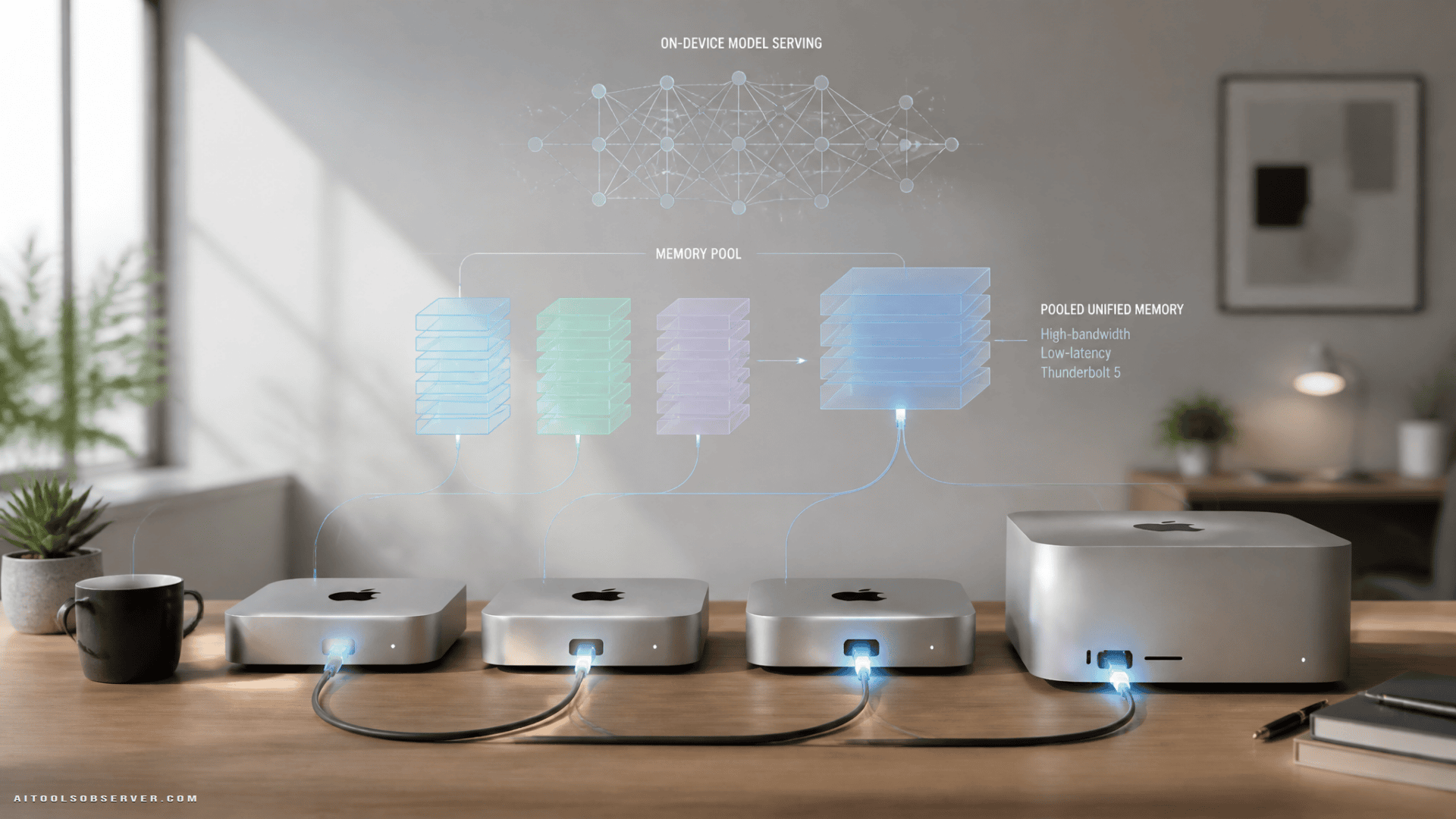
According to the leak, Harbor is a Mac app that turns Apple silicon machines into private AI inference servers for open-weight models.
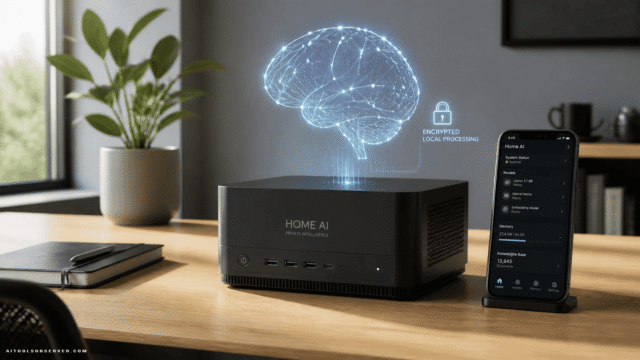
The core pitch is straightforward: run models locally, keep data on your own hardware, and avoid sending prompts or files to a cloud provider. For many users, that is the whole appeal of local AI on Mac.
The more interesting part is clustering. Harbor reportedly supports connecting multiple Thunderbolt 5 Macs together so their unified memory can be pooled into a single inference resource. In plain English, that suggests two immediate benefits:
- Running larger models than one Mac can handle alone
- Serving more requests at the same time
If that works as described, Harbor is not just a local model runner. It is closer to a lightweight private AI serving layer for Mac environments.
Why this leak stands out
There are already ways to run AI models locally on a Mac. The difference here is usability.
Most local AI setups still ask users to piece together frameworks, model files, terminals, API layers, and hardware tuning. That is manageable for developers, but not ideal for broader internal use inside companies, agencies, or research teams.
Harbor appears to focus on reducing that friction:
- Device detection over Thunderbolt 5
- Minimal setup
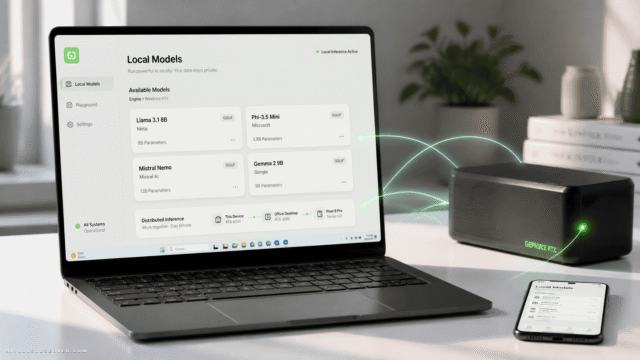
- In-app model browsing and downloads
- Automatic cluster formation
- No obvious need for command-line configuration
That combination is what makes the leak notable. Apple is not just acknowledging local AI demand. It appears to be packaging it into something more approachable.
Why Mac clustering could matter
Macs have quietly become more relevant in AI workflows, especially for teams that want local inference without renting GPUs in the cloud.
A single Mac Studio or high-spec Mac mini can already be useful for experimentation, testing agents, summarization, coding support, and internal document workflows. But memory becomes the limiting factor fast, especially with larger open-weight models or multiple simultaneous users.
That is where clustering changes the conversation.
If Harbor can really pool unified memory across Thunderbolt 5-connected Macs, it could make a stack of Macs behave more like a shared local inference appliance. That creates a few practical use cases:
Small team internal AI
A company could use a cluster of Macs to serve internal chat, search, or workflow automation while keeping data local.
Agencies and consultants
Teams handling sensitive client material may prefer on-device AI model serving instead of pushing everything to external APIs.
Developers testing local LLM products
Harbor could make it easier to prototype local AI apps or private copilots without spinning up more traditional server infrastructure.
Education and labs
Schools, labs, and controlled environments often care about privacy, predictable hardware, and simple deployment. A Mac-based inference cluster could fit that need.
The privacy angle is the real hook
A lot of AI product messaging talks about privacy, but this use case is unusually concrete.
If the leaked description is accurate, Harbor keeps inference on Apple hardware and avoids cloud transfer by default. That is appealing for any workflow involving sensitive files, proprietary documents, customer records, or internal research.
For many buyers, that is the simplest decision filter:
- Cloud AI is flexible, but raises data handling questions
- Local AI is more private, but often harder to set up
- Harbor appears positioned to make local AI easier
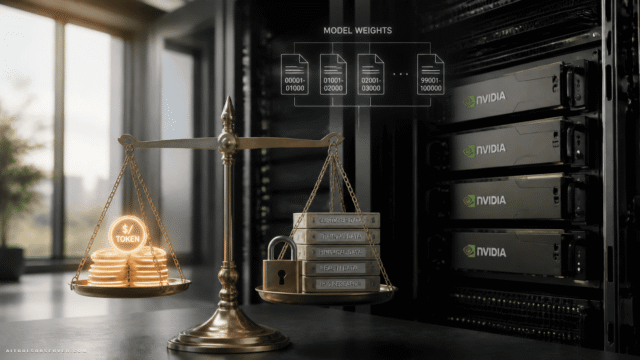
That does not mean local always wins. Cloud systems still offer more elasticity, larger model access, and easier remote scaling. But for users who care most about control, Harbor could be a strong fit.
What Harbor suggests about Apple’s AI strategy
The leak also says something bigger about where Apple may see an opening.
Apple is unlikely to outcompete every cloud AI platform on sheer model scale. But it does have a believable angle in private, local, hardware-software integrated AI experiences. Harbor fits that pattern.
Instead of asking users to choose between consumer AI features and enterprise-grade infrastructure, Apple may be exploring a middle path:
- Familiar hardware
- Local execution
- Simple deployment
- Strong privacy positioning
- Better performance through tightly integrated silicon and memory
That would be especially relevant now that Macs are becoming more common in local AI experiments, not just creative work.
Important tradeoffs to watch
The Harbor concept is compelling, but a few questions matter before this becomes truly useful at scale.
Thunderbolt 5 requirement
The leaked description points to Thunderbolt 5 Mac clusters. That could limit immediate adoption if users need the latest compatible hardware.
Model compatibility
“Open-weight models” is a broad category. Real-world usefulness will depend on which models Harbor supports and how smooth that support is in practice.
Performance versus dedicated GPU setups
Mac clusters may be easier to deploy for some teams, but they will still be compared against more traditional AI servers and GPU workstations. Harbor does not need to beat those on every benchmark, but it does need to be good enough for real business use.
Apple’s intended audience
It is still unclear whether Harbor is meant for developers, SMBs, enterprise teams, or a mix of all three. Positioning will matter as much as the technical design.
The Claris angle is worth noting
Harbor is reportedly in private preview under Apple’s Claris brand. That is interesting because Claris is associated with business productivity and workflow tooling more than consumer-facing Apple software.
If Harbor stays tied to that side of Apple, it may point to a more business-oriented rollout rather than a mainstream utility for every Mac owner. That would make sense. The strongest use cases here involve teams, workflows, private data, and lightweight internal infrastructure.
What AI tool buyers should pay attention to
For readers comparing AI tools, Harbor is a reminder that “AI platform” does not always mean SaaS.
If your team is evaluating local LLM options, private AI servers, or on-device AI deployment, Harbor could become relevant for a very specific reason: it may reduce the operational pain of self-hosting.
That does not automatically make it the right choice. But it adds a potentially valuable category to watch:
- Local AI on Mac
- Private inference server tools
- Mac clustering for model serving
- Open-weight model deployment without heavy infrastructure
If your current blockers are privacy, setup complexity, or hardware utilization, Harbor is more interesting than a typical feature leak.
Bottom line
Harbor appears to target a real gap in the market: teams that want local AI privacy and control without the usual self-hosting friction.
If Apple turns the leaked concept into a public product, the biggest question will not be whether Macs can run AI models locally. They already can. The question is whether Apple can make private AI model serving simple enough that more teams will actually use it.
That is the practical takeaway to watch: if Harbor launches as described, Macs could become easier to treat not just as AI workstations, but as private AI infrastructure.











Comments (0) No comments yet
Want to join this discussion? Login or Register.
No comments yet. Be the first to share your thoughts!