


What Changed
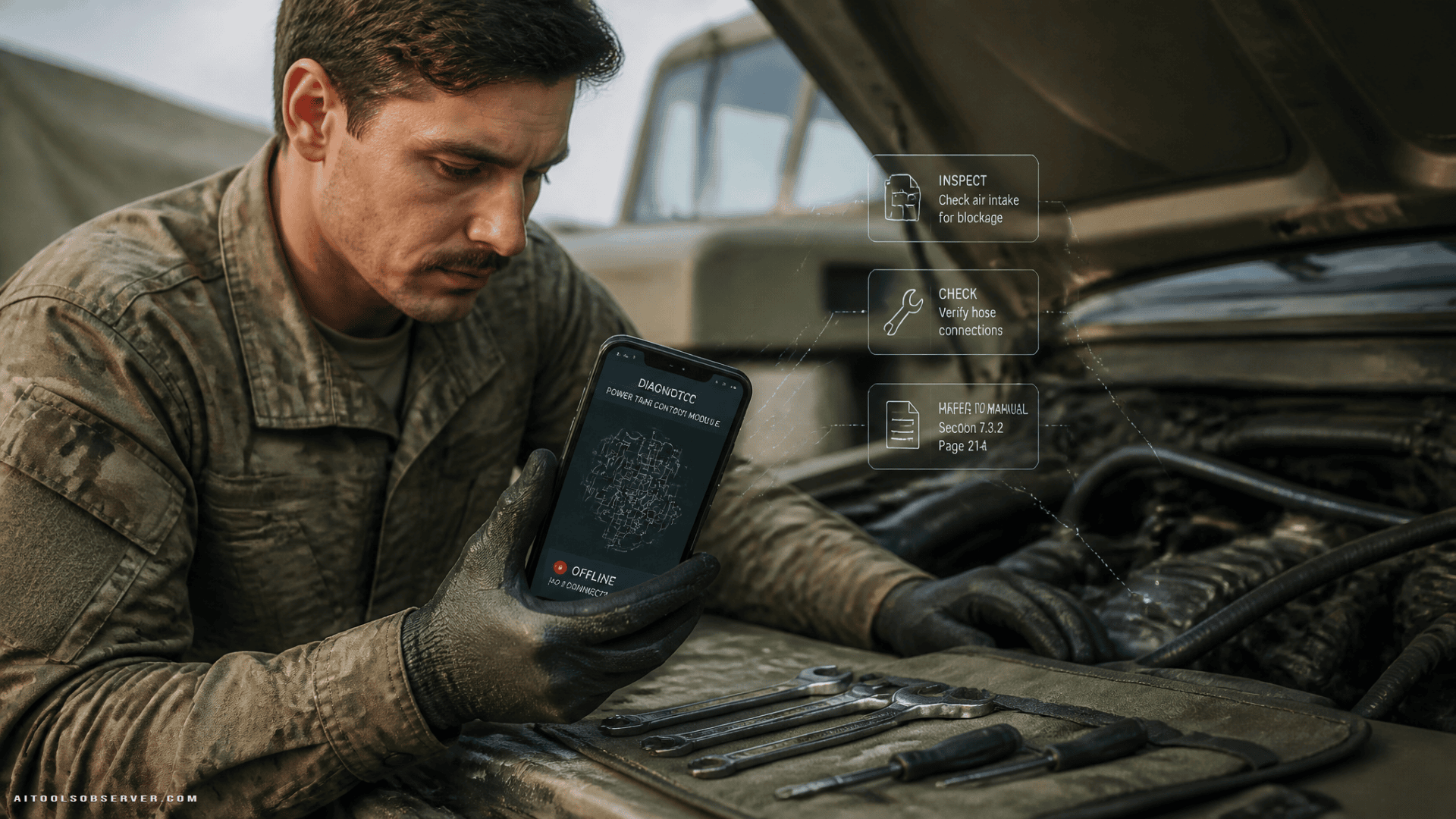
NeoLens has updated its AI assistant to run fully offline on standard Android smartphones, without requiring internet access or specialized hardware. Previously, the application could only deliver technical guidance and documentation when connected to the internet — a significant limitation in combat zones or areas with degraded connectivity. Offline capability was reportedly the most frequently requested feature from users in the field.
The shift is technically non-trivial. According to the project’s CTO, Ostap Korkuna, early prototypes required high-end smartphones with powerful graphics accelerators — devices that are neither practical nor widely available at the frontline. There was also a notable quality gap between the on-device models and the cloud-based versions using larger language models.
How They Closed the Gap
The development team addressed both constraints through a combination of approaches:
- A purpose-built, optimized knowledge base drawn from real-world operational experience
- AI models adapted specifically to run on the processors found in ordinary Android phones
- No dependency on additional hardware beyond a standard device
The result is an assistant that runs on common smartphones without any external infrastructure. The example dialogue shown in the application — covering how to diagnose white exhaust smoke on an HMMWV — illustrates the kind of structured, step-by-step technical guidance the system is designed to deliver.
Tested in the Field
A group of military mechanics has already put the new version through a closed trial involving practical diagnostic tasks, including engine fault identification. This kind of domain-specific testing matters: general-purpose AI assistants tend to struggle with the precision required for equipment maintenance, where a wrong diagnostic step can have serious consequences.
NeoLens has also previously collaborated with Roboneers to develop an AI-powered assistant for the Shablya remotely operated combat modules, suggesting the company is building focused, use-case-specific tooling rather than broad general-purpose applications.
Who This Is For
The application is available free of charge to Ukrainian military personnel. More broadly, the approach — combining optimized on-device models with a curated domain knowledge base — is worth watching for anyone working on AI deployment in environments where connectivity is unreliable, hardware is constrained, or operational stakes are high.
The real differentiator here isn’t the AI itself. It’s the deliberate engineering tradeoff: accepting some reduction in model capability in exchange for genuine field usability. That’s a practical decision, and in this context, the right one.










Comments (0) No comments yet
Want to join this discussion? Login or Register.
No comments yet. Be the first to share your thoughts!