



What OneGov Actually Did
OneGov was designed to solve a structural problem in federal procurement: fragmented purchasing. When dozens of agencies negotiate independently with the same vendors, the government loses both pricing leverage and consistency in contract terms.
By consolidating agreements, the Federal Acquisition Service was able to secure promotional pricing that made AI tools effectively free to try at scale. Acting FAS Commissioner Laura Stanton described the logic plainly: “Fragmented purchasing really limits the government’s buying power… we really don’t have the weight of the federal government coming to bear on these negotiations.”
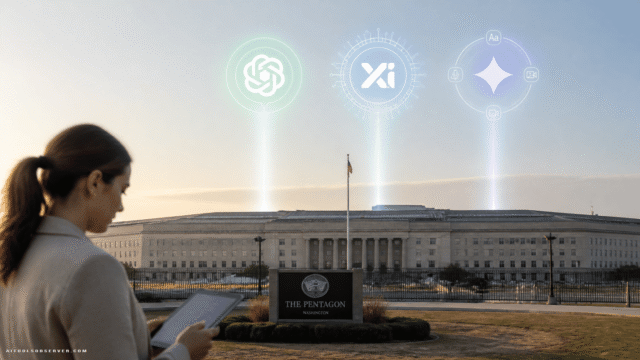
The result was fast uptake. More than 120 orders were placed against OneGov’s AI offerings. OpenAI has reported over one million users across federal, state, and local governments combined.
The Lock-In Problem Nobody Priced In
The promotional pricing was never the full cost. Government procurement expert Jessica Tillipman, associate dean for government procurement law studies at George Washington University, identified the real exposure in a March research paper: behavioral dependency.
Unlike traditional technical lock-in—where switching requires migrating data or rebuilding integrations—behavioral lock-in is subtler and arguably harder to reverse. Federal employees have built workflows, projects, and institutional habits around these tools. Tillipman put it directly: “Most people just stay with whatever it is because it’s just such a pain to migrate. Right now, if you told me I had to destroy my Claude account that has my projects in it, I would weep.”
Her paper framed the structural risk clearly: “When the promotional period ends, the cost of switching isn’t limited to the price of licensing an alternative platform. It’s the disruption of unwinding months of institutional dependency.”
There is also a downstream risk if access is reduced or removed. A Thomson Reuters study found that 27% of government professionals report using AI tools their organization had not sanctioned. Restrict access, and shadow AI use is likely to increase.
What Renewal Might Look Like
The renewal terms remain largely opaque. What is publicly visible:
- Google Gemini (via Carahsoft): customers must renew at a per-user price after the promotional period ends.
- OpenAI: subscriptions will not auto-renew; pricing is tiered by number of users.
- Anthropic: no renewal details published; the September 30 deadline is noted, and access expires at that point.
Greg Barbaccia, the outgoing federal chief information officer, offered a measured expectation in December: pricing will likely rise, but he anticipates it will be more transparent—grounded in actual usage data from the promotional period. “I don’t think it’s going to be $1,” he said. “I think it’ll be transparent at least… they could say, ‘this is your usage, this is a computed cost, this is the overhead it costs us to run.’”
That would be a meaningful improvement over how many government technology contracts have historically been structured. Whether vendors will actually deliver on that transparency remains to be seen.
The Leverage Window Is Closing
Tillipman’s core warning is about timing. The Federal Acquisition Regulation explicitly cautions against below-cost entry pricing, precisely because early discounts erode negotiating position once dependency sets in.
“The leverage agencies have today will not survive renewal,” she wrote. “This window is the moment to secure terms and build the capacity to walk away.”
That capacity—the credible ability to switch vendors or reduce scope—requires preparation that takes months. Agencies that have not already begun assessing their AI usage patterns, identifying alternatives, and modeling post-promotional costs are running short on time.
The Broader Procurement Shift
OneGov is also reshaping the role of value-added resellers (VARs), the intermediaries that have traditionally sat between software vendors and government agencies. Moving toward direct OEM agreements risks bypassing VARs, who provide implementation, integration, and cybersecurity services that agencies often cannot handle internally.
Stanton acknowledged the tension. After a January request for information, she affirmed that VARs remain essential for operational delivery—but signaled that the contractual relationships around them are evolving. “The contracting relationships may evolve, but the operational need for the types of services… continues to be there.”
The acquisition model itself is in transition. That creates uncertainty not just for agencies, but for the entire ecosystem of vendors, resellers, and integrators that supports federal IT.
The Practical Takeaway
For anyone tracking federal AI adoption or public sector procurement, the next 60 days are worth watching closely. The September 30 deadline will reveal whether the GSA has secured renewal terms that preserve government leverage—or whether the promotional period simply transferred negotiating power to three of the largest AI vendors in the market.
Tillipman’s framing is worth keeping in mind: “I jokingly call it, we’re about to enter our ‘this is why we can’t have nice things’ era.”
That is not a prediction of failure. It is a precise description of what happens when adoption outpaces procurement strategy—and a reminder that the real cost of any AI deal is rarely visible at the point of signing.



Comments (0) No comments yet
Want to join this discussion? Login or Register.
No comments yet. Be the first to share your thoughts!