


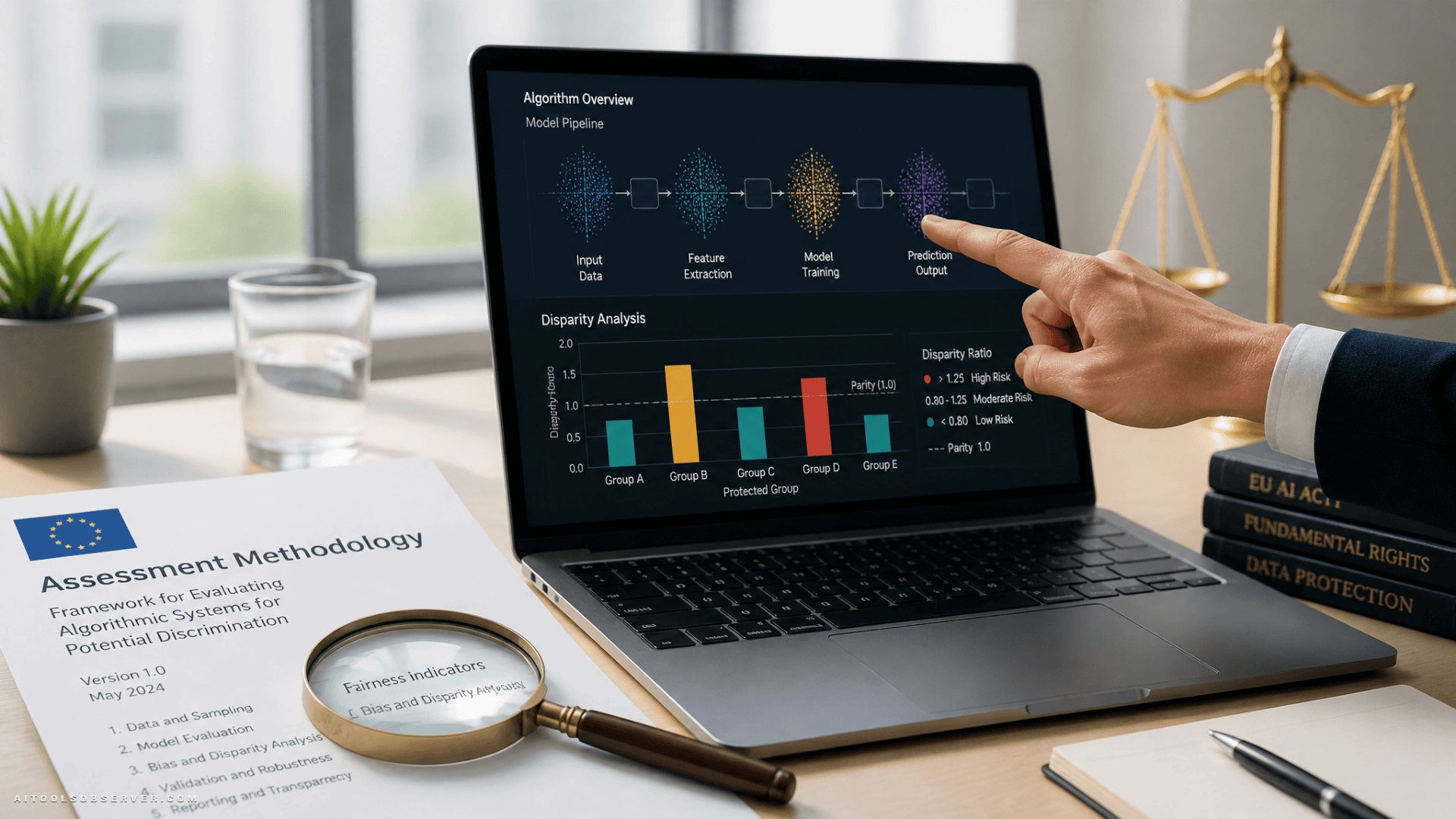
What Was Released
The Council of Europe published a practical assessment methodology designed specifically for equality bodies and practitioners who need to investigate AI-driven discrimination. It’s the output of a two-year project co-funded by the EU and carried out in collaboration with the European Commission.
The guide is available in six languages at launch: English, Dutch, French, Swedish, Finnish, and Portuguese.
What It Actually Does
Rather than offering abstract principles, the methodology walks practitioners through a structured process:
- Identify the algorithmic system involved in a complaint or case
- Collect the technical and contextual information needed to assess potential discrimination
- Examine the issue from both legal and technical angles simultaneously
- Map available remedies when discrimination is confirmed
That dual legal-technical lens matters. Algorithmic bias cases tend to collapse when legal experts can’t read the technical evidence—or when engineers don’t understand what “discrimination” means in a legal context. This framework appears designed to bridge exactly that gap.
Why This Is Worth Watching
Most AI governance efforts produce standards. This one produces a step-by-step method for practitioners who are already sitting across from a complainant and a black-box system.
The framing is deliberately practical. The Council of Europe describes it as translating “standards and legal and technical expertise into a practical, step-by-step approach”—which is a polite way of saying existing guidance wasn’t usable enough on the ground.
The Broader Signal
This release lands as EU AI policy moves from legislation to enforcement. Equality bodies are among the actors most likely to receive the first wave of real discrimination complaints under AI-adjacent frameworks. Giving them a structured methodology now—before caseloads spike—is the kind of infrastructure work that tends to matter more than it looks. For related context on Governance and Decision Quality, see how institutions are evaluating AI beyond automation.
The Takeaway
If you’re building AI tools that touch hiring, credit, housing, or any other high-stakes decision in Europe, this methodology is worth reading—not because regulators will hand it to you, but because equality bodies will likely use it to evaluate your systems. Knowing the framework they’re working from is a practical advantage.















Comments (0) No comments yet
Want to join this discussion? Login or Register.
No comments yet. Be the first to share your thoughts!