


What It Actually Does
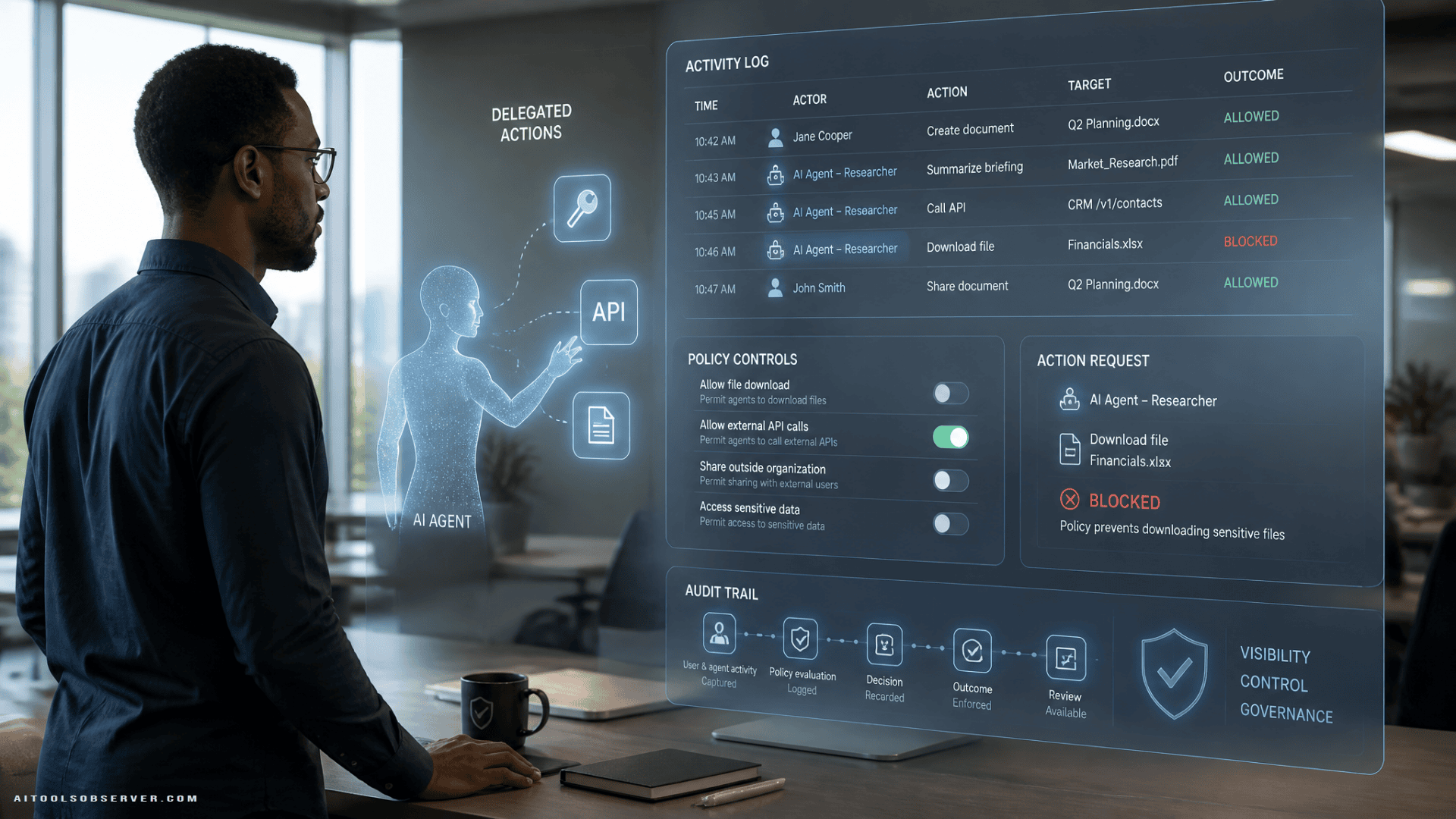
The platform extends F5’s existing AI Security Platform to cover two related problems: tracking which AI tools employees are using, and governing what AI agents do once employees hand work off to them.
F5 calls the second part “borrowed authority” — when an agent acts using a user’s permissions. That framing is useful. The risk isn’t just access; it’s delegated action that may never get a human second look.
The platform addresses this with a few concrete capabilities:
- Visibility by user and agent — logs who initiated an AI task, which agent ran it, what it attempted, and whether it was allowed or blocked
- Pre-execution inspection — checks tool calls across MCP servers and supported agent tools before they fire, then allows, blocks, or modifies based on identity, risk, and data sensitivity
- Policy enforcement across surfaces — browsers, CLIs, coding agents, MCP clients, and internal tools connecting to public model APIs
Controls sit in the network interaction path, not on endpoints. That means no separate installation per device or tool — and it’s designed to slot into existing SASE environments.
Why This Matters Now
F5’s own State of Application Strategy Report suggests 66 percent of organisations already allow AI to adjust policies and configurations automatically. That’s a lot of autonomous action happening without a clear audit trail.
The shift is real: AI tools have moved from generating text to executing workflows inside enterprise systems. An employee who grants a coding agent access to internal repositories, or lets an AI assistant interact with business software, has effectively expanded the attack surface in ways traditional DLP or web filtering wasn’t designed to catch.
Shadow AI — staff using unsanctioned tools — has been a concern for a while. Agent-driven shadow actions is the harder version of that problem.
How It Fits F5’s Broader Push
This isn’t F5’s first move into AI security. Earlier this year the company launched its AI Security Platform covering visibility, governance, testing, and runtime protection. It then added AI Gateway capabilities including an MCP Gateway for managing traffic and policy across AI applications and models.
Workforce AI Security is the latest layer, shifting focus toward employee behavior and delegated agent activity specifically. The positioning is a single policy layer across how enterprises use AI and how they build and deploy it — regardless of which models or vendors are in the mix.
Who It’s For
Enterprises dealing with a growing, messy mix of consumer AI tools, coding assistants, and agent-based workflows entering the workplace — especially security and IT teams who need audit trails and enforcement without ripping out existing infrastructure.
If your organisation is still treating AI governance as a content-filtering problem, Workforce AI Security is a signal that the category has moved on. The question worth asking isn’t just “what are employees typing into AI?” It’s “what is AI doing on their behalf, and does anyone know?”









Comments (0) No comments yet
Want to join this discussion? Login or Register.
No comments yet. Be the first to share your thoughts!