



The Restaurant Problem Is Mostly a Data Problem
Restaurants are notoriously hard to run profitably. Food costs, labor costs, and unpredictable demand create a margin environment where small inefficiencies compound fast.
The challenge isn’t that restaurant owners don’t know waste is happening. It’s that the data telling them where and how much is scattered across POS systems, scheduling tools, and inventory spreadsheets that nobody has time to reconcile at the end of a dinner rush.
Tools like UseMarty are positioned to address exactly this — pulling together labor, inventory, and POS data to surface operational issues that would otherwise stay buried. The value isn’t the data itself. It’s converting that data into something a manager can actually act on before the week’s margins are already gone.
What to Look For in a Restaurant AI Tool
If you’re evaluating AI tools for a restaurant operation, the useful ones tend to share a few traits:
- They connect to your existing POS and inventory systems rather than requiring a full workflow rebuild
- They flag issues in something close to real time, not in a weekly report nobody reads
- They translate findings into specific actions, not just dashboards full of numbers
An AI tool that functions like a quiet operations analyst — one that notices the Tuesday lunch prep is consistently over by 20% — is worth more than one that generates impressive-looking charts.
Retail Has Its Own Version of the Same Problem
Retail is a different business model, but the core tension is familiar: too much of the wrong inventory, not enough of the right kind, and labor scheduled against gut instinct rather than actual demand patterns.
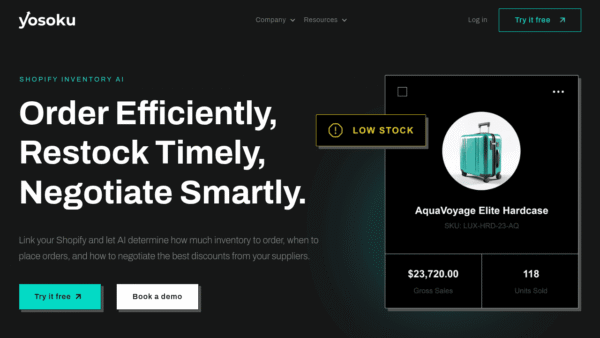
AI can help retailers get sharper on both fronts. Demand forecasting tools can reduce overstock on slow-moving items. Automated reorder triggers can prevent stockouts on high-velocity products. Neither of these is glamorous, but together they protect cash flow in ways that matter.
The thoughtful application matters here. Dropping an AI tool onto a retail operation without clean underlying data tends to produce confident-sounding wrong answers. Garbage in, garbage in with better formatting.
Service Businesses Are the Quietest Adopters
Service businesses — plumbers, cleaners, repair shops, salons — don’t get as much attention in the AI conversation, but they have real operational problems that AI handles well.
Scheduling optimization is the obvious one. Routing field technicians efficiently, reducing gaps between appointments, and matching job complexity to staff skill level are all problems that AI scheduling tools are reasonably good at solving. The savings aren’t dramatic per appointment, but they add up across a week.
Customer communication is another area where service businesses are quietly automating. AI-assisted follow-ups, appointment reminders, and review requests reduce the administrative load without requiring a dedicated person to manage it.
The Pattern Across All Three
Whether it’s a restaurant, a retailer, or a service business, the AI use cases that actually move the needle share a common structure:
- Messy operational data that nobody has time to analyze manually
- A specific inefficiency — waste, idle labor, dead inventory, scheduling gaps
- An AI tool that connects to existing systems and surfaces actionable signals
- A human who acts on those signals before the problem compounds
The businesses getting value from AI right now aren’t the ones chasing the most sophisticated tools. They’re the ones matching the right tool to a specific, well-understood problem.
The Practical Takeaway
Start with your most expensive recurring inefficiency. If food waste is eating your restaurant margins, look for tools that analyze POS and inventory data together. If retail overstock is tying up cash, explore demand forecasting. If your service schedule has too many gaps, test an AI scheduling tool for a month.
The goal isn’t to automate everything. It’s to stop losing money in the same place every week — and AI is increasingly good at telling you exactly where that place is.















Comments (0) No comments yet
Want to join this discussion? Login or Register.
No comments yet. Be the first to share your thoughts!