


The Program Structure Behind the Products
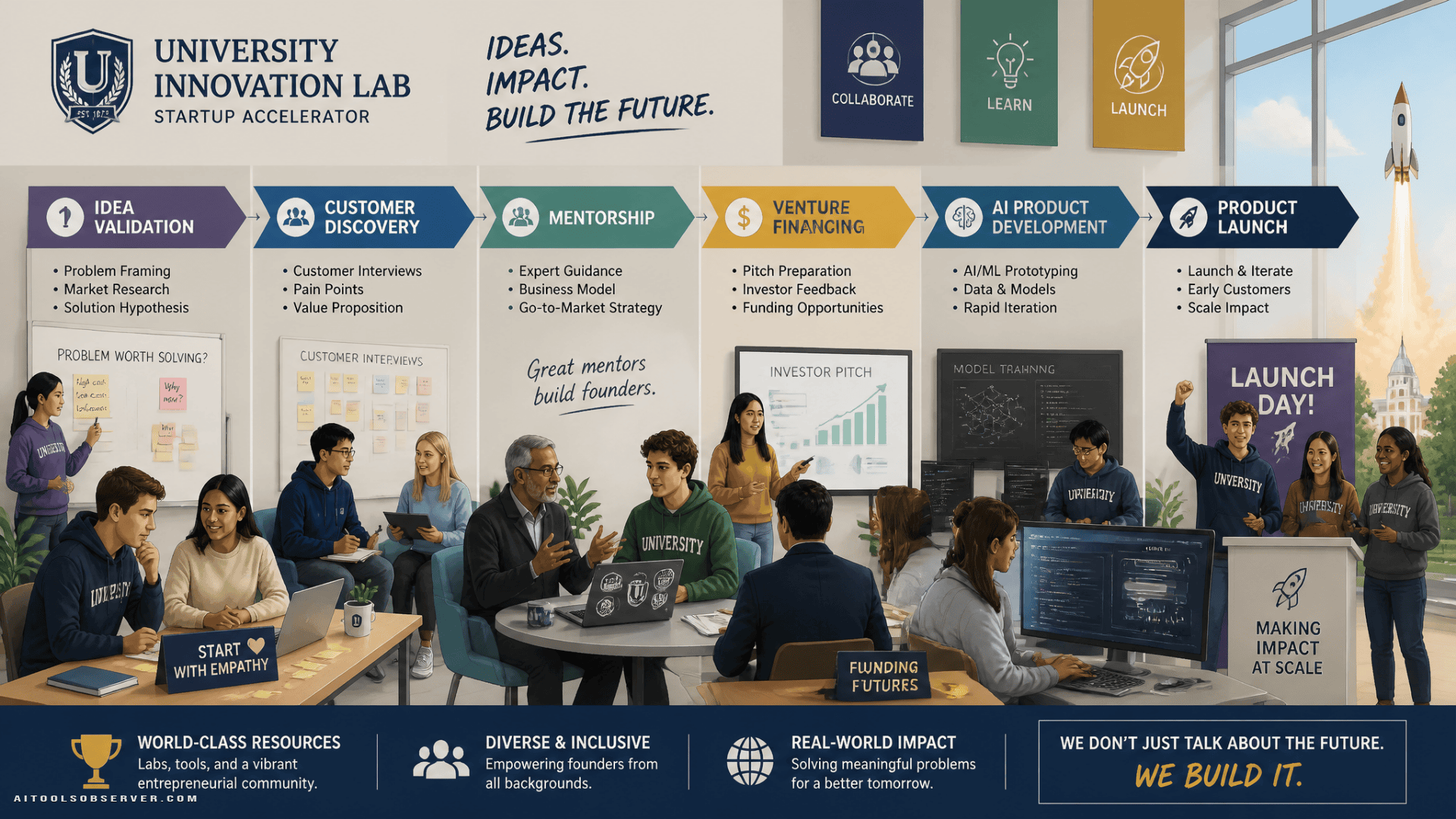
Sandbox is a year-long course designed for students across all disciplines, not just those with technical backgrounds. Teams form around software product ideas, then work through customer discovery, validation, sales, and venture financing—with mentorship from industry practitioners and access to a national network of Sandbox teams at other universities.
The program is led by Jack Manzella, entrepreneur in residence at UofL, who frames it as a full-cycle startup simulation. Students are not expected to arrive with a finished concept. The course is structured to help them find one, test it, and build toward it systematically.
Critically, students retain 100% of the equity in any company they form through the program. That single structural detail changes the incentive calculus considerably.
The Problem and the Product
Ethan Havertape, a junior in Computer Information Systems, and Nate Royal, a senior in Computer Science, built Due Gooder to address a specific and well-documented student pain point: managing coursework across multiple classes with inconsistent deadline formats and scattered syllabi.
The application ingests syllabi or learning management system data—such as Blackboard exports—and uses that information to help students plan study blocks, track deadlines, and navigate scheduling decisions. At the center of the product is Duey, an AI assistant trained on the student’s specific course context. Duey can answer questions about syllabus policies, suggest study schedules, and adapt its guidance based on what the student is actually enrolled in.
The system also generates flashcards and practice tests from uploaded notes and slides, identifies knowledge gaps, and adjusts study resources accordingly. This is not a generic study tool layered with AI branding—the AI is doing structural work inside the product.
AI Beyond the Product
Royal noted that the team uses AI extensively outside the application itself, across coding workflows, marketing operations, and internal business processes. This reflects a pattern increasingly common among lean startup teams: AI as an operational multiplier, not just a product feature.
Growth Through Sandbox
The numbers Havertape cited are concrete. The team entered Sandbox with a few hundred users and grew to tens of thousands of student signups across thousands of universities. They have since taken on investment and entered university research pilots focused on student engagement, persistence, and retention.
That trajectory—from a small user base to institutional research partnerships—suggests the product found genuine product-market fit, not just early adopter enthusiasm.
Origin and Function
Stephanie Sithu built BeforeMe out of a direct personal need. As an Etsy seller herself, she recognized that Pinterest represented an underutilized distribution channel for Etsy businesses—but that the manual effort required to create and schedule pins consistently was a genuine barrier.
BeforeMe automates that workflow. It pulls from a seller’s Etsy listings, generates Pinterest pin copy using Google’s Gemini model, and schedules those pins for publication. The scheduling logic is not static: Sithu built a heuristic AI layer that adapts timing and targeting based on which pins are gaining traction and what audience intent they appear to serve—shopping, lifestyle, gift-giving, or problem-solving.
Technical Depth and Platform Integration
Sithu worked directly with both the Pinterest and Etsy API teams during development. That level of platform engagement is uncommon for a student project and reflects the kind of technical seriousness that separates a functional SaaS tool from a prototype.
The dual AI architecture—Gemini for copy generation, a custom heuristic layer for scheduling optimization—shows deliberate design thinking. Each AI component addresses a distinct problem rather than applying a single model to everything.
What Sandbox Contributed
Sithu was specific about what the program gave her. The customer discovery framework helped her stop building on assumptions and start identifying the concrete problems Etsy sellers actually face with Pinterest marketing. That shift in approach directly shaped which features she prioritized.
She also described the pitching process as formative. Iterating her pitch through the program’s structured feedback cycles produced something that felt authentic rather than formulaic—a distinction that matters when communicating with investors or early customers.
What This Model Reveals About AI Tool Development in Academic Settings
Both projects share a structural pattern worth noting. The AI is not decorative. In Due Gooder, it handles context-aware scheduling and adaptive study generation. In BeforeMe, it drives both content creation and distribution logic. The teams built around specific, validated user problems and used AI to solve the parts of those problems that would otherwise require significant manual effort or human expertise.
The Sandbox program provided the scaffolding that made this possible: customer discovery methodology, mentorship, national peer networks, and a clear path toward commercialization. The students provided domain insight, technical execution, and the willingness to iterate under pressure.
The Practical Takeaway
For anyone evaluating how AI tools actually get built and validated, the UofL Sandbox model offers a useful reference point. The tools that reach real users at scale tend to emerge from a combination of structured problem discovery, tight AI integration with a specific workflow, and iterative refinement under external feedback.
The equity retention structure also matters. Students who own what they build have a fundamentally different relationship to the work than those completing an assignment. That ownership dynamic appears to be a meaningful driver of the quality and ambition visible in both Due Gooder and BeforeMe.
If you are tracking where the next generation of focused, workflow-specific AI tools is coming from, university programs with this structure are worth watching closely.













Comments (0) No comments yet
Want to join this discussion? Login or Register.
No comments yet. Be the first to share your thoughts!