


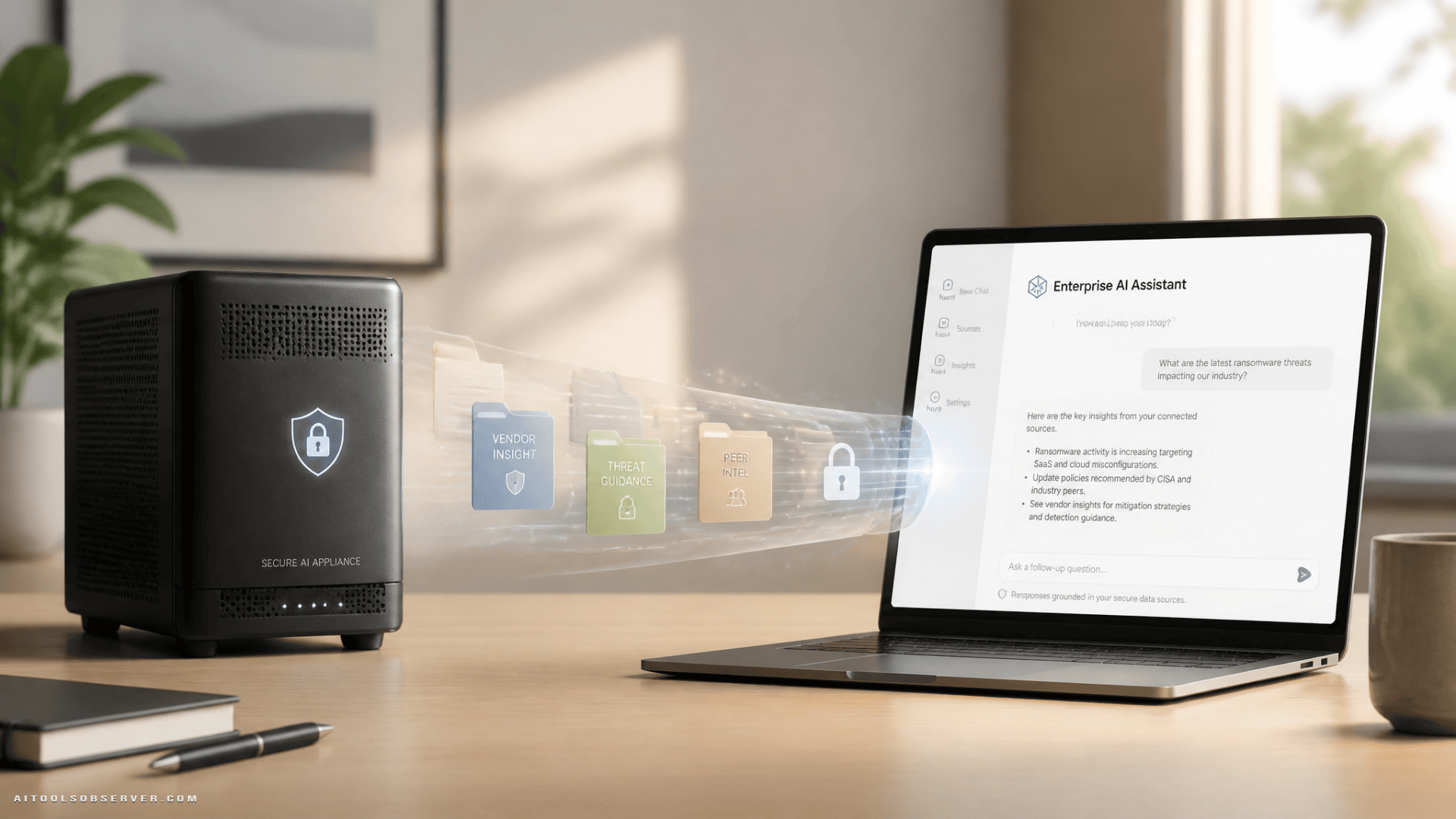
What It Actually Does
The IANS MCP Server gives security teams in-workflow access to a private knowledge base built over two decades. That includes:
- Thousands of documented conversations between client security teams and IANS’ 170+ active practitioner Faculty
- Vendor-agnostic research and benchmarking data
- Peer community discussions and real-world decision outcomes
- Continuously updated cybersecurity news and threat guidance
The key distinction isn’t just more data — it’s different data. Public AI tools draw from the open web, which skews toward marketing copy, press releases, and whatever ranks well. IANS’ corpus skews toward what security teams actually did, what tradeoffs they faced, and what happened next.
Why MCP, Why Now
The Model Context Protocol has emerged as a practical standard for connecting AI assistants to external data sources without rebuilding workflows from scratch. For enterprise security teams already using Claude, this means IANS intelligence shows up where the work is happening — no tab-switching, no separate portal login.
Early usage patterns suggest teams are reaching for it in high-stakes, fast-moving situations: vendor evaluations, board presentation prep, AI governance programs, and benchmarking against peer organizations. These are exactly the scenarios where a generic answer is worse than no answer.
The Peer Intelligence Angle
One of the more interesting aspects of the IANS MCP is its emphasis on what peers actually did rather than what best practices suggest you should do. That framing matters in cybersecurity, where formal standards often lag real-world threats by months or years.
Topics seeing especially strong early demand — securing AI agents and MCP deployments, phishing-resistant authentication, cyber risk quantification — are all areas where the gap between published guidance and current practice is widest. That’s not a coincidence.
Who This Is For
This is squarely aimed at enterprise security teams, particularly CISOs and their direct reports who are already using Claude or planning to integrate AI into security workflows. It’s less useful for someone doing casual research and more useful for someone who needs a defensible, peer-tested answer before a board meeting in two hours.
IANS positions the MCP as a complement to direct Faculty engagement, not a replacement. The intelligence layer accelerates the routine; the human experts still handle the nuanced.
The Practical Takeaway
If your security team is using Claude and currently relying on it to answer questions about vendor selection, threat response, or AI governance — the quality of those answers is only as good as what Claude can access. The IANS MCP is a direct attempt to close that gap with data that’s been stress-tested by practitioners, not scraped from the public web.
Worth watching as more AI platforms come online in the second half of 2026. The real test will be whether the intelligence stays current fast enough to match the threat landscape it’s meant to illuminate.












Comments (0) No comments yet
Want to join this discussion? Login or Register.
No comments yet. Be the first to share your thoughts!