



What’s Actually Happening

METI’s unannounced package would reportedly be offered to around 15 companies across entertainment sectors. Nine of those are anime and manga publishers, with names like Shueisha, Kodansha, Crunchyroll, Square Enix, and Bandai Namco reportedly on the shortlist.
The remaining six slots cover music, gaming, and live-action companies — though which ones remain unclear. Square Enix and Bandai Namco straddle both anime and gaming, so they may end up double-dipping, which is either efficient or very on-brand depending on how you look at it.
As of now, METI hasn’t officially confirmed anything. But given the ministry’s busy 2026 — including a June announcement adding sixteen projects to its Generative AI Accelerator Challenge program to address labor shortages — this move would fit the pattern neatly.
The Piracy Problem Driving This

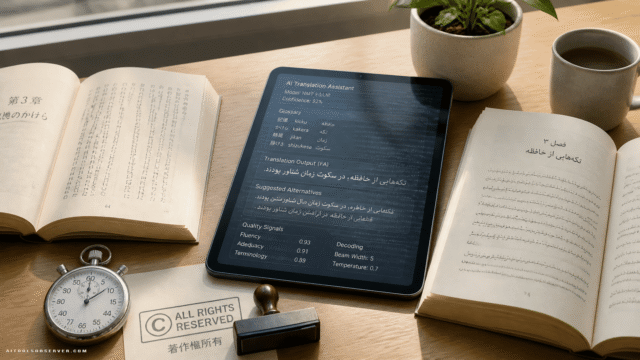
Here’s the uncomfortable truth the subsidy is quietly trying to fix: unofficial fan translations are faster than official ones. Sometimes by weeks. Sometimes by months.
When a new manga chapter drops in Japan, fan translators can have it in English, Spanish, or Portuguese within hours. Official publishers, working through traditional localization pipelines, simply can’t compete with that speed. The result is that pirated versions build the audience while official releases arrive late to their own party.
Generative AI changes the math. If publishers can compress translation timelines from weeks to days — or days to hours — the speed advantage that piracy relies on starts to erode.
Why This Is a Bigger Signal Than It Looks
Government-backed AI adoption programs aren’t new. But a $70M subsidy specifically targeting creative content localization is a notable escalation.
It signals that Japan is treating AI translation not as a cost-cutting experiment but as a strategic infrastructure investment for its cultural export economy. Anime and manga are genuinely massive global industries. Gaming is even larger. If AI can close the localization gap at scale, the downstream effects on distribution, licensing, and international revenue could be significant.
It also puts pressure on the broader localization industry to adapt. Human translators, localization studios, and subtitle vendors are all watching this closely — and they should be.
What It Means for AI Tool Watchers
For anyone tracking the AI tools ecosystem, this is a clear signal of where enterprise-scale generative AI adoption is heading: not just internal productivity, but external-facing content pipelines where speed and volume are competitive advantages.
Tools built for high-throughput, culturally nuanced translation — think beyond generic LLM wrappers — are going to find serious demand here. The gap between “technically translated” and “actually localized” is still real, and the companies that solve it at speed will be the ones worth watching.
The Catch Nobody’s Saying Out Loud
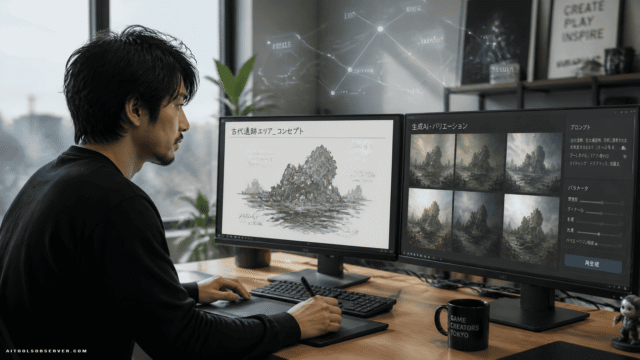
AI translation is fast. It is not always good. Manga and anime carry enormous cultural weight — wordplay, honorifics, regional dialects, visual-verbal interplay. Getting it technically correct and culturally resonant are two very different problems.
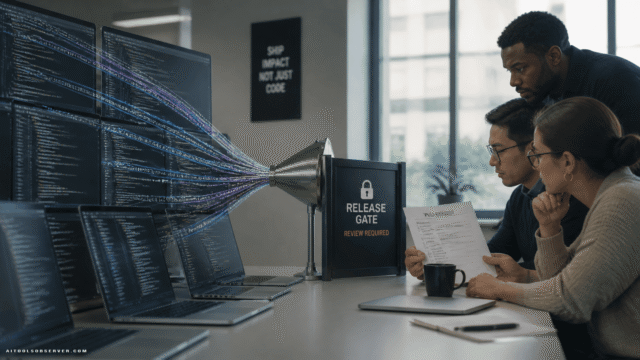
The subsidy encourages adoption. It doesn’t guarantee quality. Publishers will need to figure out where human review fits into an AI-accelerated pipeline, or risk trading one problem (slowness) for another (localization that misses the point entirely).
Japan is betting $70 million that AI can outrun piracy. The smarter bet is on the publishers who use that funding to build pipelines where speed and quality aren’t a tradeoff — they’re the same thing.














Comments (0) No comments yet
Want to join this discussion? Login or Register.
No comments yet. Be the first to share your thoughts!