



What’s Actually Being Released
MPLAB XC Pro Compilers — These are the professional-tier compilers for Microchip’s 8-bit, 16-bit, and 32-bit MCU and MPU portfolio. The Pro tier delivers meaningful improvements over the free base compilers: smaller code size, lower memory usage, faster execution, and architecture-optimized output. For developers working on resource-constrained hardware, those gains aren’t cosmetic — they can be the difference between a design that fits and one that doesn’t.
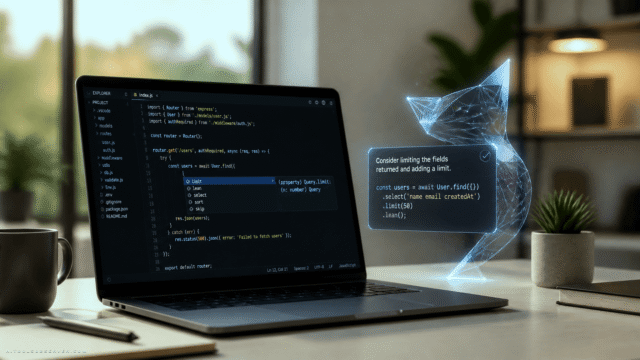
MPLAB Machine Learning Development Suite — This includes the Model Builder plug-in, which integrates directly into both MPLAB X IDE and Microsoft Visual Studio Code. It generates optimized AI and IoT sensor recognition code for embedded machine learning applications on edge devices.
Why This Matters for Embedded AI Development
TinyML and edge AI have been growing fast, but the toolchain cost has been a quiet friction point — especially for independent developers, small teams, and students working on IoT prototypes or sensor-based applications.
By removing the license cost on the Pro Compilers, Microchip is lowering the floor for anyone building on its silicon. You no longer need to choose between optimized output and budget.
The Machine Learning Development Suite addition is the more forward-looking piece. Generating optimized inference code for resource-constrained devices is genuinely hard. Having a tool that plugs into VS Code and handles that output automatically removes a significant step from the embedded ML workflow.
Who Benefits Most
- Hobbyists and students who previously couldn’t justify the Pro license cost
- Startups and small teams prototyping IoT or edge AI products on Microchip MCUs
- Professional developers who were using workarounds or base-tier compilers to stay within budget
- Educators building embedded systems or ML curricula around Microchip hardware
The Practical Tradeoff to Understand
Free access to Pro Compilers doesn’t change the underlying hardware constraints. You’re still working with resource-limited devices. What it does change is how efficiently your code runs on that hardware — and that efficiency gap between base and Pro tier has historically been significant enough that many developers paid for it.
The ML Development Suite is only as useful as the models you feed it. It generates optimized code, but the quality of your training data and model design still determines real-world performance on the edge.
The Bigger Picture
Microchip appears to be making a strategic bet: reduce friction in the development toolchain, and more developers build on Microchip silicon. It’s a model that semiconductor companies have used before — make the tools free, monetize the hardware.
For developers, the calculus is straightforward. If you’re already working with Microchip MCUs or MPUs, or evaluating platforms for an embedded AI or IoT project, the cost barrier for professional-grade tooling just disappeared.
Download both tools directly from Microchip’s site and test them against your current workflow. The optimization improvements in the Pro Compilers are worth benchmarking on your specific target device — the results will tell you more than any spec sheet.






Comments (0) No comments yet
Want to join this discussion? Login or Register.
No comments yet. Be the first to share your thoughts!