



What the Partnership Actually Does
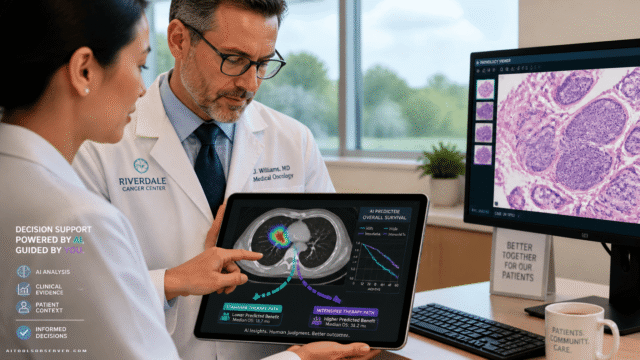
Telefónica Tech, the digital business unit of Telefónica, is deploying Harrison.ai’s CE-certified AI system across Spain’s regional health services. The tool analyses chest X-rays and can automatically flag up to 124 clinical findings from a single scan — including pulmonary nodules, which are a key marker in lung cancer screening.
The system is not designed to replace radiologists. It functions as a rapid second opinion, surfacing findings that clinicians can then review, prioritise, and act on. Medical staff retain full authority over diagnosis and treatment decisions.
Why CE IIb Certification Matters Here
The Harrison.ai algorithm holds CE IIb medical device certification — the highest classification for diagnostic support tools under EU medical device regulation. That designation isn’t cosmetic. It signals the tool has met strict requirements around safety, efficacy, and quality for use in cases involving potentially life-threatening conditions.
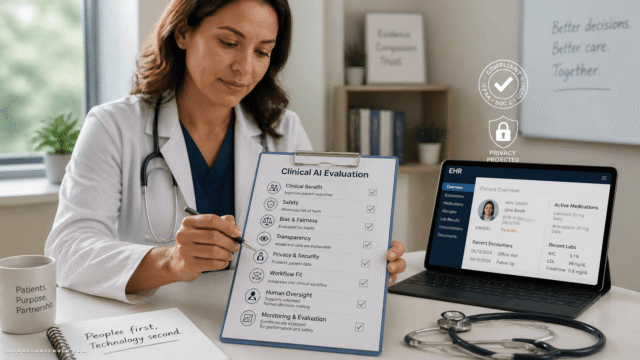
For healthcare procurement teams and clinical leads evaluating AI tools, that certification level is a meaningful threshold. It distinguishes validated clinical software from general-purpose AI products that happen to process medical data.
How It Was Built
According to Harrison.ai, the algorithm was trained on data from more than 780,000 chest X-ray studies. Each study was independently labelled by at least three qualified radiologists during development — a methodology designed to reduce labelling bias and improve reliability across diverse patient presentations.
That training scale matters when the tool is being deployed across varied regional health networks with different patient demographics and imaging equipment.
Integration Into Spain’s Health Infrastructure
Telefónica’s data and AI specialists are handling the technical integration, aligning the system with the requirements of Spain’s regional health networks. The company also provides ongoing managed maintenance and support — which means healthcare providers aren’t left to manage a complex AI deployment on their own.
Clinicians in A&E departments and primary care settings can access AI-generated insights through a standard web browser, reducing friction at the point of triage. The software also integrates into radiologists’ existing patient lists, with customisable urgency categorisation.
That last detail is worth noting. Workflow integration is often where AI tools fail in clinical settings — not because the algorithm underperforms, but because adoption breaks down when the tool sits outside existing systems. That dynamic is central to AI in Healthcare deployments more broadly.
The Practical Impact on Radiology Workflows
The deployment targets a few specific workflow problems:
- Triage speed: Urgent cases can be flagged faster, reducing delays before initial clinical decisions are made.
- Referral filtering: The AI acts as an initial screen, potentially limiting unnecessary specialist referrals and freeing up radiology capacity.
- Finding prioritisation: Radiologists can customise how cases are sorted by urgency, rather than working through a flat queue.
Dr Aengus Tran, CEO and Co-Founder of Harrison.ai, framed the goal directly: helping clinicians detect diseases like lung cancer at an earlier stage, prioritise the most urgent cases, and ensure no findings go unnoticed, including incidental cancers.
What This Signals for AI in Healthcare
This rollout reflects a broader shift in how AI radiology tools are being adopted. The emphasis is on integration over replacement — embedding validated algorithms into the infrastructure clinicians already use, rather than asking them to adopt entirely new systems.
Telefónica’s existing reach across Spain’s health services gives Harrison.ai distribution that most AI healthcare startups can’t access independently. That combination — a clinically validated algorithm plus an established infrastructure partner — is increasingly the model for scaling medical AI in regulated markets.
As these systems expand, questions of oversight and clinical ownership become more important, which is why AI Accountability in Healthcare Governance remains closely tied to adoption.
The Takeaway
If you’re tracking AI adoption in healthcare, this partnership is a useful reference point. CE IIb certification, large-scale training data, workflow integration, and a clear division between AI assistance and clinical authority — these are the markers that distinguish deployable clinical AI from proof-of-concept tools. Spain’s regional health services will be a real-world test of whether that combination holds up at scale.
For broader context, this sits within the wider landscape of Medical Imaging Analysis.



Comments (0) No comments yet
Want to join this discussion? Login or Register.
No comments yet. Be the first to share your thoughts!