


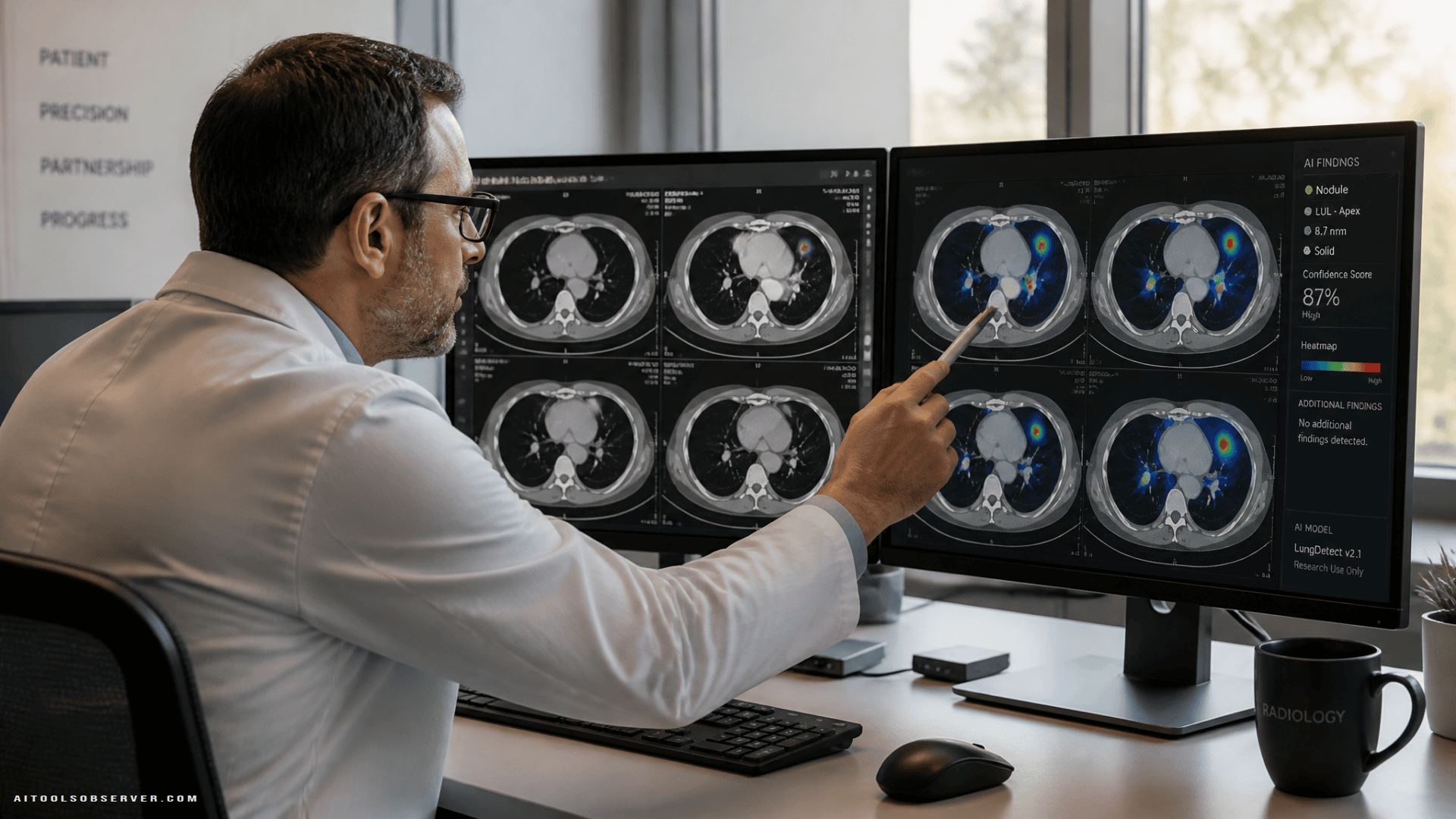
Radiology Is AI’s Biggest Proving Ground in Medicine
Of the roughly 1,400 AI-enabled medical devices cleared by the FDA as of early 2026, about three-quarters are for radiology. No other medical specialty comes close.
These tools aren’t just administrative helpers. Some AI systems can identify abnormalities invisible to the human eye. Others detect more polyps in colonoscopies than conventional methods. A 2026 Swedish study found that AI-assisted mammography screenings reduced missed cancers and lowered the number of diagnoses appearing between scheduled screenings.
The accuracy case for AI is real. Human error rates in diagnostic imaging are estimated at 3 to 5 percent — translating to roughly 40 million errors worldwide each year. AI doesn’t get tired. It doesn’t get distracted. It can compare every pixel of an image against every scan it has ever processed.
But that’s not the whole picture.
Why “AI Is More Accurate” Doesn’t Mean “Replace the Radiologist”
Here’s a concrete example from Stanford radiologist Curtis Langlotz: imagine an AI tool that detects 95 percent of lung nodules on a chest CT, while radiologists detect 90 percent. On the surface, AI wins.
Except radiologists catch a meaningful portion of that remaining 5 percent — cases the AI missed entirely. That’s because human and machine intelligence are genuinely different kinds of intelligence.
AI processes patterns at scale. Radiologists interpret images in clinical context — factoring in patient history, disease presentation, and the kind of flexible reasoning that neural networks don’t replicate.
The real question isn’t who performs better on average. It’s how you combine both to reduce total errors.
The Collaboration Problem Nobody Talks About Enough
Working alongside AI requires a mental shift that’s harder than it sounds.
Radiologists have spent decades overriding rule-based computer alerts — drug interaction warnings, threshold flags — and they do so about half the time, often correctly. But modern AI imaging tools are neural networks, not rule-based systems. They’re “black boxes.” They don’t explain their reasoning.
That creates a genuinely difficult judgment call: when the AI flags something and you’re not sure why, do you trust it or override it?
Two failure modes emerge from this dynamic:
- Automation bias — accepting the AI’s output without applying your own clinical judgment, leading to false positives and unnecessary procedures
- Automation complacency — over time, trusting the AI’s high accuracy rate so much that you stop catching its rare but serious errors, like a missed brain bleed on a CT scan
One study found that even experienced radiologists showed significant drops in mammography interpretation accuracy when influenced by incorrect AI predictions. The AI didn’t just fail — it pulled the human’s judgment in the wrong direction.
Training Is the Gap Nobody Has Closed Yet
More than a quarter of physicians responding to a 2026 American Medical Association survey said they had received no training on AI tools. Only 11 percent said they had received substantial training.
That’s a serious problem when the tools are already in clinical use.
Effective collaboration requires radiologists to understand not just that an AI tool is 95 percent accurate overall, but when it fails. For example: a specific tool might be wrong on 30 percent of scans if the patient moved during imaging. Without that knowledge, a radiologist can’t apply appropriate skepticism at the right moment.
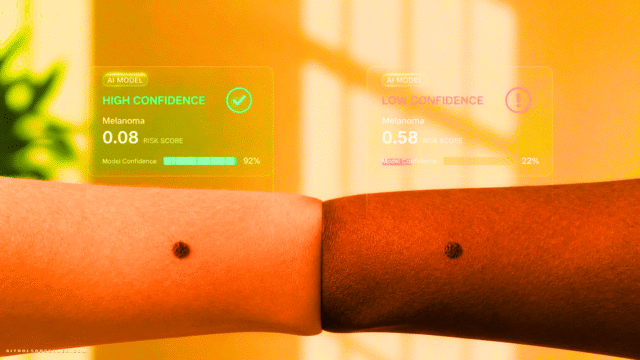
Nina Kottler, chief medical AI officer at Mosaic Clinical Technologies, advocates for AI systems to report confidence estimates alongside their outputs — not just yes/no answers. She also recommends monitoring how often individual radiologists agree or disagree with AI results over time, and intervening when the pattern drifts too far in either direction.
What the 2026 Landscape Actually Looks Like
Here’s a practical summary of where things stand:
- AI adoption in radiology is accelerating, not plateauing — the FDA device pipeline reflects sustained investment and regulatory momentum
- Diagnostic accuracy is improving in specific, measurable use cases like mammography screening and polyp detection
- Workflow gains are real — AI tools that triage urgent scans and draft reports are already reducing bottlenecks
- Human oversight remains essential — AI makes different kinds of errors than humans, and catching those errors requires trained, engaged radiologists
- The collaboration model is still being figured out — as Stanford’s Langlotz puts it, “we are just at the very beginning of understanding how to optimize the human/machine system”
The Takeaway That Actually Matters
The replacement framing was always the wrong lens. The more useful question is: which radiologists will thrive as AI becomes standard infrastructure, and which won’t?
Langlotz’s answer has been consistent for nearly a decade: radiologists who use AI will replace radiologists who don’t.
That’s not a prediction about job loss. It’s a statement about competence. The radiologists who understand how these tools work, know when to trust them, and know when to push back will deliver better outcomes than those who ignore AI or defer to it blindly.
For anyone tracking AI adoption across professional fields — not just healthcare — radiology is the clearest real-world test case available. The data from 2026 doesn’t show replacement. It shows a messy, high-stakes, genuinely important collaboration still being learned in real time.











Comments (0) No comments yet
Want to join this discussion? Login or Register.
No comments yet. Be the first to share your thoughts!