


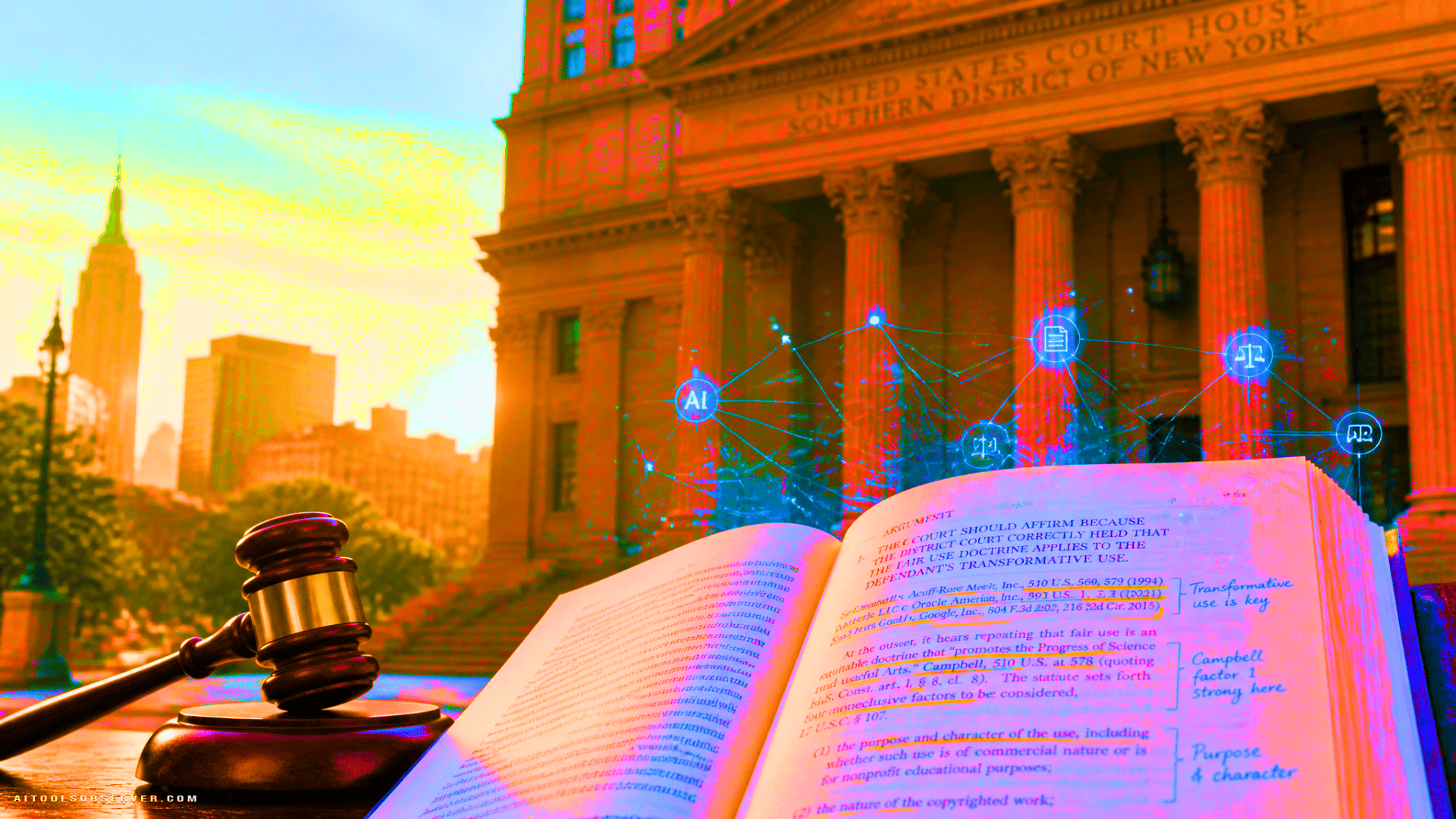
Why this matters in New York courts
New York’s court system has moved toward a statewide baseline for AI use through court policy and rules described in the source material. The direction is clear: AI use is not inherently forbidden, but responsibility stays with the human user.
That means judges remain accountable for opinions, orders, and decisions. Litigators remain accountable for filings, citations, representations to the court, billing practices, and protection of client information. AI does not dilute those duties. If anything, it makes them easier to violate at scale.
This is why generative AI in law is less about novelty and more about controls.
Where generative AI actually helps legal work
Used carefully, generative AI is useful for narrow, well-defined tasks. It performs best when the lawyer or judge already knows the objective, limits the assignment, and verifies the result against real sources.
Legal research support
AI can help:
- generate search terms and Boolean queries
- identify possible issues, claims, defenses, and counterarguments
- suggest leading cases to verify
- compare authorities once the user has located them
- organize research notes by issue, rule, or jurisdiction
- summarize procedural posture for review, subject to checking
This makes AI a useful research assistant. It does not make it a substitute for reading the cases, Shepardizing or KeyCiting, or confirming controlling New York authority.
A good mental model is this: AI can point you toward the law. It is not the law.
Legal writing support
AI can also help with drafting and editing tasks such as:
- outlining an argument in IRAC form
- turning rough notes into a first-pass structure
- tightening sentences and removing repetition
- adjusting tone for clients, courts, or internal memos
- improving readability and organization
- helping format citations and headings, subject to review
This is especially helpful for repetitive writing tasks. It can also help newer lawyers see clearer organization patterns and develop editing instincts faster.
But legal writing is not just formatting and fluency. It depends on judgment, fact sensitivity, authority selection, and analytical precision. Those are exactly the areas where AI can sound polished while being wrong.
The biggest risk: polished nonsense
The real danger is not awkward AI prose. It is convincing prose that hides weak reasoning, invented authority, or jurisdictional mistakes.
A filing can look clean, confident, and complete while containing defects that would never survive careful human review. That is why legal AI use needs a stricter review standard than ordinary drafting assistance.
Common failure points include:
- fabricated cases or quotations
- incorrect citations to real cases
- wrong court, year, or pinpoint citation
- overgeneralized statements of law
- superficial treatment of facts and procedural posture
- conclusions that do not engage counterarguments
- use of non-New York standards where New York law controls
- broken internal references, party names, or dates
In legal work, one invented case is not a minor typo. It can trigger sanctions, damage credibility, and distort the court’s decision-making process.
How to spot AI-generated legal text before it becomes a problem
You cannot reliably detect AI use from style alone. Still, there are patterns worth treating as prompts for closer review.
Surface-level red flags
Some AI-assisted writing tends to show:
- overuse of em dashes
- formulaic contrast phrases
- cliché transitions
- unusually even sentence length
- prose that feels too smooth without saying much
These are not proof of AI use. Human writers do these things too. But they can signal the need for deeper checking.
Substantive red flags
More important than style are signs that the content was not meaningfully verified:
- citations that do not support the proposition offered
- references to authority with no discussion of facts
- generic descriptions of holdings
- missing seminal or controlling cases
- federal or out-of-state standards presented as if they govern New York issues
- inconsistent party names, pronouns, dates, or record references
- arguments that summarize but never analyze
If a draft looks polished but avoids friction, nuance, and factual application, it needs scrutiny.
Best practices for judges and litigators using generative AI
The safest way to use AI in New York legal practice is to limit its role and tighten human review.
Treat AI output as draft text, not finished work
This is the core rule.
AI can produce a useful first draft, a cleaner structure, or a list of issues to investigate. It should not be treated as final authority, final reasoning, or final citation work. The human user must own the substance.
That means editing for:
- legal accuracy
- factual accuracy
- jurisdictional fit
- citation integrity
- consistency with the record
- consistency with the author’s professional voice
If the output does not sound like something the author would ordinarily file or publish, it is not ready.
Use AI for bounded tasks, not open-ended legal conclusions
The more open-ended the prompt, the higher the risk of hallucinations and overconfident mistakes.
Safer tasks include:
Generate search terms for this issue under New York law.Organize these authorities by issue.Compare the standards in these three verified cases.Rewrite this paragraph for clarity without changing substance.
Riskier tasks include:
Write my motion.Tell me the controlling law.Give me New York cases that prove this point.Draft an opinion resolving the dispute.
The difference is control. Bounded tasks keep the lawyer or judge in charge of the legal reasoning.
Protect confidentiality before prompting
Public or consumer AI tools may create confidentiality risks depending on their settings, terms, and data handling practices. That matters for client facts, litigation strategy, and privileged material.
A cautious workflow is to avoid entering sensitive information unless the tool and environment are approved for that use. If confidential facts are necessary for the task, minimize, anonymize, or abstract them where possible.
Before using any AI tool on client work, ask:
- what data is being entered?
- where is it going?
- who can access it?
- is it retained?
- can it be used to train future models?
- does this use align with professional confidentiality duties?
Convenience is not a defense for careless disclosure.
Don’t let AI distort billing judgment
If AI reduces drafting time, billing should reflect the time actually and reasonably spent, including review and revision. The fact that a task would have taken longer without AI does not automatically justify billing as if it did.
This is one of the easiest places for AI adoption to collide with ethics. Faster work is not the issue. Unreasonable charging is.
Law firms should update internal billing guidance so attorneys understand:
- what AI-assisted time can be billed
- how review time should be recorded
- when flat or value-based pricing may be more appropriate
- how disclosure expectations are handled
Human judgment cannot be delegated
For judges, the line is especially important. Research help and drafting assistance are one thing. Delegating decision-making is another.
AI can help organize issues or improve writing quality. It cannot replace independent evaluation of the record, legal standards, witness credibility, procedural fairness, or discretionary judgment.
For litigators, the same principle applies differently. AI can assist with preparation. It cannot substitute for the lawyer’s duties of competence, candor, and nonfrivolous advocacy.
Build an internal AI review workflow
Most legal AI mistakes are process failures, not just tool failures. A repeatable review workflow reduces risk.
A practical review sequence looks like this:
- Define the task narrowly.
- Avoid unnecessary confidential facts.
- Use AI for structure, comparison, or language support.
- Pull and read every cited authority independently.
- Check jurisdiction, posture, holdings, and quotations.
- Review against the record and controlling New York law.
- Edit for reasoning, tone, and consistency.
- Finalize only after a human takes full responsibility for the result.
This is slower than one-click drafting. It is also far safer.
AI hallucinations in legal research: what they look like in practice
Legal hallucinations do not always look bizarre. Often they look close enough to pass a rushed review.
Examples include:
- a real case name paired with a fake pinpoint citation
- a quotation that sounds judicial but does not appear in the opinion
- a valid legal standard borrowed from another jurisdiction
- a real doctrine applied to the wrong procedural context
- a summary that omits the precise fact pattern that limits the case’s value
That is why AI errors are dangerous in law. They often fail in subtle ways.
A junior lawyer under deadline pressure may miss them. A judge reviewing a heavy motion calendar may miss them. A partner who trusts polished prose may miss them. The solution is not panic. It is disciplined verification.
Court compliance and policy-minded use
The New York approach described in the source material points toward a statewide minimum standard rather than an outright ban. That is a practical stance.
Courts cannot avoid AI issues because litigants, counsel, chambers staff, and self-represented parties will use these tools whether a court likes it or not. The more realistic goal is to reduce misuse, set expectations, and align AI use with existing obligations.
From a compliance perspective, that means legal professionals should assume:
- they are responsible for anything submitted or issued under their name
- disclosure or certification rules may vary by court or context
- sanctions are possible for fabricated authority or careless review
- process evidence may matter if AI use later becomes disputed
If your workflow would be hard to defend after the fact, it probably needs improvement before the filing.
How legal teams can use AI responsibly right now
For firms, chambers, and legal departments, responsible AI use usually starts with internal policy rather than tool selection.
A useful policy should cover:
- approved and prohibited use cases
- confidentiality and data-entry rules
- verification requirements for citations and legal standards
- billing expectations
- supervisor review procedures
- documentation of prompts or draft history where appropriate
- training for new lawyers on editing AI-assisted work
This is not just risk management. It is quality control.
The strongest teams will not be the ones that use AI the most. They will be the ones that know exactly where AI helps, where it fails, and where a human must slow the process down.
Comparing AI tools for legal writing and research
Not every AI tool belongs in the same bucket.
General-purpose models
These are flexible and fast, but they may present higher risk for legal work if they are not grounded in verified legal databases or controlled environments. They can be useful for:
- rewriting
- outlining
- issue spotting
- summarizing user-provided material
They are less safe when asked to generate legal authority from scratch.
Legal research platforms with AI layers
Legal research platforms with AI layers may be better positioned for authority discovery and workflow integration because they sit closer to legal source material. Even then, the same rule applies: verify everything.
The key comparison factor is not whether a tool markets itself as legal AI. It is whether your workflow still forces real source checking, jurisdictional discipline, and human editorial control.
The editing standard that matters most
As AI becomes more common, legal writing quality may hinge less on who can produce a first draft and more on who can edit one intelligently.
Strong legal editors of AI-assisted work do a few things consistently:
- test every proposition against authority
- strengthen factual application
- remove vague generalities
- restore the author’s voice and discipline
- add the analytical friction AI tends to smooth over
- catch the subtle inconsistencies that expose weak process
That is where professional value increasingly lives.
A practical checklist before filing or issuing AI-assisted work
Use this as a final gate:
- Have all cases, statutes, rules, and quotations been verified?
- Does the draft rely on controlling New York authority where required?
- Are procedural posture and facts accurately described?
- Does the reasoning actually apply law to this record?
- Are client confidences protected?
- Is the document internally consistent?
- Does the billing reflect actual reasonable time spent?
- Would you be comfortable defending the workflow behind the document?
If the answer to any of these is no, the document is not ready.
The smart takeaway
For New York judges and litigators, generative AI is most useful when it is treated like a fast but unreliable junior helper: good for research support, drafting assistance, and editing prompts; bad as a final source of truth.
Use it to accelerate the boring parts. Do not let it make the important decisions. In legal writing and research, the winning workflow is not “AI first.” It is “human judgment last.”
















Comments (0) No comments yet
Want to join this discussion? Login or Register.
No comments yet. Be the first to share your thoughts!