


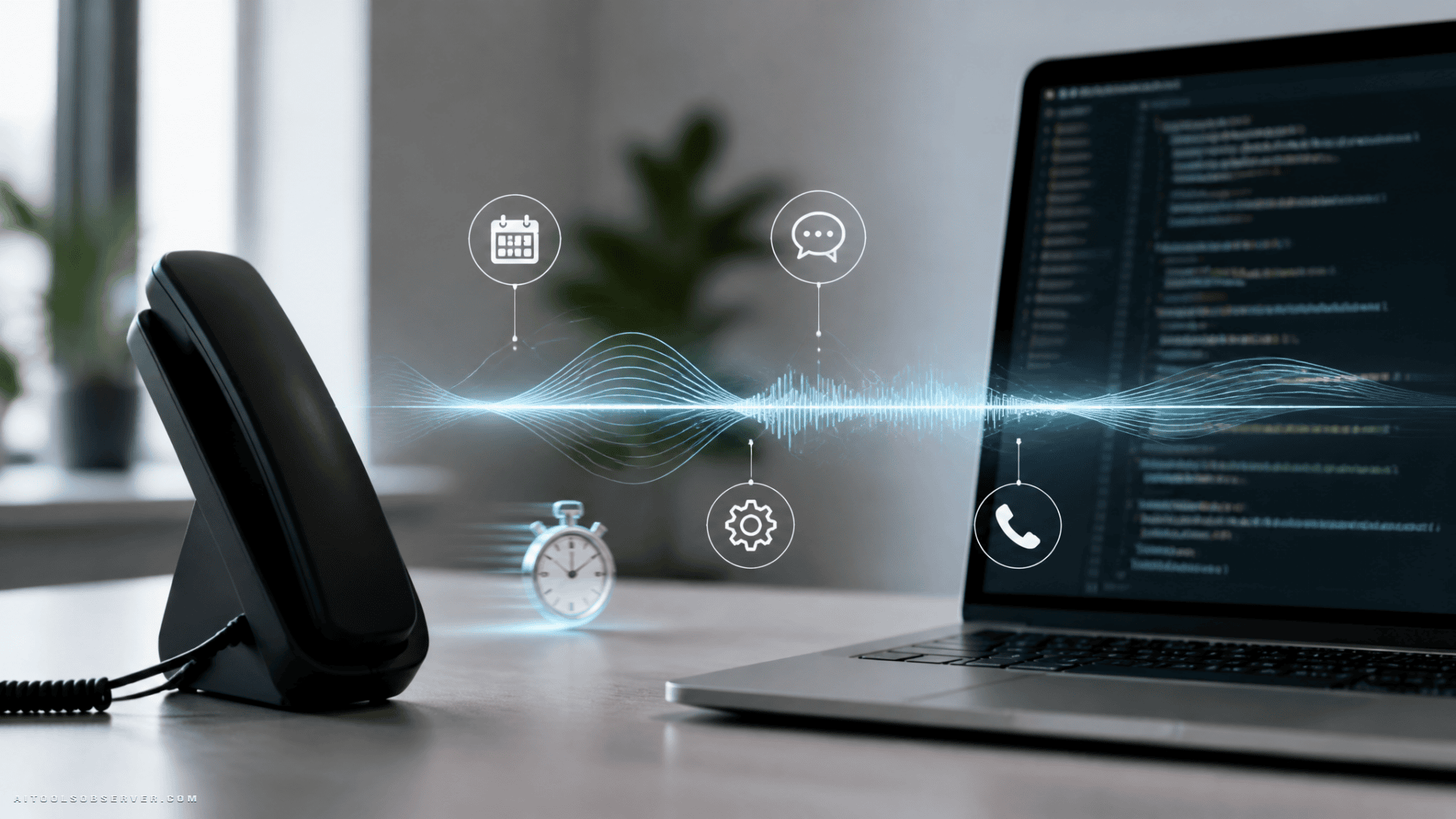
What Full-Duplex Actually Changes
The practical difference between turn-based and full-duplex voice is felt immediately by end users. A turn-based system waits. A full-duplex system responds to interruptions, acknowledges backchannels, and keeps the conversation moving—the way a human would.
GPT-Live-1 handles incoming and outgoing audio together in one model, which means it can react to a mid-sentence interruption without losing context or stalling. In early evaluations, language learning platform Speak found that GPT-Live-1 cut interruptions by almost 80% compared to previous turn-based systems, giving learners more natural space to think before the tutor responded.
That’s not a minor UX improvement. For any voice product where pacing matters—tutoring, customer support, reservations—it changes how the experience feels at a fundamental level.
The Architecture Simplification Is Real
One of the more concrete signals in the launch comes from Elise AI, a healthcare voice platform. Their co-founder and CTO reported that switching to GPT-Live-1 simplified their codebase by 80% and removed 23,000 lines of code. That’s the kind of outcome that matters to engineering teams who have been maintaining brittle multi-system pipelines.
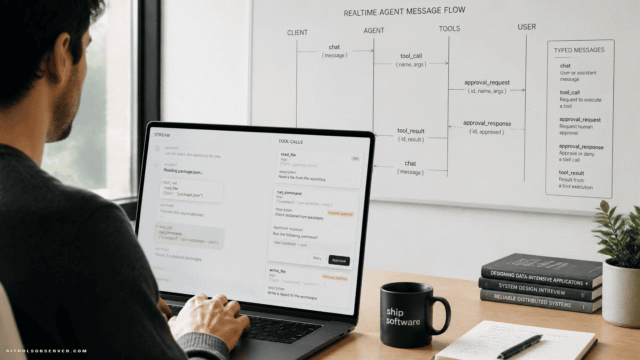
The reason this is possible is that GPT-Live-1 handles the voice layer while delegating deeper reasoning and tool calls to a backend text model. Developers can pair it with different models depending on task complexity—a lighter model for high-volume scheduling tasks, a more capable reasoning model for complex customer issues. The voice conversation continues while backend work happens in parallel.
This separation of concerns is a meaningful architectural shift. The voice model stays fast and natural. The reasoning model stays powerful. Developers don’t have to sacrifice one for the other.
Benchmark Performance Worth Noting
The evaluation numbers OpenAI has published show substantial gaps between GPT-Live-1 and its predecessor, GPT-Realtime-2.1.
Turn-taking latency dropped from 1.41 seconds to 0.798 seconds on Full Duplex Bench v1—nearly half the wait time before the agent starts responding after a user finishes speaking.
Tool calling accuracy jumped from 60% to 87% on Full Duplex Bench v3, which tests tool use from spoken requests that include natural pauses, hesitations, and self-corrections. That last detail matters: real users don’t speak in clean, structured sentences.
Full Duplex Bench interactivity improved from 47.8% to 80.1%, measuring reactions to background speech, side conversations, listener backchannels, and interruptions.
On Tau3 Voice—which evaluates spoken customer-service tasks across airline, retail, and telecom domains—GPT-Live-1 paired with a medium-reasoning backend model scored 86.2%, compared to 45.7% for GPT-Realtime-2.1. That’s a 40-point gap on end-to-end task completion.
These aren’t marginal improvements. They suggest GPT-Live-1 is operating in a meaningfully different performance tier for voice agent intelligence.
What Developers Can Actually Build With It
The telephony support is one of the more immediately practical additions. GPT-Live-1 can power full-duplex voice agents for phone calls, which opens up deployment scenarios that were previously difficult to execute cleanly.
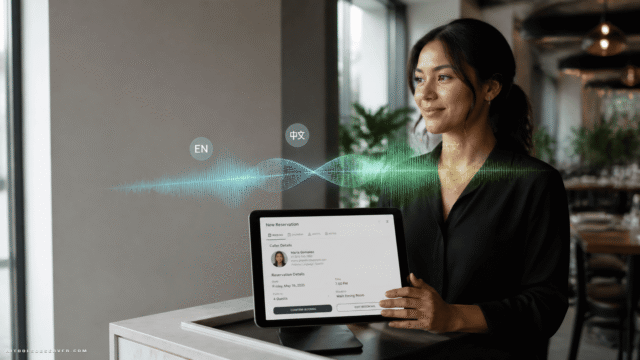
Yelp has already deployed it in Yelp Host for restaurant reservations and food orders. Their CTO noted that callers are speaking in fuller, more natural sentences—a behavioral signal that the experience on the other end of the phone feels genuinely different to users.
Beyond telephony, the model supports:
- Tone, pace, and style control via system prompt, so developers can shape how an agent sounds and behaves without custom model training
- Silent context management that handles background noise and pauses without narrating every step or misreading silence as a turn end
- Long-session reliability for extended interactions where context retention typically degrades
- ASR transcripts and response text natively, with keyword biasing and alphanumeric understanding built in
- Turn detection for developers who still want to build around explicit turn boundaries
New Voice Options
GPT-Live-1 also expands the available voice selection significantly. The launch includes twelve voices—Quartz, Ripple, Vesper, Willow, Stone, Gleam, Meridian, Bossa, Tempo, Beacon, Delta, and Cinder—spanning different accents, dialects, and languages. For developers building products for global audiences, having more voice options that sound natural to local users is a practical requirement, not a cosmetic one.
Who This Is For
GPT-Live-1 is clearly aimed at developers building production voice agents, not hobbyist projects. The architectural benefits—simplified pipelines, reduced latency, better interruption handling—matter most at scale, where every second of wait time and every dropped context affects real users and real business outcomes.
The most immediate use cases are customer support, appointment booking, restaurant reservations, and any workflow where a phone call or real-time voice interaction is the primary interface. Healthcare, hospitality, retail, and telecom all have obvious applications based on the early adopter examples already in the launch.
If you’re currently running a chained STT-LLM-TTS architecture and spending engineering time managing the handoffs, GPT-Live-1 appears to offer a direct path to a simpler, faster, and more reliable voice layer. The 23,000 lines of removed code at Elise AI is a useful benchmark for what that simplification can look like in practice.











Comments (0) No comments yet
Want to join this discussion? Login or Register.
No comments yet. Be the first to share your thoughts!