


What the lawsuit is claiming
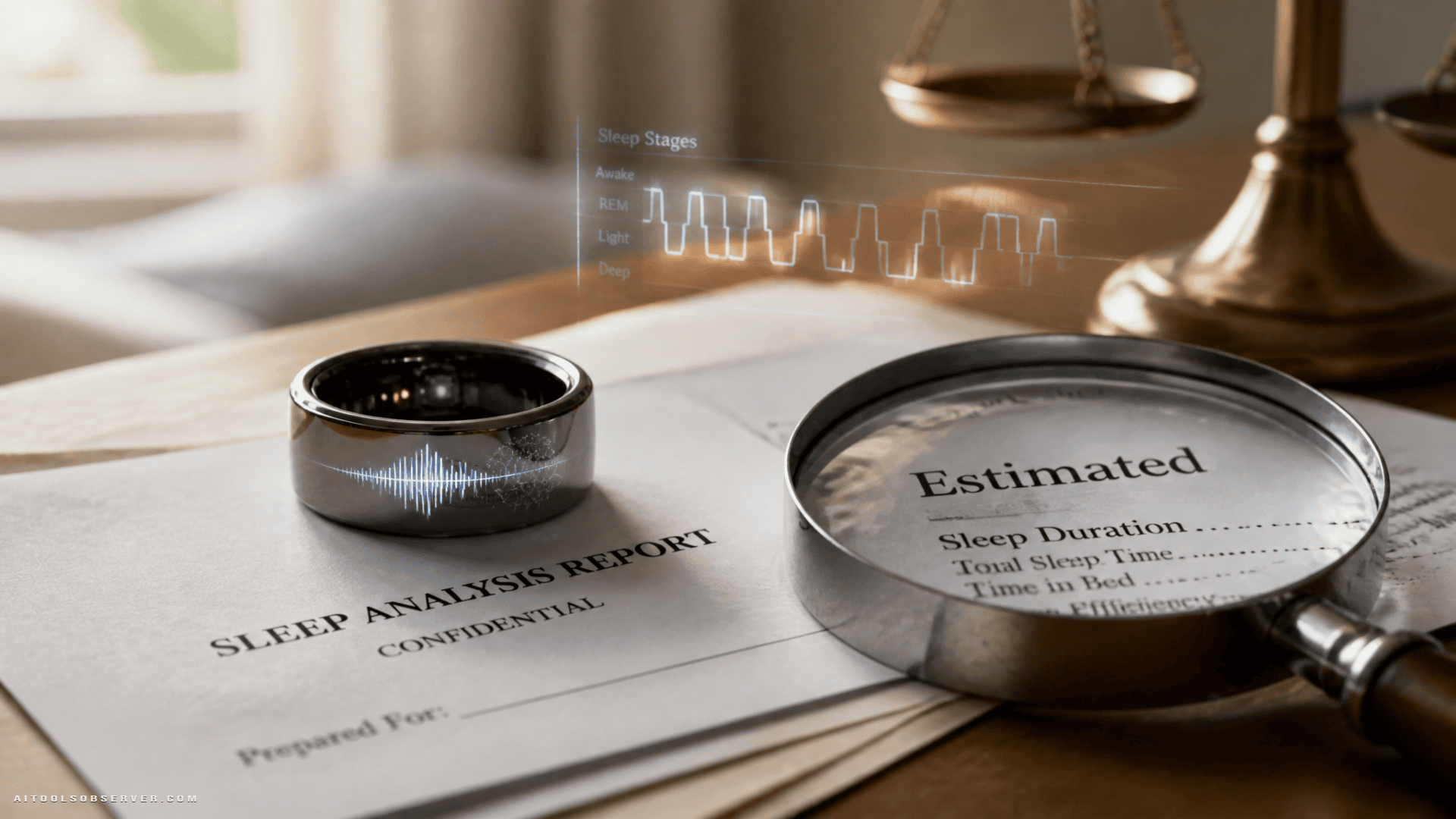
A class-action complaint filed in federal court in California alleges that Oura Ring does not actually track sleep in the way consumers may understand that phrase. The argument centers on a basic technical point: the ring does not measure the same physiological signals used in clinical sleep testing, such as brain electrical activity, eye movements, and muscle tone.
According to the complaint, Oura relies on AI models to infer sleep states from indirect signals. The lawsuit characterizes that as “guesswork” and argues that consumers were led to believe they were receiving accurate sleep-stage tracking.
The suit includes claims related to advertising, warranties, and California consumer protection laws. It seeks monetary compensation on behalf of a proposed class.
Oura, for its part, has said it stands behind its science, research, and accuracy claims. The company also said it is committed to clearly communicating what it measures, what it estimates, and how members should use that information, while disputing the allegations.
Why this matters beyond Oura
This is not just a brand-specific legal story. It gets to the core of how consumer health tech works.
Most wearables do not directly measure sleep the way a lab-based sleep study does. Instead, they typically use signals like movement, heart rate, temperature trends, and other sensor data to estimate whether you are asleep and what sleep stage you may be in.
That approach is common across wearable tech because rings and watches are designed for convenience, not clinical-grade diagnostics. The tension starts when estimated outputs are presented in ways that sound more certain than they really are.
The real issue: measurement vs. inference
This case may end up pushing a wider conversation around product language. There is a meaningful difference between these two ideas:
- “We measure your sleep stages”
- “We estimate your sleep stages based on sensor data”
To most consumers, those statements do not sound the same. But from a technical and legal perspective, they can be very different.
That gap is where many AI product claims get risky. AI often adds value by finding patterns in imperfect data. But if the interface makes an estimate feel like a fact, users may place more confidence in the result than they should.
Why sleep tracking is especially sensitive
Sleep is not like step counting.
If your step count is slightly off, that is usually annoying but manageable. If your sleep stage data is wrong, it can shape how you interpret fatigue, stress, recovery, and health symptoms.
For some users, sleep tracking can become highly influential. They may change routines, training load, supplement use, or whether they seek medical advice based on what their wearable shows. That raises the bar for how clearly companies should explain accuracy, limitations, and intended use.
This is also why sleep tech often attracts stronger reactions than general fitness features. The product is operating closer to health guidance, even if it is still sold as consumer wellness technology.
What “AI accuracy” means in wearable health tech
In wearables, AI accuracy is rarely a simple yes-or-no question. It usually breaks down into a few separate issues:
1. What inputs the device actually collects
A ring can gather some useful signals, but it cannot capture every signal that a clinical sleep study uses. That does not make the product useless. It does mean the output is derived from a narrower data set.
2. How the model turns data into a result
AI models are trained to infer patterns. In sleep tracking, that often means translating indirect signals into categories like light sleep, deep sleep, or REM. The better the model and validation, the more useful the estimate may be. But it is still an estimate.
3. How the result is presented to users
This may be the most important piece. A confidence interval, caveat, or “estimated” label changes user expectations. A polished dashboard with specific stage labels can imply certainty, even when the system is probabilistic.
4. Whether the claim matches consumer interpretation
A company may use technically careful language in documentation, while consumers absorb a simpler marketing message. Lawsuits often emerge from that gap.
What this could mean for wearable brands
Even if this specific case takes time to play out, it may influence how wearable companies talk about AI-powered health features.
Expect closer scrutiny in areas like:
- Sleep stage tracking
- Recovery scores
- Stress detection
- Readiness or performance predictions
- Any wellness feature that sounds diagnostic
Brands may need to be more explicit about what is measured directly versus modeled indirectly. That could lead to clearer labels, more careful onboarding language, and fewer broad claims in marketing.
For product teams, this is also a design problem. If a feature depends on inference, the interface should help users understand uncertainty instead of hiding it behind a neat score.
What consumers should take from this
If you use a wearable for sleep tracking, the practical lesson is simple: treat the output as directional, not definitive.
That means:
- Use trends over time rather than obsessing over a single night
- Be cautious about sleep stage precision
- Compare device insights with how you actually feel
- Avoid treating a wearable like a medical diagnosis tool
- Seek professional evaluation for serious sleep concerns
A wearable can still be helpful even if it is not perfectly accurate. For many people, the value is in behavior change and awareness, not exact sleep architecture.
Why this matters for AI tool buyers more broadly
The Oura case highlights a bigger pattern across AI products: the most important question is often not whether AI is used, but how the output is framed.
This matters in every category, from health tech to productivity software. If an AI system makes predictions, classifications, or summaries from partial data, AI tool buyers should ask:
- What is actually measured?
- What is inferred?
- How much uncertainty is there?
- Is the claim practical, scientific, or marketing-driven?
That is the difference between choosing a useful tool and buying into a promise that sounds stronger than the underlying system.
The likely market impact
Consumer health tech is built on trust. Once that trust is challenged, buyers become more skeptical not just of one product, but of a whole category.
That could push the market in two directions at once. On one side, companies may become more conservative in their claims. On the other, better products may stand out by being transparent about limitations and validating what their models can actually do.
For users, that is a healthy shift. AI wearables do not need to be perfect to be useful. But they do need to be honest about where measurement ends and estimation begins.
The takeaway
If this lawsuit changes anything, it should change how people read AI-powered health claims. Don’t just ask whether a device tracks sleep. Ask how it knows, what signals it uses, and whether the result is measured or inferred.
That one habit will help you evaluate not only sleep wearables, but almost every AI tool that turns limited inputs into confident-looking answers.











Comments (0) No comments yet
Want to join this discussion? Login or Register.
No comments yet. Be the first to share your thoughts!