


What Bee Actually Does

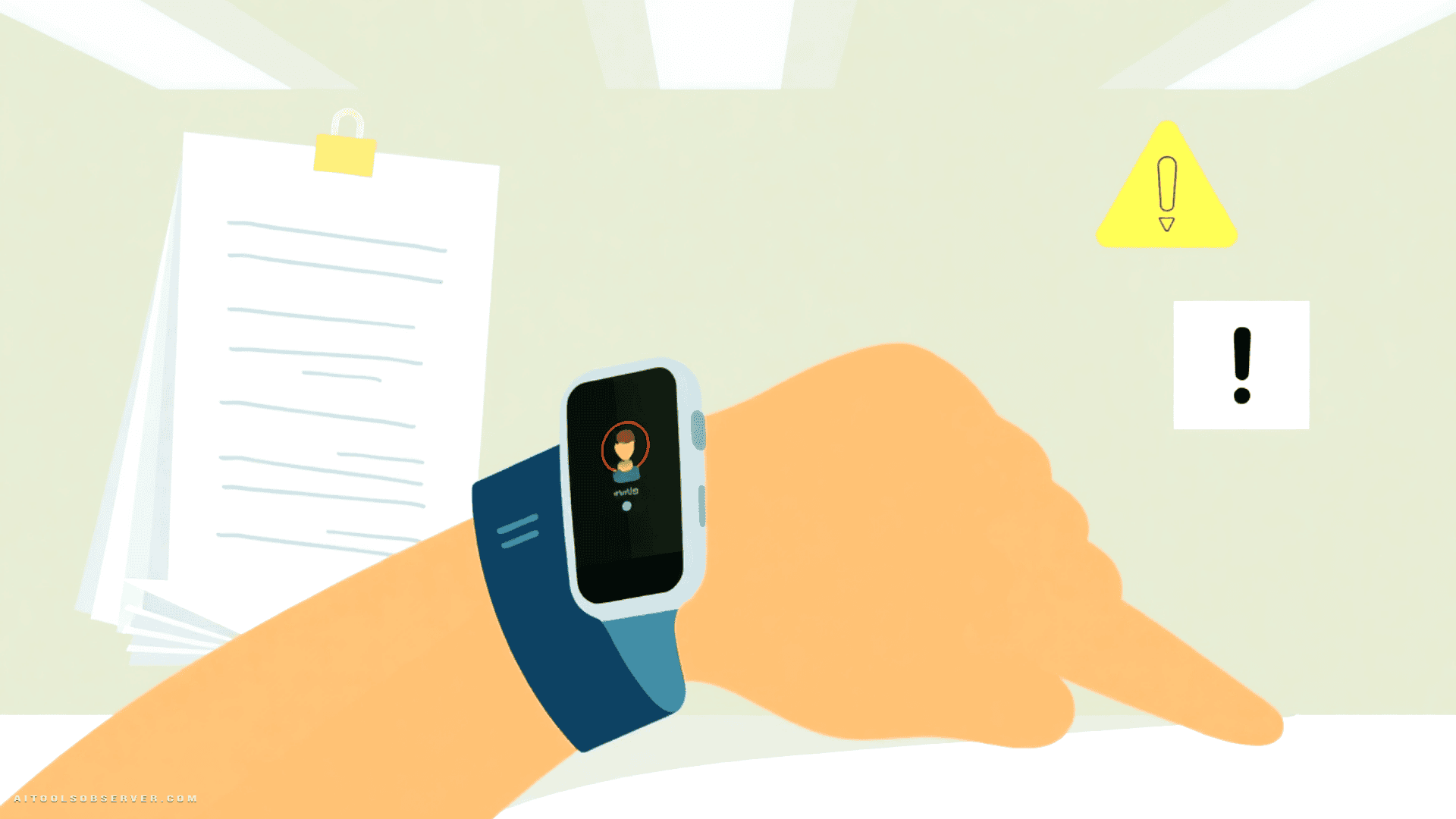
Bee is a wrist-worn recorder that transcribes and summarizes your conversations throughout the day. Pair it with the mobile app, tap the button to start recording (a green light confirms it’s listening), and let it run. Later, you get a clean summary and a full transcript — no manual note-taking required.
It also syncs with your calendar to send reminders and alerts. Think of it as a passive assistant that catches everything you forget to write down.
Simple concept. Significant implications.
Professional Use Is Its Sweet Spot

If your workday is a blur of back-to-back meetings, Bee has a real argument to make. Activate it during a call, and afterward the app breaks down the conversation into digestible segments — no re-listening, no frantic scrolling through notes.
That’s legitimately useful. The summaries are readable, reasonably accurate, and structured in a way that makes post-meeting review fast.
It’s Smarter Than It Looks

Here’s a fun data point: during a casual movie night watching Reservoir Dogs, Bee didn’t panic. It correctly identified the context and labeled the session “Tarantino Film Scene Analysis.” That’s either impressive contextual awareness or a very good guess — either way, it’s a point in Bee’s favor.
The Transcripts Are Messy

Summaries are decent. Raw transcripts? Less so. Bee struggles with speaker identification — you often have to manually label who said what. It also occasionally drops sections of conversation, which means you’re not getting a complete record, just a mostly complete one.
For casual note-taking, that’s fine. For anything legally or contractually sensitive, it’s a problem.
It’s Not Doing Anything New

Otter, Granola, and a dozen other transcription tools offer similar summaries without requiring you to wear anything. Bee’s hardware form factor is its differentiator — but if you’re already comfortable with a phone or laptop recording your meetings, the wrist gadget adds novelty more than capability.
The Privacy Conversation (The Uncomfortable One)

Let’s be direct: Bee needs a lot of permissions to work well. Location, photos, contacts, calendar, notifications, and optionally your health data — sleep patterns, resting heart rate, the works. All of it goes to the cloud.
That’s a significant data footprint for a device marketed primarily at personal use. And while Bee claims encryption at rest and in transit, third-party security audits, and continuous monitoring — Amazon’s broader track record on data privacy is, let’s say, not spotless.
There’s a tantalizing detail worth noting: Bee apparently demoed a version of the device running entirely locally, with no cloud dependency. If that ever ships, the privacy calculus changes dramatically. For now, it remains a demo, not a product.
The Consent Problem in Personal Life

In professional settings, you can ask permission before hitting record. In personal life — dinner conversations, casual hangouts, private moments — that gets complicated fast. Bee is designed for always-on use, but always-on recording in personal contexts raises questions that go beyond product features.
It’s not just about what Bee does with your data. It’s about what it means to the people around you.
Who Should Actually Buy This

Consider Bee if you’re a professional who lives in meetings, values passive note-taking, and are comfortable with cloud-based data storage. The convenience is real, and for the right workflow, it earns its place.
Skip it if you’re privacy-conscious, primarily want it for personal life, or already have transcription tools that work for you. The hardware novelty doesn’t justify the data tradeoffs for most personal use cases.
The Verdict

Bee is a genuinely interesting piece of hardware in search of the right user. As a professional meeting companion, it has a credible pitch. As a lifestyle assistant for your entire waking life, it asks for a level of trust — in Amazon, in cloud infrastructure, in always-on recording — that many people reasonably won’t give.
The green light tells you when it’s listening. What it doesn’t tell you is everything that happens to that data afterward.
Observe carefully. Choose accordingly.










Comments (0) No comments yet
Want to join this discussion? Login or Register.
No comments yet. Be the first to share your thoughts!