


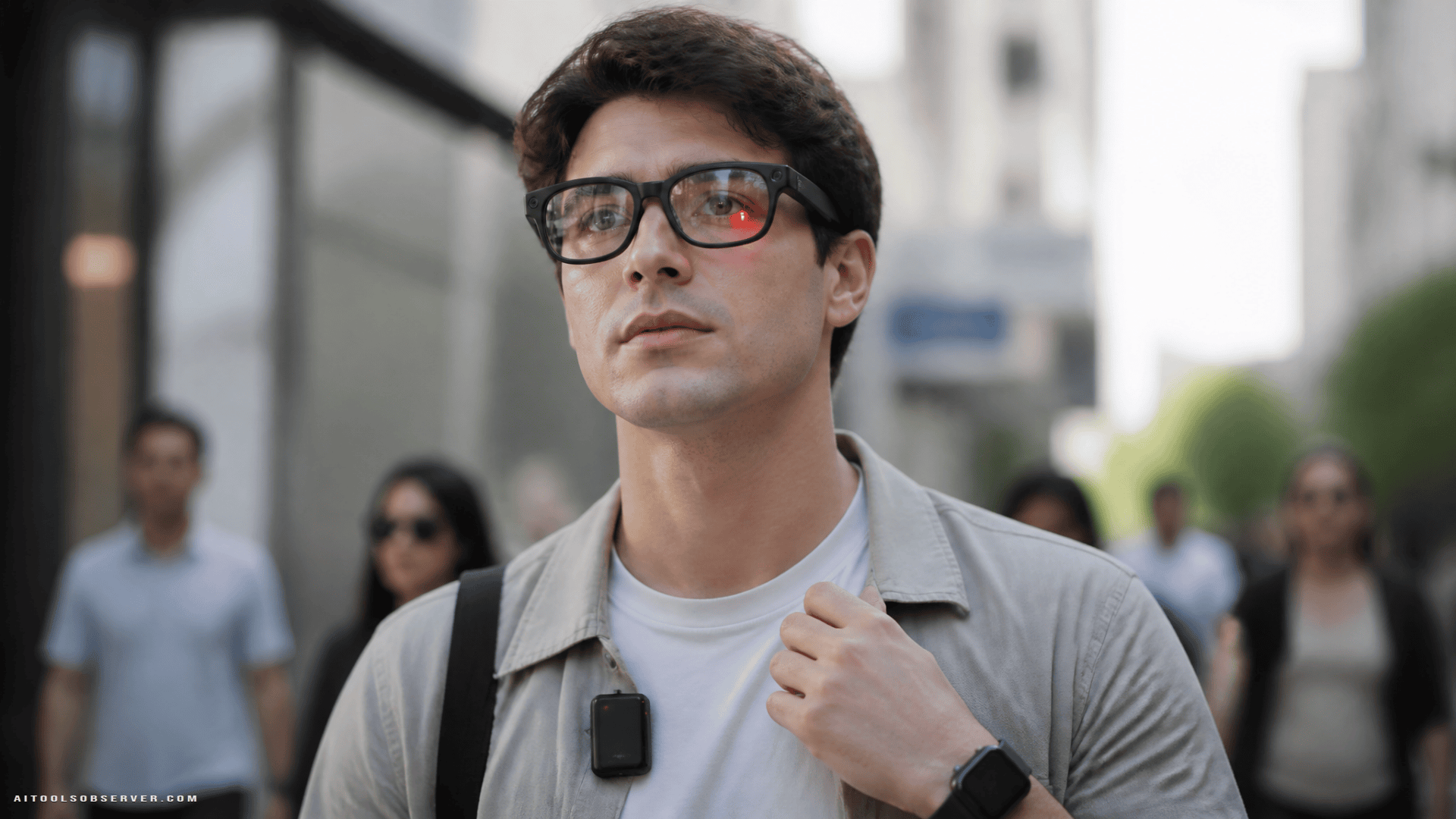
The new device race is not about screens
For years, the smartphone was the command center. Tap, type, swipe, repeat.
AI wearables are trying to change that model. Smart glasses, wristbands, and clip-on recorders aim to collect context continuously so an assistant can respond to what you see, hear, and say in the moment. The goal is not another gadget. The goal is ambient access.
That is why products like Meta Ray-Ban glasses, Amazon Bee, and Plaud devices matter beyond their individual features. Together, they point to a broader shift: AI companies want input from your actual day, not just your search bar.
Why this category suddenly feels important
AI assistants are only as useful as the context they get.
A phone can tell an assistant where you are, what you typed, maybe where you tapped. A wearable can add a much richer stream: the conversation you just had, the landmark you are looking at, the meeting you forgot to summarize, the task you mentioned out loud and never wrote down.
That makes the appeal obvious in a few situations:
- hands-free questions while walking or traveling
- automatic notes from meetings or conversations
- reminders based on spoken plans
- follow-up suggestions after networking or social events
This is the strongest argument for the category. Less admin. Less app juggling. More “just help me.”
Where the experience actually shines
The best use cases are narrow and practical.
Smart glasses can be useful when you want quick visual context without stopping to unlock your phone. Looking at a building, a sign, or a place of interest and getting a near-instant answer is genuinely convenient. It replaces a small but annoying ritual: stop, unlock, search, squint, continue.
Wearable recorders also make sense in work settings where note capture already happens. If you already ask for permission in meetings, interviews, or event conversations, a clip-on recorder or wrist device can feel more natural than waving a phone around like a tiny legal threat.
This is the current sweet spot for AI wearables: moments where friction is high, the value is clear, and social norms already allow some recording.
Where it gets weird, fast
Outside those narrow use cases, the vibe changes.
Recording a formal interview is normal. Recording game night, a coffee chat, or a one-on-one with a coworker is not. Even if permission is asked, the social cost goes up. The device may be small, but the awkwardness is not.
That awkwardness is not a bug in adoption. It is the adoption problem.
AI wearables ask people around the user to participate in the product experience, whether they signed up for it or not. Your assistant gets smarter by turning everyone nearby into context.
That is where the post-smartphone pitch starts to wobble. Smartphones are obvious. Wearables are easier to miss. A phone on the table says, “a device is here.” Glasses, bracelets, and pins say, “maybe.”
Consent is doing a lot of heavy lifting
The privacy issue is not only data collection. It is consent in ordinary life.
With phones, recording tends to look like recording. With wearables, the line gets blurrier. Indicator lights help, but they rely on people noticing them, understanding them, and trusting them. That is a fragile chain.
And context matters. A visible recording light on glasses is one thing in public. It is another in offices, social gatherings, shops, or spaces where people do not expect to be analyzed by someone else’s assistant.
In other words, the challenge is not “can this device signal recording?” It is “can social norms keep up when recording becomes casual, constant, and wearable?” Right now, the answer appears shaky.
The bigger risk: AI that interprets, not just records
There is another layer here that matters just as much as privacy: inference.
These devices are not being built merely to capture audio or video. They are being built to draw conclusions. That is the business case. The assistant listens, watches, summarizes, predicts, nudges, and recommends.
Sometimes that is helpful. Sometimes it gets oddly therapeutic without being invited.
When AI moves from “you said this” to “you must be feeling that,” the risk is no longer just surveillance. It is misreading. A wearable assistant may infer urgency, anxiety, intent, or priorities from fragments of life that were never meant to become structured inputs.
That creates a new kind of UX problem: the assistant feels proactive, but not always welcome. Smart can slip into presumptuous very quickly.
Why big tech keeps pushing anyway
Because the upside is enormous if people accept the trade.
An assistant with full-day context could, in theory, become far more useful than one that only waits inside a speaker or chat window. It could remember what you promised, suggest what comes next, and reduce the amount of prompting needed to get useful help.
For companies building AI ecosystems, this is strategically attractive for three reasons:
- more context improves personalization
- more usage deepens product lock-in
- more hardware creates a direct channel to the user
That last part matters. The post-smartphone era, if it arrives, will not just be about better interfaces. It will be about who owns the interface between your life and the model.
Are these products replacing phones? Not yet.
Right now, no.
They are companions, not replacements. They solve edge cases well and everyday life inconsistently. A phone still wins on control, visibility, familiarity, and social acceptability. It is still the safer default in most settings.
What wearables offer today is not total displacement. It is selective offloading.
You may use smart glasses on a walk, a recorder in a meeting, or a wrist device at an event. Then you put them back in a bag, because normal life contains other humans.
That does not make the category unimportant. It makes it early.
What to watch in the next phase
The category will likely be decided less by raw capability and more by trust design.
The winners will need to solve a few hard problems at once:
2. Clear consent cues
Can bystanders easily tell when recording or analysis is happening?
3. Narrow, obvious value
Does the product solve a problem people feel often enough to change behavior?
4. Reliable interpretation
Can the AI avoid overreaching when it turns conversations into advice or assumptions?
5. User control
Can people easily review, delete, limit, or correct what the device captures and infers?
A lot of AI hardware looks clever in demos. Much less of it survives contact with dinner, meetings, friendships, and basic human boundaries.
What this means for founders, marketers, and AI adopters
If you build or buy AI tools, the lesson is bigger than wearables.
The market is shifting from prompt-based tools to context-based systems. That is the opportunity. But the more context a tool wants, the more trust it must earn. Products that assume constant access to users’ lives will face higher scrutiny than products that stay task-bound and explicit.
For teams evaluating this category, a few questions cut through the hype fast:
- Is the use case frequent enough to justify a new device?
- Does the convenience clearly outweigh the social friction?
- What happens when the AI gets the context wrong?
- How is consent handled for everyone nearby, not just the wearer?
- Is this replacing phone behavior or just adding another layer of device management?
If those answers are fuzzy, the product probably is too.
So, are we ready?
Technically, maybe. Socially, not really.
AI wearables are getting closer to a post-smartphone model where assistance is ambient, continuous, and embedded in everyday life. But the main blockers are not chips or models. They are manners, consent, and trust.
Useful takeaway: treat AI wearables as workflow tools, not default lifestyle devices. The strongest current fit is deliberate, permission-based use in clear contexts. The minute “always on” becomes the selling point, ask who is carrying the convenience and who is carrying the risk.






Comments (0) No comments yet
Want to join this discussion? Login or Register.
No comments yet. Be the first to share your thoughts!