



The Claim, Unpacked
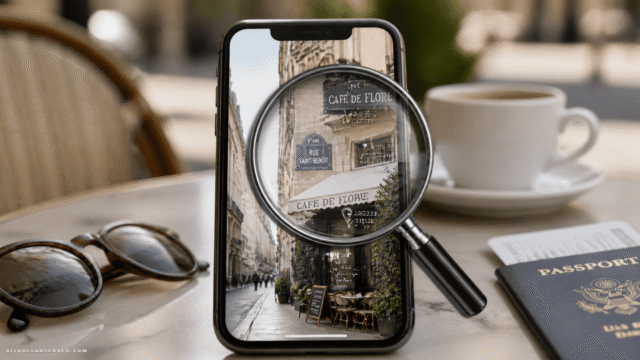
The viral fear goes something like this: if you post a high-resolution selfie with your fingers close to the camera, a cybercriminal can digitally extract your fingerprint from the image, clone it, and use it to break into your accounts.
It reportedly traces back to an April TV segment featuring a security expert making exactly that argument. The internet did what the internet does — amplified it, stripped the nuance, and ran.
Technically Possible. Practically? Not So Much.

Here’s where it gets interesting. Experts don’t say it’s impossible — they say it’s improbable for almost everyone reading this.
Justin Cappos, a New York-based cybersecurity researcher with work tied to Google and Palantir, put it bluntly:
“You’re more likely to be hit by a car tomorrow than this in your lifetime.”
That’s not dismissiveness — that’s calibration. The attack requires a high-resolution image, the right angle, good lighting, and a determined adversary with specific technical skills. That’s a lot of stars to align for your average peace-sign selfie taken in a dimly lit café.
When It Has Happened

To be fair, there are real precedents — just not the kind that affect regular people.
In 2014, a hacker claimed to have cloned the fingerprint of Ursula von der Leyen (then Germany’s defense minister) using close-up press event photos. That same year, security researchers at Kraken reconstructed a fingerprint from a surface photo using Photoshop, a printer, and glue.
Both cases share something important: the targets were high-profile, the effort was deliberate, and the execution required significant resources.
The Missing Piece Everyone Ignores
Even if a hacker successfully extracts your fingerprint from a photo, they still need physical access to the scanner your fingerprint unlocks — your laptop, a bank’s thumbprint pad, a secure facility reader.
A digital copy of your fingerprint doesn’t magically open a device. It needs to be converted into a physical spoof, then presented to a real scanner. That’s not a casual Friday afternoon project.
Vyas Sekar, a professor of electrical and computer engineering at Carnegie Mellon, frames it well: a hacker would need to be fairly determined
and targeting someone with access to something genuinely valuable — a high-security facility, classified systems, that sort of thing.
What Should Actually Keep You Up at Night

If you’re worried about cybercrime — and you should be, a little — fingerprint selfies are not where to focus your energy.
Phishing is. Cappos points out that the average person is far more likely to be compromised through a malicious email link than through biometric extraction from Instagram. Phishing is scalable, cheap, and devastatingly effective. Fingerprint cloning from selfies is none of those things.
“I don’t think cybercriminals have started to weaponize it at any scale,” Cappos said. “Definitely, where we are today, this is not going to happen.”
He does leave a door open for the future — AI-enhanced image processing is improving fast, and what requires significant effort today might require less tomorrow. But today, the threat is theoretical for most people.
The AI Angle Worth Watching

Here’s the part that deserves a bit more attention than the viral posts gave it.
AI image enhancement tools are genuinely getting better at reconstructing fine detail from low-resolution or partially obscured images. The gap between technically possible with expert tools
and possible with consumer software
is narrowing — slowly, but it’s narrowing.
This doesn’t mean you should stop posting selfies. It does mean biometric security as a concept deserves more scrutiny as AI capabilities evolve. Fingerprints, retina scans, facial geometry — none of these can be reset like a password. That immutability is both their strength and their long-term vulnerability.
So, Should You Change How You Post?
Probably not because of this specific threat. But a few sensible habits don’t hurt:
- Avoid ultra-high-resolution close-ups of your fingertips if you’re particularly security-conscious
- Don’t rely solely on biometrics for high-value accounts — layer with a PIN or password
- Stay alert to phishing — that’s where the real action is
The Takeaway
The peace-sign fingerprint panic is a good reminder that not all viral security warnings are created equal. Some threats are real and underreported. Others are technically valid but practically irrelevant for 99.9% of people.
This one sits firmly in the second category — for now.
The smarter move isn’t to audit your selfie archive. It’s to understand how to evaluate security claims before sharing them. Because the most effective social engineering doesn’t need your fingerprints. It just needs your click.





Comments (0) No comments yet
Want to join this discussion? Login or Register.
No comments yet. Be the first to share your thoughts!