


How AI Has Restructured the Fraud Workflow

Traditional scams required significant manual effort: researching targets, crafting convincing messages, impersonating voices or institutions, and managing outreach one contact at a time. AI has eliminated most of that friction.
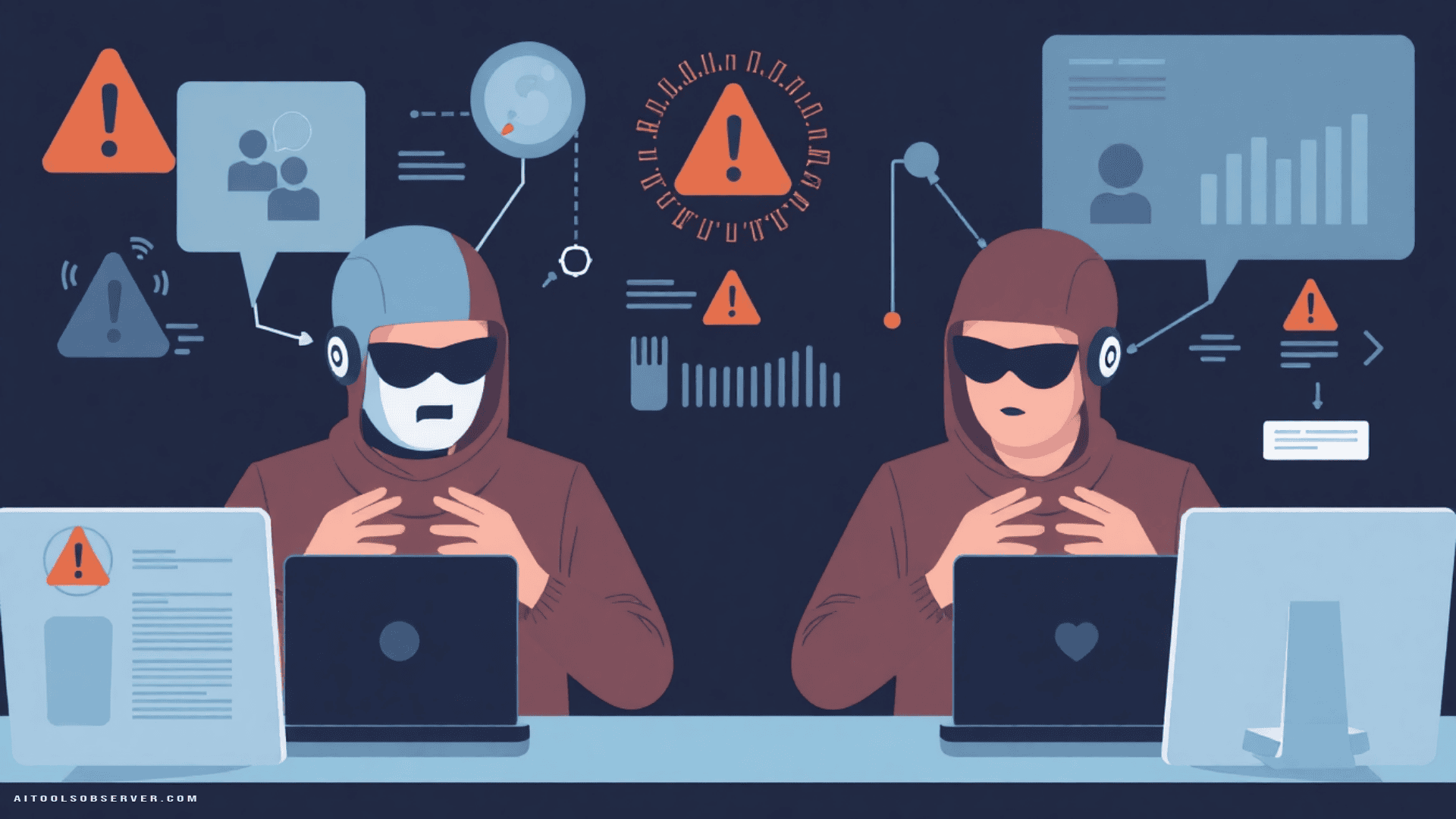
Scammers now use AI to automate prospecting, generate personalized phishing content, clone voices, fabricate video, and build convincing fake platforms — all within a single, coordinated operation. What once required a team and weeks of preparation can now be executed by one person in hours.
Eva Velasquez, CEO of the Identity Theft Resource Center, frames it plainly: scammers are “harvesting all of this rich information about a person which previously they had to put more time and effort into.” The result is that everybody is a target — not just the digitally inexperienced.
Automated Phishing and Mass Outreach

AI tools allow scammers to generate highly personalized emails, texts, and calls at volume. These messages no longer carry the grammatical errors and generic phrasing that once made phishing attempts easy to identify. They are contextually aware, tonally appropriate, and often reference real details scraped from public sources.
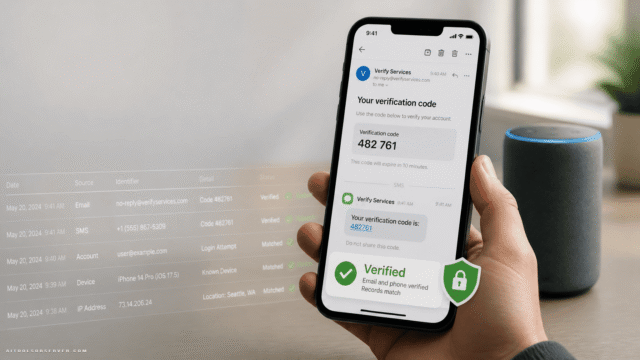
The implication is structural: inbound contact can no longer be treated as inherently trustworthy, regardless of how legitimate it appears. If you did not initiate the contact, verify through a channel you control. Call the institution directly using a number you already know — not one provided in the message.
Voice Cloning and Deepfake Impersonation

Voice cloning has moved from a research curiosity to an accessible scam tool. A few seconds of publicly available audio — from a social media video, a podcast appearance, or a voicemail — is sufficient to generate a convincing synthetic voice.
Chuck Bell, programs director for advocacy at Consumer Reports, notes that imposter scams are among the most prevalent: scammers impersonating banks, logistics companies like FedEx, government agencies like the IRS, or tech support services. The fabricated voice establishes trust; the invented scenario — a security breach, a legal problem, an urgent delivery issue — creates pressure to act.
Deepfake video extends this further. A video call that appears to show a known face, a family member in distress, or an authority figure is no longer technically difficult to produce. Awareness of this capability is itself a protective mechanism. Velasquez notes that even imperfect deepfakes are convincing enough to deceive, precisely because most people are not expecting them.
AI-Enhanced Investment Fraud

One of the more sophisticated schemes emerging involves entirely fabricated investment platforms. Scammers use AI to automate initial outreach, then deploy AI-augmented audio or video to build personal rapport with the target. Once trust is established, victims are directed to a convincing, AI-built trading platform that shows consistent — and entirely fictional — returns.
Wilder describes the mechanics: “They convince people to put more and more money into the platform, and it looks like it’s going up and up.” The platform eventually disappears, along with the deposited funds. Every stage of this operation — outreach, trust-building, platform construction, and exit — is enhanced by AI tooling.
This type of fraud, sometimes called “pig butchering,” is particularly damaging because victims often invest significant sums over extended periods before the deception becomes apparent.
Practical Protection Tactics
Understanding the threat model is necessary. Acting on it is what matters.
Treat All Inbound Contact as Unverified

The default posture has shifted. Any unsolicited call, text, or email — even from a recognized number or address — should be treated with measured skepticism. Spoofing technology makes caller ID unreliable. AI-generated messages can replicate tone and style convincingly.
The corrective action is simple: do not respond within the channel that contacted you. Go to the source independently. Look up the official number, visit the official website, and verify from there.
Build Awareness of Audio and Video Manipulation

Knowing that voice cloning and deepfake video exist changes how you process incoming media. A phone call from a relative claiming to be in legal trouble and needing immediate financial help should trigger verification, not immediate action — regardless of how authentic the voice sounds.
Velasquez specifically recommends discussing these tactics with older family members, who are disproportionately targeted by scams that exploit emotional urgency and authority figures. Scammers frequently impersonate law enforcement, knowing that most people are conditioned to respond quickly and compliantly.
Freeze Your Credit

A credit freeze through the three major credit bureaus — Equifax, Experian, and TransUnion — prevents new accounts from being opened in your name without your explicit authorization. It costs nothing, can be done online, and can be temporarily lifted when you need to apply for credit.
This is one of the highest-leverage protective steps available. It does not affect existing accounts or credit scores, and it removes a significant avenue for identity-based fraud.
Activate Transaction Alerts and Prefer Credit Over Debit

Wilder recommends enabling real-time transaction alerts on all financial accounts. Immediate notification of any card activity allows suspicious charges to be disputed quickly, before they compound.
He also advises using credit cards rather than debit cards for online purchases. Credit cards carry stronger statutory fraud protections, and disputed charges do not directly drain a bank account while the investigation proceeds. Debit card fraud, by contrast, involves your actual funds and carries a more limited protection window.
The Asymmetry Problem

There is an uncomfortable asymmetry at the core of this issue. AI tools lower the cost and complexity of fraud dramatically, while the burden of defense falls entirely on individuals who must remain vigilant across every channel, every interaction, every day.
Scammers need to succeed once. Consumers need to succeed every time.
That asymmetry will not be resolved by awareness alone. Platform-level fraud detection, regulatory pressure on AI misuse, and institutional accountability all have roles to play. But in the immediate term, the practical steps above represent the most reliable layer of personal protection available.
The AI tools ecosystem is genuinely powerful. That power does not discriminate between legitimate use and malicious intent. Observing how these tools are being weaponized — and adjusting behavior accordingly — is no longer optional. It is the baseline requirement for operating safely in a digitally connected world.
















Comments (0) No comments yet
Want to join this discussion? Login or Register.
No comments yet. Be the first to share your thoughts!