


What Roblox actually launched
Roblox released three AI safety tools through the Robust Open Online Safety Tools Model Community, or ROOST. The broader idea is straightforward: predators do not stay on one app, so safety technology should not stay locked inside one company either.
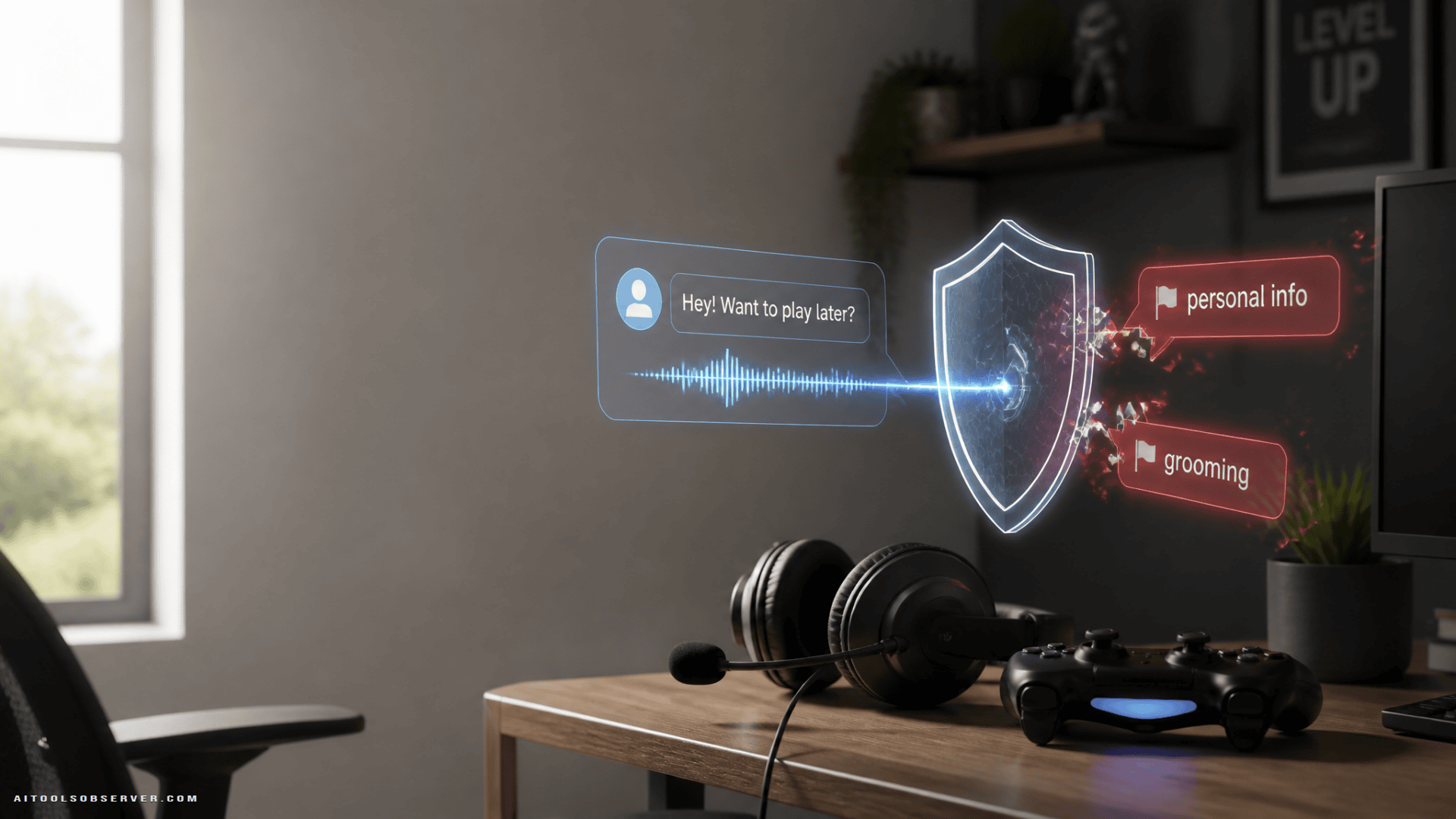
The three models cover different risk signals:
- Sentinel v2 focuses on early grooming detection by analyzing conversation patterns
- PII Classifier v2.0 flags attempts to collect or share personal information and steer users off-platform
- Voice Safety Classifier v3 is designed to catch abuse in voice interactions in real time
For AI teams, trust-and-safety leads, and platform operators, this is the key point: Roblox is not just improving internal moderation. It is positioning these models as reusable infrastructure for other online services in the broader open-source AI ecosystem.
Why Sentinel v2 stands out
Among the three, Sentinel v2 appears to be the most important from a prevention angle. Instead of waiting for an obvious violation, it looks for behavioral signals that suggest grooming may be starting.
That shift matters because grooming rarely begins with content that looks clearly abusive on its own. It often starts with ordinary chat, then moves gradually toward isolation, secrecy, or requests that put a child at risk. A model trained to identify that progression can give moderators a chance to intervene earlier.
Based on the available context, Roblox says a large share of its detected cases came from Sentinel’s early detection approach. If that performance holds up beyond Roblox’s own reporting, it suggests a more proactive safety layer than basic keyword filtering.
The PII Classifier solves a common escape route
One of the oldest moderation problems is platform hopping. A predator may start on a game or social app, then try to move the conversation to text, disappearing chat apps, or other services with less oversight.
That is where the PII Classifier matters. It is built to catch attempts to exchange personal information or direct a child elsewhere.
The multilingual angle also deserves attention. Roblox says the model now works across a much broader language set than before. For global platforms, that is a practical improvement, not a marketing detail. Safety systems that only work well in a handful of languages leave large gaps in real-world protection.
Voice moderation is becoming a core safety layer
Text chat moderation gets most of the attention, but voice creates a harder problem. Harm can happen quickly, context is messier, and real-time action matters more.
Roblox’s Voice Safety Classifier is aimed at that gap. It is designed to monitor voice interactions across multiple languages and violation categories, which points to a broader trend: safety tooling is expanding from text-only moderation into multimodal moderation.
For platforms with live social features, that matters. Voice chat can be a high-risk area because it feels more personal, faster, and harder for parents or moderators to review after the fact.
Why open source changes the story
The open-source piece is what makes this news bigger than a standard product update.
When a large platform shares safety models publicly, two things happen:
- Smaller platforms get access to safety infrastructure they may not have the resources to build alone
- The wider safety community can inspect, adapt, and improve the models over time
That does not automatically solve online harm. Open models still need deployment, tuning, policy enforcement, and human review. But it lowers the barrier for more platforms to take trust and safety seriously.
For founders building social, gaming, chat, or community products, this is especially relevant. Safety tooling is often treated as something to add later. Moves like this push it closer to being part of the core stack from day one in an open-source environment.
The bigger context Roblox cannot ignore
This launch also lands against a tougher backdrop for Roblox. The platform has faced ongoing scrutiny over child safety, moderation gaps, and allegations that predators have used the platform to reach minors.
That tension is important. Releasing better AI safety tools is meaningful, but it does not erase past criticism or ongoing legal and reputational pressure. If anything, it raises the bar.
The real test is not whether Roblox can publish a strong blog post or open-source a promising model. The real test is whether these systems reduce harm consistently in live environments, across edge cases, languages, and evasive tactics.
What this means for parents, platforms, and AI adopters
For parents, the practical takeaway is simple: improved AI moderation helps, but it is not enough on its own. Safety settings, account controls, and regular check-ins still matter because no model catches everything.
For platforms, the lesson is more strategic. Trust and safety is no longer just a policy issue. It is an AI tooling issue, a product design issue, and a platform-risk issue.
For AI adopters watching the market, Roblox’s release is a useful signal of where safety tech is heading:
- Earlier detection instead of only reactive moderation
- Multilingual coverage as a baseline requirement
- Voice moderation moving into the mainstream
- Open-source safety infrastructure becoming more common
What to watch next
The most important question now is adoption. Open-source safety models only matter if other platforms implement them and if they perform well outside the environment they were built in.
It is also worth watching how these tools balance accuracy with false positives. Early-warning systems are valuable, but overly aggressive moderation can create its own problems, especially in fast-moving chat and voice environments.
The smart takeaway is this: Roblox’s new tools look like a serious step toward earlier intervention, and the open-source release gives the wider internet safety ecosystem something practical to build on. But for any platform serving kids, AI moderation should be treated as a backstop, not a complete answer.









Comments (0) No comments yet
Want to join this discussion? Login or Register.
No comments yet. Be the first to share your thoughts!