


What changed
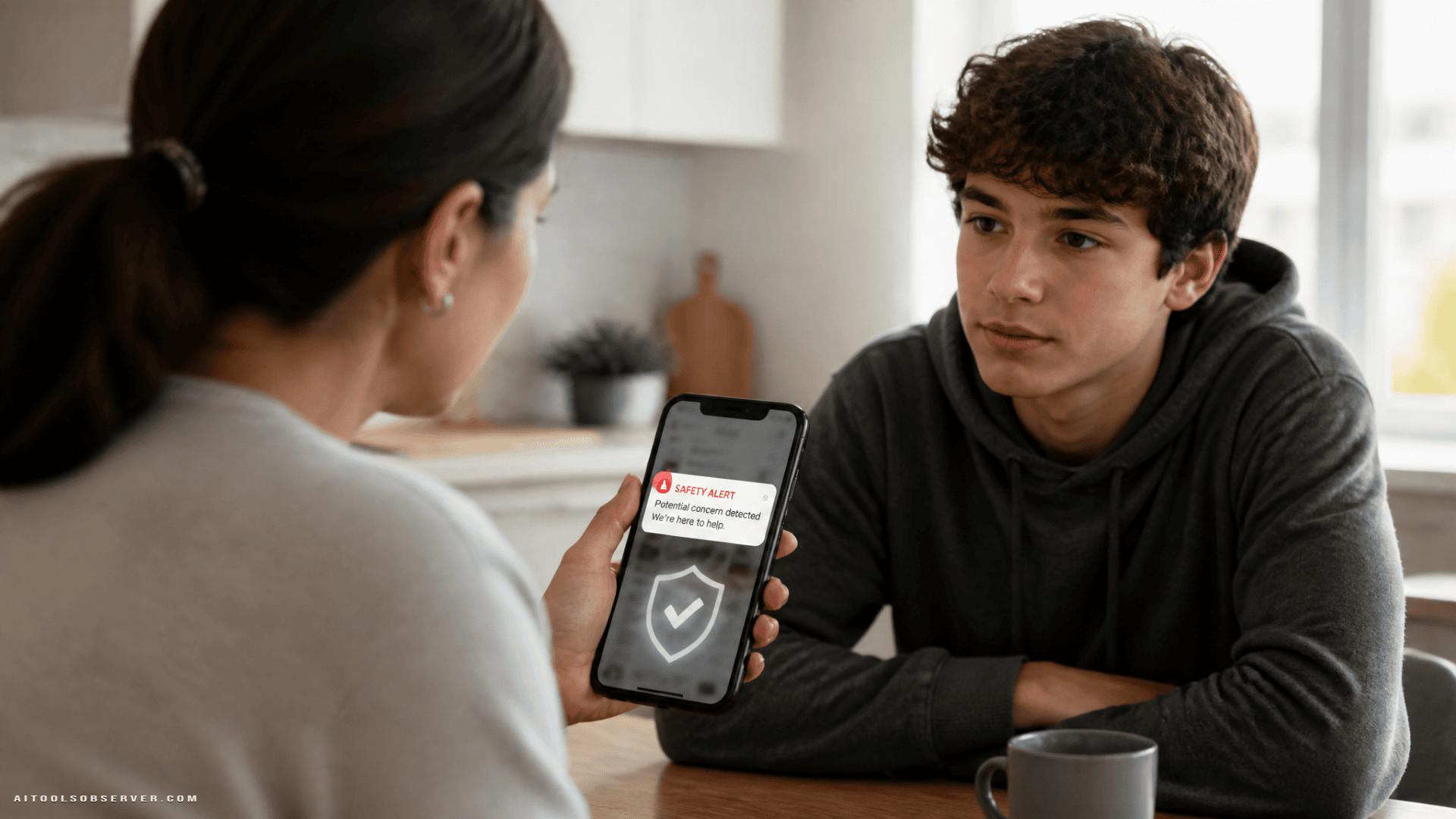
Meta is deploying AI-powered safety alerts tied to Instagram parental supervision. Based on the available description, if a teen is under parental supervision and the system detects that they may be discussing suicide or self-harm with Meta AI, a parent can be notified.
The key point is that this is not described as broad, public-facing content moderation. It appears more specific: an AI system flags concerning conversations, and a parent alert is sent when the teen is enrolled in the platform’s supervision setup.
For parents, this positions Instagram less as a passive social app and more as an active monitoring layer. For Meta, it is a trust-and-safety move that pushes the platform deeper into a sensitive family role.
How parent alerts appear to work
Based on the description, the process has a few clear steps:
- The teen and parent enroll in Instagram parental supervision
- The AI monitors relevant interactions involving Meta AI
- If the system detects discussion that may involve self-harm or suicide, it may trigger an alert
- The parent is notified so a human can step in
Meta’s own framing matters here. The alert is not presented as a clinical judgment. It is framed as an indication that there “may” be a problem, with the goal of involving people rather than leaving the issue to the system.
That distinction is important. AI is being used here as a triage mechanism, not as a therapist, counselor, or final decision-maker.
Why this matters
This update reflects a broader shift in consumer AI products: safety systems are moving from platform-level moderation into private, high-risk, person-to-person contexts.
For social platforms, that creates a new expectation. It is no longer enough to remove harmful content after the fact. Companies are increasingly expected to detect signals earlier, especially where minors are involved.
For families, the promise is straightforward:
- Earlier visibility into possible crisis behavior
- A faster route to offline support
- More active parental involvement for supervised accounts
For product observers, the bigger signal is that AI safety features are becoming part of the product itself, not just part of moderation policy.
The privacy and ethics tension
The strongest objection is also the most obvious one: monitoring vulnerable teens with AI can create new risks while trying to reduce existing ones.
Privacy advocates argue that once a platform starts analyzing intimate conversations for mental health signals, the line between protection and surveillance gets thin very quickly. Teen users may also change their behavior if they believe sensitive disclosures could trigger parental escalation. Related concerns around privacy risks and AI ethics show why these design choices matter.
There are several practical concerns:
- Context errors: AI may misunderstand jokes, venting, fiction, or indirect language
- Trust erosion: teens may feel watched rather than supported
- Overreach: parents may receive alerts without enough nuance to interpret them well
- Underreach: harmful situations may still be missed
This is the central tradeoff. A system designed to catch edge cases can also create stress in ordinary cases.
Why the “supervision” requirement matters
One useful guardrail in the available description is the requirement that both parent and teen sign up for parental supervision on Instagram.
That does not erase the privacy debate, but it does matter. It suggests this is not a silent, universal monitoring rollout for all teen accounts. Instead, the feature appears tied to an existing supervision framework where family involvement is already part of the account setup.
Even so, consent in youth safety products is rarely simple. A teen may technically agree to supervision while still feeling they have little practical choice. That makes product design and communication just as important as the alert itself.
What Meta is really trying to do
At a product level, Meta seems to be making a specific bet: in high-risk youth situations, imperfect early warning may be better than no warning at all.
That is a defensible position, but only if the company can keep the system narrow, legible, and clearly limited in purpose. The more expansive the monitoring feels, the harder it becomes to maintain user trust.
This is where many AI safety features succeed or fail. Not on the intention, but on boundaries:
- What exactly is being monitored?
- When is an alert triggered?
- How much context is shared with parents?
- What recourse exists if the system gets it wrong?
Without clear answers, even well-meant safety features can feel invasive.
What founders and AI product teams should watch
For builders in AI and social products, this is a case study worth tracking closely. It shows how AI is moving into emotionally charged, liability-heavy use cases where “helpful” is not enough.
Three lessons stand out:
1. Human escalation is the product, not the backup
Meta’s framing suggests the alert is meant to bring humans in. That is the right instinct for high-risk topics. In sensitive domains, AI should often route, flag, or support—not independently resolve.
2. Safety features need visible limits
Users are more likely to accept monitoring when the scope is narrow and the trigger conditions are understandable. Vague safety systems create suspicion fast.
3. Trust costs can outweigh feature benefits
A safety intervention that reduces openness or pushes vulnerable users away from honest communication may solve one problem by creating another. Product teams need to measure that risk carefully.
What parents should take from this
For parents, the practical value of this feature is not that AI “knows” a teen is in danger. It is that a platform may surface a signal that otherwise would stay hidden.
That means alerts should be treated as prompts for careful conversation, not proof of a specific crisis. A thoughtful response matters more than the notification itself.
If families choose to use supervision features like this, the most useful approach is usually simple:
- Discuss in advance what alerts mean
- Make clear that support comes before punishment
- Treat AI signals as incomplete information
- Keep real-world human help at the center
Bottom line
Meta’s update is a serious attempt to use AI where social platforms face the most pressure to act: teen safety and potential mental health harm. The value is clear—earlier warning and faster parental involvement—but so are the risks, especially around privacy, misinterpretation, and trust.
The smart takeaway is not to ask whether AI should protect minors in absolute terms. It is to ask whether a specific safety feature is narrow enough, transparent enough, and human-centered enough to help without causing new harm. On that standard, parent alerts may be useful—but only if families treat them as a starting signal, not a verdict.













Comments (0) No comments yet
Want to join this discussion? Login or Register.
No comments yet. Be the first to share your thoughts!