


What Actually Happened
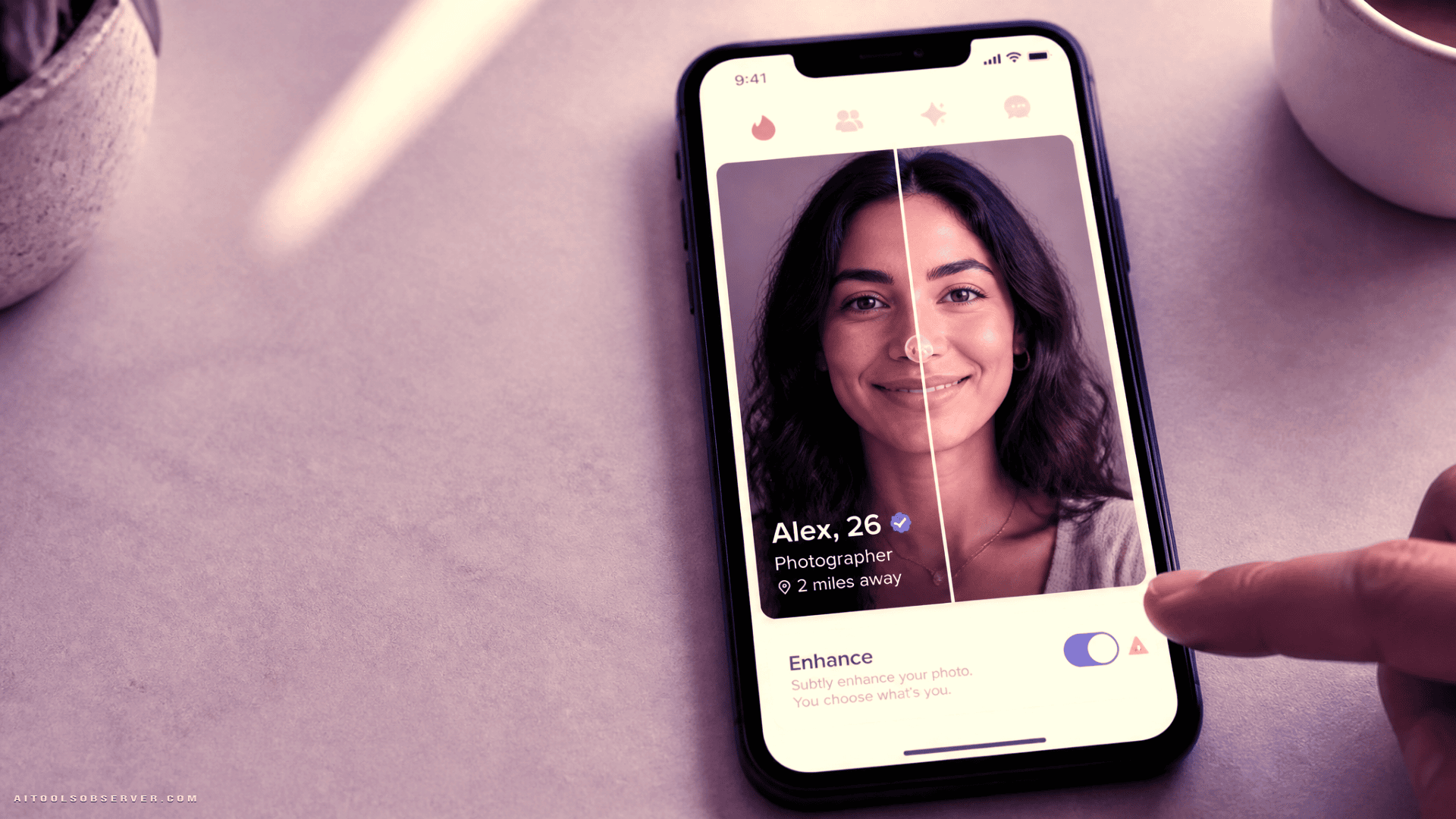
Tinder rolled out an in-app “Photo Enhance” tool designed to improve users’ profile photos automatically. For some users, it did more than sharpen lighting or adjust contrast. It altered facial features, changed skin tone, and added details that simply weren’t there.
One user, Jenny Rubin, opened the app to find a notification that her photo had been “enhanced.” When she checked, her closed-mouth smile had been replaced with a wide, toothy grin — one that wasn’t hers. The face in the photo looked like her, but wasn’t quite her.
Tinder confirmed to NBC News that the unintended changes affected a small number of users. The company paused the feature after the reports surfaced.
Why This Is a Bigger Problem Than a Bug
A glitchy filter is one thing. Altering someone’s face, skin tone, or smile without their knowledge is something else entirely.
Dating profiles are built on the premise of authentic self-presentation. When an AI tool changes how you look — even subtly — without your explicit consent, it undermines the entire point of the platform. Users aren’t just annoyed. They’re asking a legitimate question: who authorized this?
The answer, in this case, appears to be: no one did.
The Consent Gap in Consumer AI Tools
This incident highlights a pattern that’s becoming harder to ignore across consumer AI products. Features get shipped. Defaults get set. Users get opted in — sometimes without a clear moment where they agreed to let an AI modify their appearance.
There’s a meaningful difference between:
- Enhancing a photo (adjusting brightness, reducing noise)
- Altering a photo (changing facial features, skin tone, adding elements)
The first is a tool. The second is a decision that should require explicit user consent. When that line gets blurred in product design, incidents like this are the predictable result.
What It Signals for AI Tool Builders
Tinder isn’t a fringe startup experimenting in a vacuum. It’s a mainstream consumer app used by millions. If a product at that scale can ship an AI feature that modifies users’ faces without clear consent, it’s a signal that the industry still hasn’t built strong enough guardrails around AI image manipulation.
For anyone building or evaluating AI tools that touch personal data — especially biometric data like faces — this case is a useful reference point. A few things stand out:
- Default behavior matters. If a feature is on by default and modifies user appearance, that’s a consent problem waiting to happen.
- "Small number of users" doesn’t minimize the issue. When the harm is unauthorized facial alteration, scale doesn’t reduce the severity.
- Pausing is the right move, but it’s reactive. The better outcome is catching this before it ships.
What Users Should Know Right Now
Tinder has paused Photo Enhance following the reports. If you use Tinder and noticed unexpected changes to your profile photos, it’s worth reviewing your current photos and reverting any you didn’t manually approve.
More broadly, this is a good moment to audit any AI photo tools you use — on dating apps or elsewhere. Check what permissions you’ve granted, what defaults are enabled, and whether the tool distinguishes between enhancement and alteration.
AI photo tools can be genuinely useful. But useful and trustworthy aren’t the same thing, and right now, the gap between them is exactly where incidents like this happen.








Comments (0) No comments yet
Want to join this discussion? Login or Register.
No comments yet. Be the first to share your thoughts!