



What the Executive Order Actually Proposes

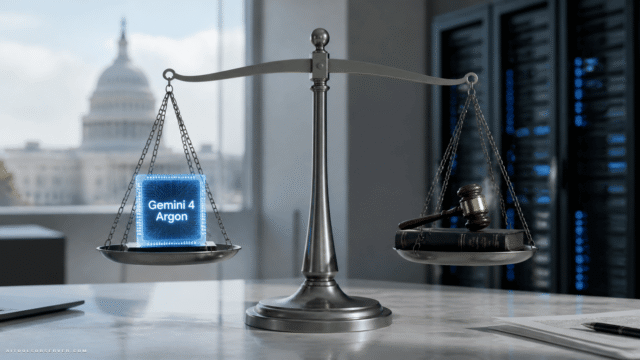
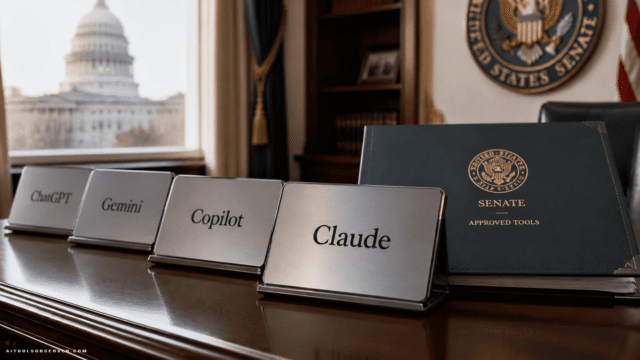
The draft order is structured around two distinct pillars: a pre-launch model review framework and a cybersecurity clearinghouse.
Under the first pillar, AI companies would voluntarily share advanced models with the federal government for a defined period ahead of public release. One version of the draft specifies a 90-day pre-launch window, though industry players — including OpenAI and Anthropic — have reportedly pushed for a significantly shorter period, with some preferring as few as 14 days.
The second pillar establishes a voluntary cybersecurity clearinghouse, coordinated by the Treasury Department alongside other federal agencies and participating AI companies. Its stated purpose is to identify and remediate security vulnerabilities in unreleased models before those vulnerabilities can be exploited in the wild.
The order also calls for expanded hiring at the US Tech Force, the government body responsible for modernizing federal computer infrastructure.
Why the Administration Is Moving Now

The catalyst appears to be Anthropic’s Mythos model — an advanced AI system the company says can exploit cybersecurity vulnerabilities at an unprecedented pace.
Anthropic has not released Mythos publicly. Instead, access is being granted through a tightly controlled consortium called Project Glasswing, with close coordination across federal, state, and local government stakeholders. OpenAI has similarly begun offering early access to its latest models for businesses and governments focused on strengthening cyber defenses.
These developments appear to have concentrated minds in Washington. Advanced AI models capable of supercharging cyberattacks represent a category of risk that is difficult to contain once a model is publicly deployed. Early government access — even on a voluntary basis — gives agencies a window to assess threats before they materialize at scale.
The Voluntary Framework: Strength or Limitation?

The word “voluntary” carries significant weight here, and it cuts both ways.
On one hand, a voluntary framework avoids the legal and political friction of mandatory regulation, making it easier to move quickly and maintain industry cooperation. On the other hand, it relies entirely on the goodwill and self-interest of AI companies to participate — and offers no enforcement mechanism if a company chooses to opt out.
The tension over the review window length illustrates this dynamic clearly. A 90-day period gives government evaluators meaningful time to assess model capabilities and risks. A 14-day window is closer to a formality. The final number will signal how much genuine oversight the administration is actually prepared to require.
NIST’s Role — and a Curious Disappearance
Earlier this month, the Department of Commerce’s National Institute of Standards and Technology announced that major tech companies had agreed to share unreleased AI models with the government for national security and public safety evaluations.
That announcement has since been removed from the Commerce Department’s website — a detail that raises questions about internal alignment and the pace at which policy is being finalized. Whether the NIST initiative feeds directly into the executive order framework, or represents a parallel track, remains unclear.
What This Means for the AI Tools Ecosystem

For founders and teams building on top of frontier models, this order introduces a new variable: pre-launch review periods could affect the cadence at which new model capabilities become available. A 90-day window, if adopted, would meaningfully delay access to the most advanced systems.
For enterprise buyers and government contractors, the cybersecurity clearinghouse is the more immediately relevant development. If it functions as intended, it creates a structured channel for identifying model-level vulnerabilities before deployment — a meaningful addition to any serious AI risk management framework.
For the broader market, the order signals that the era of entirely self-regulated AI development in the United States may be drawing to a close, even if the initial steps are framed as cooperative rather than compulsory.
The Bigger Picture

Voluntary frameworks are often the first draft of mandatory ones.
The administration’s willingness to engage directly with OpenAI, Anthropic, and other frontier labs on the structure of this order suggests a pragmatic approach — building industry buy-in before codifying requirements. But the underlying logic is clear: as AI models grow more capable of causing real-world harm at scale, the case for purely hands-off AI governance becomes harder to sustain.
How the final executive order reads — and whether the 90-day review window survives industry pressure — will be the first real test of whether this administration’s AI governance ambitions match its rhetoric.











Comments (0) No comments yet
Want to join this discussion? Login or Register.
No comments yet. Be the first to share your thoughts!