


The Alleged Scheme in Brief
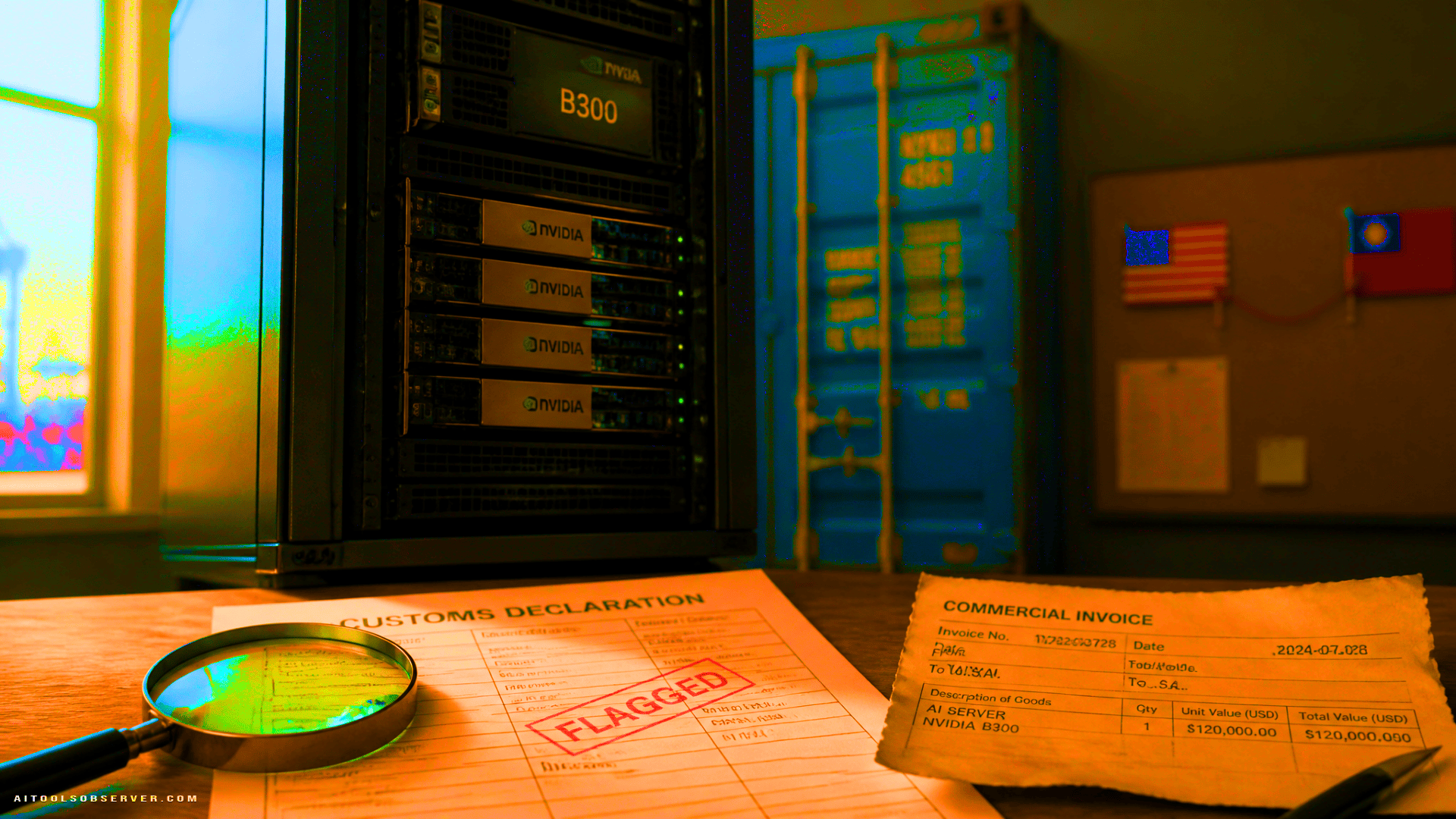
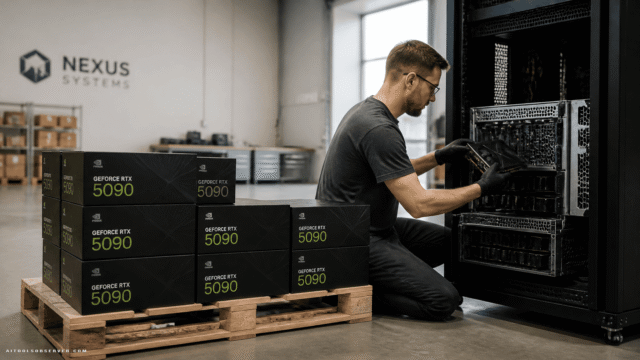
Since 2022, US export law has required a license to ship advanced semiconductors to China. The restriction exists to preserve a strategic advantage in AI development. Despite that framework, US authorities arrested Supermicro co-founder Wally Liaw in March, alleging that he coordinated the diversion of approximately $2.5 billion in restricted AI servers to Chinese customers beginning in 2024.
Taiwan launched its own parallel investigation and found that co-conspirators attempted to falsify documents to make 130 B300 servers appear installed and operational at a Taiwanese facility. According to Reuters, 74 of those servers were ultimately delivered to Chinese customers. Taiwanese customs officials detected irregularities and blocked the remaining 56 before they could follow the same route.
Taiwanese prosecutors have since alleged that an Nvidia senior manager and Supermicro employees colluded across multiple levels of the supply chain, motivated by substantial financial gain.
How the Compliance Failures Compound
Supermicro has confirmed it is cooperating with Taiwanese investigators and has already made internal changes, including terminating employees connected to the scheme through a third-party investigation. That same investigation cleared current senior officials of direct involvement.
However, the core problem is difficult to dismiss: billions of dollars in hardware moved to questionable clients without triggering meaningful internal controls. Investors have filed a securities fraud lawsuit against Supermicro, concerned that illicit sales may represent a significant share of the company’s revenue.
Nvidia CEO Jensen Huang was publicly critical of Supermicro’s compliance program before any Nvidia employees were directly linked to the scheme, stating that partners must meet compliance standards and urging improvement. The subsequent linking of an Nvidia senior manager to the alleged scheme makes that earlier statement considerably more complicated.
Taiwanese prosecutors noted that all indicted employees were fully aware of the rigorous internal control procedures at both companies — and that the scheme became more brazen over time, not less.
The Remote Access Loophole
Physical server smuggling is only one dimension of the problem. A separate and arguably harder-to-close gap involves remote cloud-based access to Nvidia chips through data centers in Southeast Asia.
US lawmakers are currently weighing the Remote Access Security Act (RASA), which would extend export controls to cover remote access to critical hardware and software. Industry experts have identified remote compute access as a meaningful driver of capability gains for Chinese AI companies including Alibaba, ByteDance, and Tencent.
The scale of the potential exposure is notable. Hyperscalers are reportedly planning to expand from two data centers in the region today to 31 projects underway — which would substantially increase the available remote compute accessible to Chinese firms.
RASA will likely face pushback from cloud providers, who would bear the compliance costs, including implementing stricter know-your-customer protocols. Whether the bill advances or stalls, the underlying vulnerability it targets is real and documented.
A Pattern With Historical Precedent
One analyst, Lauren Barden-Hair, an expert in China’s influence over multinational firms in Southeast Asia, has argued that the US was not simply outmaneuvered — it was repeating a known pattern. She draws a direct line to “Chinagate,” the 1998 campaign finance scandal in which China used Southeast Asian companies as intermediaries to obscure its involvement and influence.
The unnamed Southeast Asian firm that US prosecutors describe as central to the Supermicro scheme appears to follow the same structural logic: a business entity based outside China’s sovereign territory, with deep financial ties to Chinese interests, providing plausible cover for restricted activity.
That framing matters for how the US approaches enforcement going forward. Document forgery and employee misconduct are addressable through prosecution. Structurally embedded intermediary networks operating across multiple jurisdictions are a different order of problem.
What This Means for AI Hardware Controls
A few practical implications stand out for anyone tracking the AI tools and infrastructure ecosystem:
- Compliance is now a competitive variable. Companies building on Nvidia hardware — or evaluating AI infrastructure vendors — should treat export compliance track records as a due diligence factor, not a background assumption.
- The B300 server market is under active scrutiny. Any supply chain touching advanced Nvidia server hardware and Southeast Asian logistics is operating in a higher-risk regulatory environment than it was 18 months ago.
- Remote access to compute is the next regulatory frontier. If RASA advances, cloud providers offering GPU access internationally will face new compliance obligations. That affects pricing, availability, and vendor selection for teams relying on cloud-based AI infrastructure.
- Nvidia’s 15% price increase on AI servers adds a further layer: higher margins on illicit sales increase the incentive for bad actors, even as enforcement pressure rises.
The Supermicro case is not primarily a story about two companies making compliance mistakes. It is a demonstration of how determined actors exploit the gap between the speed of hardware deployment and the pace of regulatory adaptation. That gap remains open.














Comments (0) No comments yet
Want to join this discussion? Login or Register.
No comments yet. Be the first to share your thoughts!