


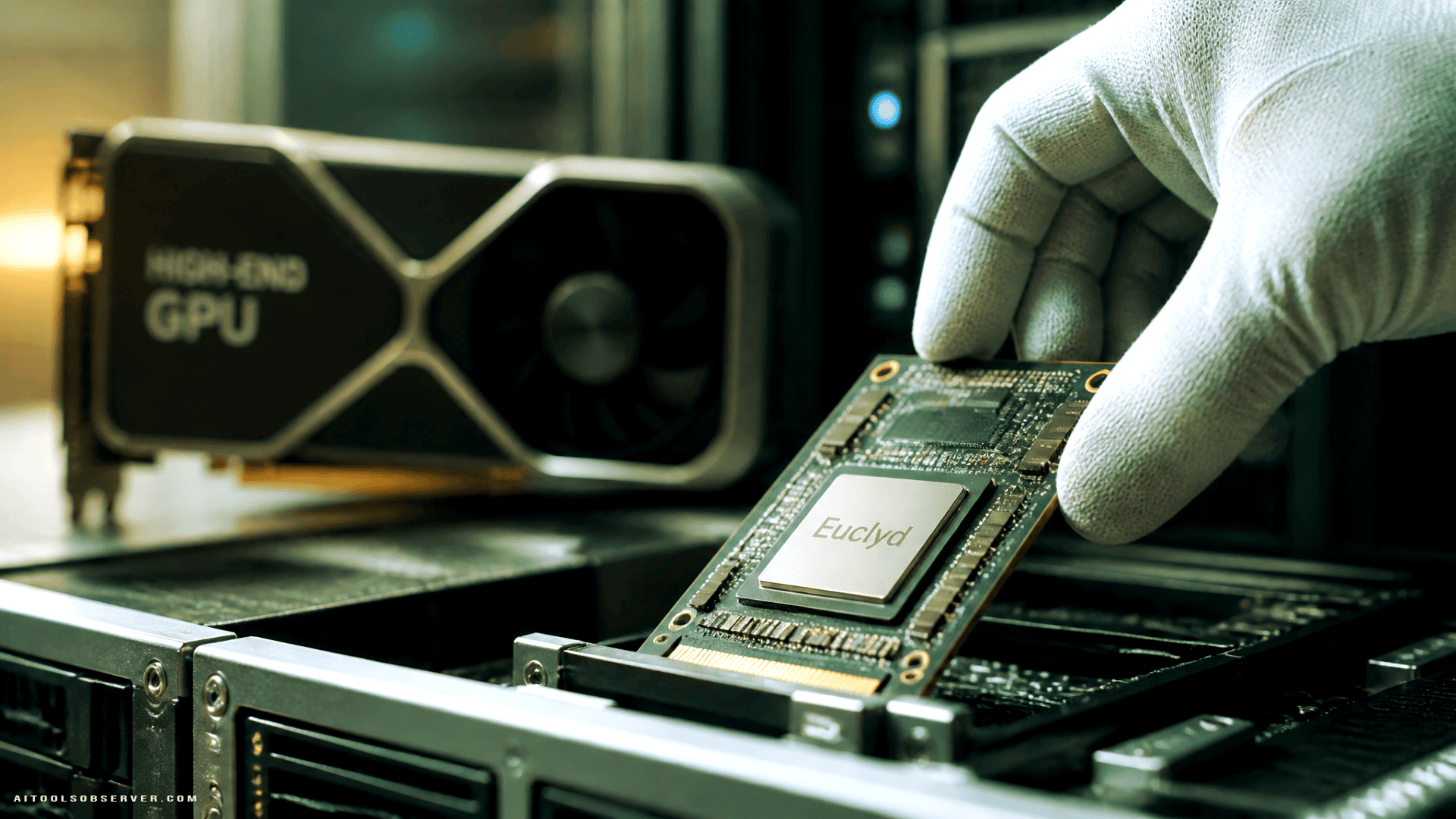
What Euclyd Is Actually Building
Euclyd isn’t just tweaking existing chip designs. The company is developing a full AI chip system — processor and memory architecture together — specifically optimized for inference workloads, not training.
That distinction matters. Nvidia’s GPUs were originally built for gaming and later repurposed for AI. Euclyd is designing from scratch with inference in mind, targeting lower energy consumption and reduced infrastructure costs for AI data centers.
The company is pursuing two revenue streams:
- Hardware sales — physical rack systems sold to enterprise customers who want secure, self-hosted AI inference
- IP licensing — selling its chip architecture to companies that want to build their own processors on top of existing technology
Why Samsung’s Involvement Goes Beyond the Check
Samsung isn’t just writing a check here. As one of the largest memory manufacturers in the world, Samsung brings supply chain access, engineering depth, and manufacturing relationships that most chip startups can only dream of.
Euclyd’s CEO put it plainly: Samsung can help with far more than money — they understand memory, systems engineering, and global supply chains at a scale that directly maps to what Euclyd needs to execute.
That kind of strategic backing can compress timelines and reduce the risk of hitting production bottlenecks, which is where many hardware startups stall out.
The Bigger Picture: Nvidia Isn’t the Only Option Anymore
Nvidia became the world’s most valuable company largely because its GPUs dominated both AI training and inference. But that near-monopoly is now drawing competition from multiple directions.
OpenAI announced its first in-house AI chip. Google, AWS, and Meta are all developing custom silicon for AI workloads. Euclyd is entering a crowded but genuinely open race — the demand for inference infrastructure is growing fast enough that multiple winners can emerge.
The key tension is cost and efficiency. Running AI models at scale is expensive, and AI data centers operators are actively looking for alternatives that reduce energy consumption without sacrificing performance.
What to Watch
Euclyd’s chips haven’t been proven at commercial scale yet. The company is targeting physical chip system rollouts starting in 2028, with thousands of enterprise customers by 2030. That’s a long runway, and a lot can change in AI hardware between now and then.
Still, the funding size, the strategic investor mix, and the specific focus on inference efficiency signal that this is worth tracking — especially for enterprises evaluating self-hosted AI infrastructure options over the next few years.
The practical takeaway: If you’re making AI infrastructure decisions today, Nvidia remains the default. But the competitive landscape is shifting fast enough that locking into any single hardware vendor without an exit strategy is a risk worth thinking about now, not in 2028.















Comments (0) No comments yet
Want to join this discussion? Login or Register.
No comments yet. Be the first to share your thoughts!