


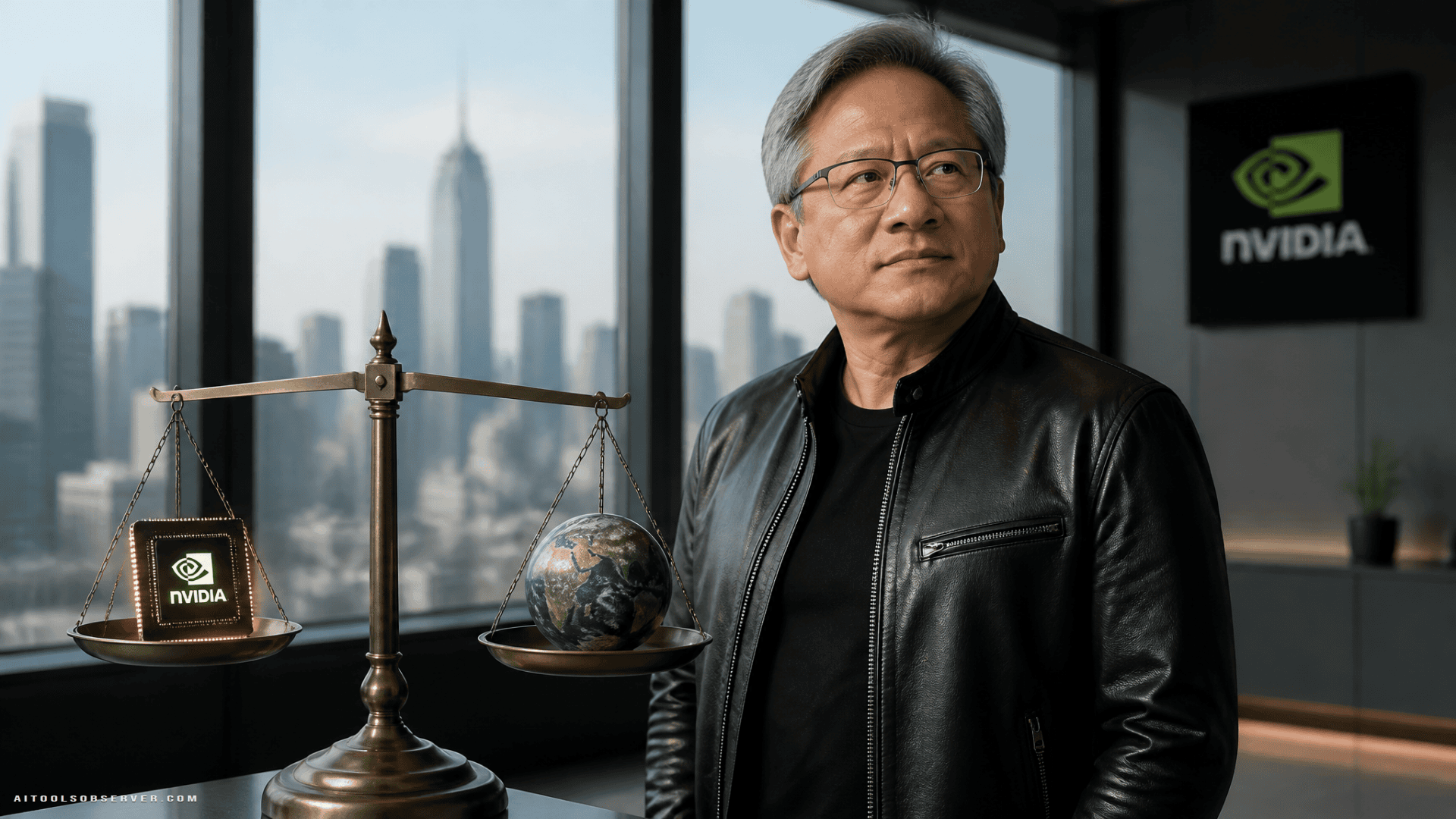
Huang’s Core Argument: Fear Is a Business Strategy
Huang didn’t just dismiss extinction warnings. He went further, suggesting that calls to “slow down” AI development may be less about safety and more about legal protection.
His exact framing: companies asking for a slowdown aren’t asking for new laws — they’re asking to be relieved of existing ones.
That’s a pointed accusation. It implies that executives like Anthropic’s Dario Amodei and OpenAI’s Sam Altman, who have publicly urged caution, may be positioning their companies to limit liability exposure rather than genuinely advocate for safer development.
Whether or not you agree with Huang, this reframes the entire safety debate. It shifts the question from “how dangerous is AI?” to “who benefits from the narrative that AI is dangerous?”
Why Nvidia’s Position Makes Sense — and Why It’s Worth Scrutinizing
Huang acknowledged that Nvidia‘s business success is directly tied to the responsible deployment of AI products. That’s a real incentive to care about safety outcomes.
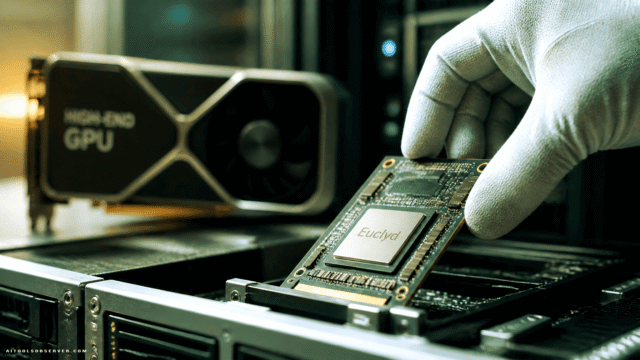
But it’s also worth noting the obvious: Nvidia sells the chips that power AI development. A slowdown in AI model training and deployment would directly hurt Nvidia’s revenue. Huang has a financial stake in keeping the accelerator pressed down.
That doesn’t make him wrong. It just means his perspective deserves the same critical reading he’s applying to others.
The Regulation Question Is Getting More Complex
The debate isn’t just philosophical. Real policy decisions are being made right now.
A few things happening simultaneously:
- US-China AI tensions are intensifying, with Nvidia’s most powerful chips still facing export restrictions to China under Washington’s controls.
- US Treasury Secretary Scott Bessent held talks with Chinese Vice Premier He Lifeng, with both sides discussing a new AI safety notification mechanism — a sign that AI is now firmly a geopolitical negotiating chip.
- A US-China summit between Trump and Xi is in the works, with AI on the agenda alongside tariffs and critical minerals.
For anyone building or buying AI tools, this geopolitical layer matters. Export controls shape which chips are available, which models get built, and ultimately which AI products reach the market.
The Safety Debate Is Splitting the Industry
Huang’s comments reflect a genuine divide — not just between him and Amodei or Altman, but across the broader industry.
Multiple people with experience at OpenAI, Meta, and DeepMind have reportedly expressed skepticism that unchecked AI development would lead to mass casualties. That’s a significant data point. These aren’t outsiders dismissing risk — they’re people who’ve worked inside the systems being debated.
At the same time, King Charles used a UK AI summit to warn tech leaders directly about “existential dangers,” and the conversation is clearly reaching heads of state. Trump, for his part, called fears about AI a “hoax” during a live phone call with Huang at a tech conference — an unusual moment that signals where US executive-branch sentiment currently sits.
The result is a fractured landscape:
- One camp sees AI risk as a serious, near-term concern requiring regulatory guardrails and slower development.
- Another camp sees those warnings as exaggerated, potentially self-serving, and counterproductive to innovation.
- Governments are somewhere in between, trying to negotiate safety frameworks while also competing for AI dominance.
What This Means If You’re Evaluating AI Tools
For founders, marketers, and operators choosing AI tools right now, this debate has practical implications.
Regulatory uncertainty is real. The rules around AI liability, safety requirements, and export controls are actively being shaped. Tools built on models from companies that face regulatory scrutiny could see feature changes, access restrictions, or pricing shifts.
The US-China chip dynamic affects availability. If you’re evaluating AI infrastructure or platforms that rely on specific hardware, the export control environment is worth monitoring. It affects what gets built and at what cost.
Safety claims deserve scrutiny in both directions. When an AI company emphasizes its safety commitments, ask whether that’s reflected in its product behavior — or whether it’s positioning. When a company dismisses safety concerns entirely, apply the same test.
The Takeaway
Huang’s comments are a useful corrective to uncritical fear — but they’re not a reason to stop thinking critically about AI risk and regulation.
The more useful frame: the AI safety debate is now as much about business strategy, liability, and geopolitics as it is about the technology itself. Understanding who benefits from each position helps you read the landscape more clearly — and make smarter decisions about which tools, platforms, and providers you actually trust.








Comments (0) No comments yet
Want to join this discussion? Login or Register.
No comments yet. Be the first to share your thoughts!