



What changed
Based on the announcement, there are three important additions:
- New AI-related checks in the Zero Trust Assessment tool
- A new DevSecOps pillar in the Zero Trust Workshop
- New guidance for securing AI agents, memory, and development workflows
The bigger shift is less about a new security slogan and more about execution. Microsoft appears to be moving Zero Trust for AI from a high-level framework into something security and platform teams can actually use to assess exposure, prioritize fixes, and build a roadmap.
Why this matters now
AI tools are changing how software gets built and how work gets done across the enterprise. Developers are using assistants to generate code, suggest packages, write infrastructure configurations, and automate parts of testing and delivery.
That speed comes with tradeoffs. If an AI assistant has access to sensitive repositories, if an agent stores memory without clear controls, or if a pipeline pulls in insecure dependencies, the blast radius grows quickly.
This is where Zero Trust fits. The core ideas still apply:
- Verify explicitly
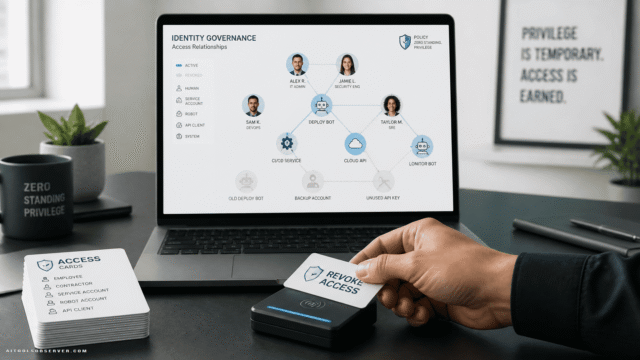
- Use least privilege
- Assume breach
What changes in the AI era is where those principles need to be enforced. It’s no longer just users, devices, and apps. It’s also agents, copilots, memory, model-connected tools, build systems, and machine-assisted workflows.
The new AI pillar in the Zero Trust Assessment
Microsoft says its Zero Trust Assessment now expands coverage with new pillars for AI, Security Operations, and Infrastructure, alongside existing areas like Identity, Devices, Network, and Data.
For AI adoption, that matters because many organizations still don’t have a clean baseline. They may know they’re using copilots or AI-powered development tools, but not whether the right controls are in place around permissions, data access, governance, or runtime behavior.
The practical value of an assessment tool like this is straightforward:
- It helps teams see current posture
- It identifies gaps across AI and non-AI environments
- It turns findings into prioritized recommendations
Microsoft also says the reporting now supports both practitioner guidance and executive-ready summaries. That’s useful because AI security projects often stall when technical findings don’t translate into business priorities or phased action.
The DevSecOps update is the part many teams will care about most
The most operational update here is the new DevSecOps pillar in the Zero Trust Workshop.
According to the description, this pillar includes 15 control groups and 91 tasks designed to apply Zero Trust from source code to cloud deployment. That suggests Microsoft is focusing less on abstract policy and more on the day-to-day controls that shape secure development.
The announcement points to practical areas such as:
- Developer platforms
- CI/CD pipelines
- Source repositories
- Dependencies
- Artifacts
- Infrastructure as code
This is a smart place to focus. AI-assisted development doesn’t just speed up coding. It can also speed up insecure coding, insecure package selection, and risky deployment patterns if governance is weak.
For teams already using code assistants or autonomous workflows, the key question is no longer “Should we allow AI in development?” It’s “What controls do we need before this becomes a supply-chain problem?”
AI memory is getting treated as a security boundary
One of the more interesting parts of the update is the additional guidance around AI memory.
Microsoft says the workshop’s AI pillar now includes guidance based on its AI Memory framework, with the idea that memory should be treated as a governed security boundary. In practical terms, that means memory isn’t just a feature that helps an agent feel more useful or context-aware. It’s also a place where sensitive intent, user context, and operational history may accumulate.
That raises a few real security questions:
- What gets stored in memory?
- Where did that information come from?
- How long does it persist?
- Who can inspect, modify, or delete it?
- How much control does the user have?
For buyers evaluating AI agent platforms, this is becoming an important filter. Strong agent performance is one thing. Controlled memory behavior is another.
What the workshop is designed to do
Microsoft’s Zero Trust Workshop appears to follow a simple sequence:
- Plan the right pillars and stakeholders
- Run the Zero Trust Assessment for a baseline
- Use the workshop to build a phased roadmap
The tasks are organized into “First, Then, Next,” which is useful for teams that need a realistic implementation path rather than a giant control checklist.
The new DevSecOps pillar also highlights four AI-assisted development tasks in particular:
- Code governance
- Tool allowlisting
- Data protection
- AI and machine learning pipeline supply-chain security
That’s a practical set of priorities. If you’re trying to reduce AI-related risk in development, those are strong places to start.
What this means for AI agents and copilots
The announcement makes clear that Microsoft is thinking beyond model security in the narrow sense. The scope includes AI agents, copilots, autonomous systems, development tooling, and runtime operations.
That matters because most real-world AI risk now sits in the layer around the model:
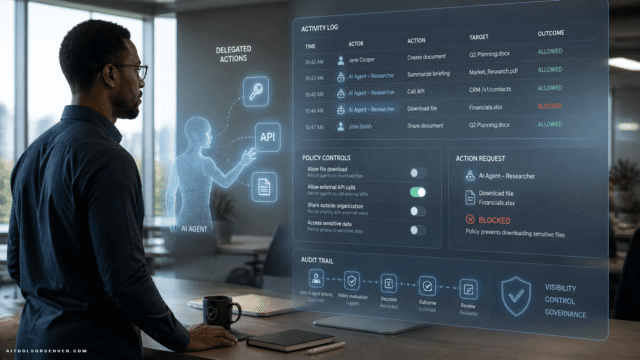
- Excessive permissions
- Weak identity controls
- Untrusted tools
- Insecure source code access
- Leaky memory handling
- Compromised dependencies
- Poorly governed pipelines
In other words, the problem is often not just “Is the model safe?” It’s “What can this AI-connected system access, change, remember, or trigger?”
That’s the right framing for any organization trying to operationalize secure AI adoption.
The broader pattern: AI security is becoming infrastructure security
A useful way to read this launch is that AI security is no longer a separate side project. It is increasingly part of identity, infrastructure, development, data governance, and operations.
That has two implications.
First, organizations probably don’t need an entirely separate security philosophy for AI. They need to extend existing principles into new workflows and trust boundaries.
Second, tool buyers should be cautious about products that promise AI safety in isolation. If a vendor can talk about model behavior but not permissions, memory, repositories, pipelines, and runtime controls, the picture is incomplete.
What to watch if you’re evaluating AI security tools
If you’re comparing platforms, frameworks, or security products in this category, this update highlights a useful checklist.
Look for solutions that can help with:
- Baseline assessment across AI and non-AI environments
- Policy enforcement for AI agents and copilots
- Least-privilege access to code, data, and tools
- Governance for AI memory and context persistence
- Visibility into CI/CD and software supply-chain risk
- Actionable remediation, not just alerts
The strongest tools in this space will likely connect AI usage to the rest of the security stack, not treat it as a disconnected layer.
Final takeaway
Microsoft’s update is notable because it focuses on the messy middle of AI security: the place where agents touch source code, memory stores, pipelines, infrastructure, and enterprise data.
For security leaders, the useful takeaway is simple: if AI is entering development and operations, your Zero Trust model needs to extend there too. Start by baselining exposure, tighten permissions around agents and tools, and treat memory and software supply chains as first-class security concerns before convenience turns into risk.








Comments (0) No comments yet
Want to join this discussion? Login or Register.
No comments yet. Be the first to share your thoughts!