


What Okta Actually Launched
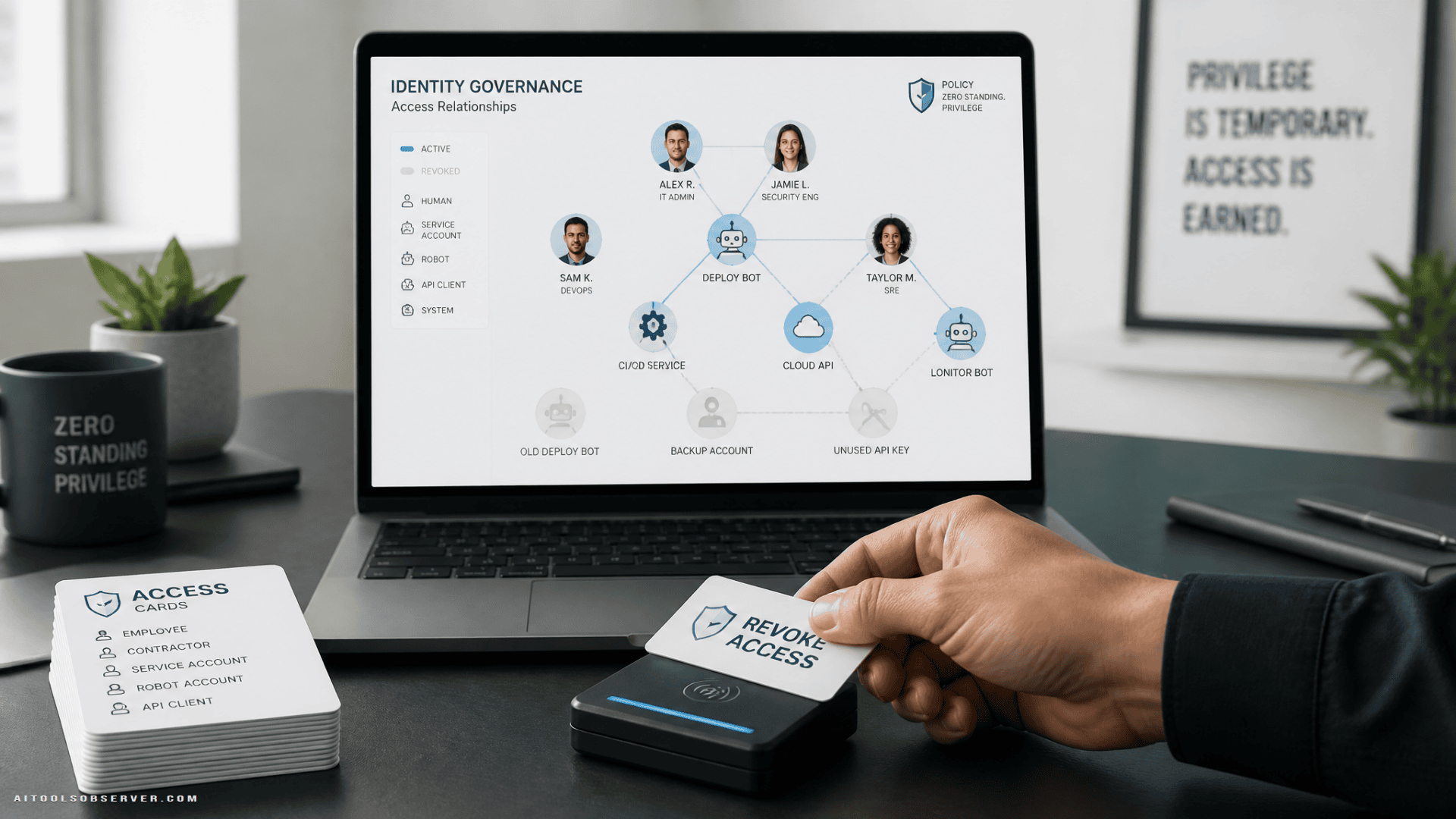
Okta introduced two capability sets aimed at closing the gap between how enterprises manage human access and how they’re (often not) managing AI agent access:
- AI Identity Governance — designed to bring structured oversight to both human users and nonhuman identities like AI agents and service accounts.
- Zero Standing Privilege — real-time permission revocation that removes access when it’s no longer needed, rather than letting it accumulate indefinitely.
The platform also appears to include Advanced Entitlement Management and faster 48-hour integrations, positioning it for complex, multi-cloud environments where identity complexity compounds quickly.
Why This Matters Now
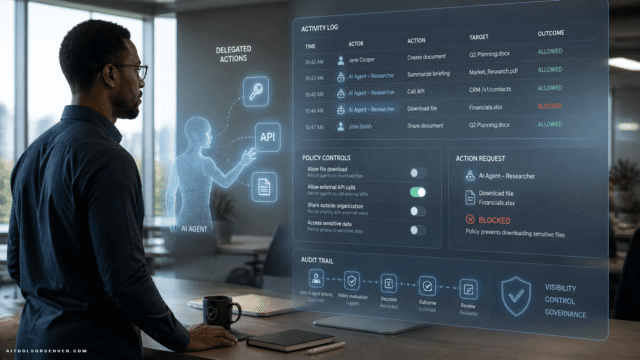
Enterprises are deploying AI agents faster than their security teams can track them. Each agent needs access to data, APIs, and systems — and unlike a human employee, there’s no offboarding meeting when the workflow changes.
The result is a growing layer of nonhuman identities with permissions that nobody’s actively reviewing. Okta is betting that governance tooling built specifically for this problem is the next meaningful expansion of its core identity platform.
This isn’t a bolt-on. For a pure-play identity provider, covering AI agents is a natural extension of covering humans — it’s the same question: who (or what) can access what, and should they still be able to?
The Practical Angle for Enterprise Teams
If your organization is running AI agents, automation workflows, or LLM-connected tools inside corporate systems, the permission risk is real and often underestimated. A few things worth thinking about:
- Nonhuman identities accumulate fast. Every new AI integration is a new identity with access rights that may outlive its usefulness.
- Standing privilege is a liability. Persistent access that isn’t actively needed is an attack surface. Zero Standing Privilege flips the default.
- Governance tooling is catching up. Okta’s move signals that the identity management category is adapting — which means the tooling to manage this risk is becoming more accessible.
What to Watch
The real test isn’t the launch — it’s adoption. Whether these tools show up in enterprise contracts and drive meaningful subscription growth will become clearer as Okta reports on fiscal 2027 performance. Commentary on Zero Standing Privilege and Advanced Entitlement Management uptake will be the signal worth tracking.
For now, the launch is a useful indicator of where the identity security market is heading: toward treating AI agents as first-class citizens in access control, not afterthoughts.
The takeaway: If you’re evaluating enterprise security tools or building AI-powered workflows, identity governance for nonhuman identities is no longer a niche concern. It’s becoming table stakes — and the tooling is finally starting to reflect that.












Comments (0) No comments yet
Want to join this discussion? Login or Register.
No comments yet. Be the first to share your thoughts!