



What changed
A group of 116 companies and entities signed a letter urging businesses and policymakers to act decisively on AI-era cybersecurity.
Based on the available context, the letter centers on three practical asks:
- Raise the security bar across organizations
- Improve and modernize cyber defense tools
- Coordinate government support, especially for under-resourced critical infrastructure
The message is straightforward: there is a limited window to strengthen defenses before agentic AI threats become even harder to contain.
Why this matters now
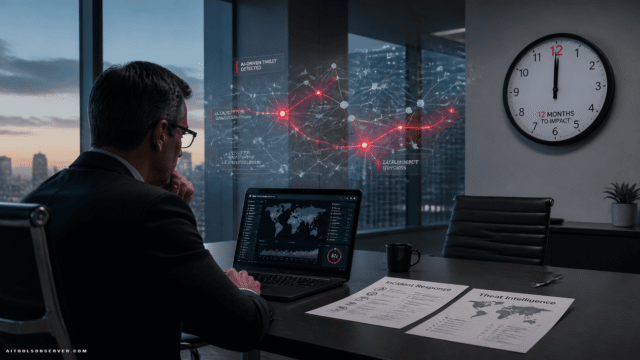
The biggest shift is the rise of agentic threats. Instead of simple one-off attacks, defenders are increasingly worried about AI-enabled systems that can help plan, execute, and iterate attacks quickly.
That changes the economics of cybercrime. If attackers can move faster with AI assistance, defenders need better tooling, tighter workflows, and stronger baseline security just to keep up.
This is also why the call includes both low-cost and frontier models. Not every organization can afford cutting-edge systems, but many still need usable AI security tools that improve detection, response, and resilience.
Why hospitals and water systems are in focus
The letter reportedly calls for cyber defense to be more accessible for critical infrastructure such as hospitals and water treatment plants. That detail matters.
These organizations often sit at the uncomfortable intersection of high impact and limited resources. They can’t easily absorb downtime, but they may not have the budget, talent, or tooling depth of a large cloud provider or major enterprise.
For AI tool buyers, this is an important lens. Security is no longer just a feature for software teams or Fortune 500 buyers. It increasingly affects public services, operational systems, and organizations where a cyber incident has direct real-world consequences.
The market signal behind the headlines
This push also reflects a broader market reality: cybersecurity is becoming more central to the AI stack, not separate from it.
As AI adoption spreads, enterprises are asking harder questions:
- Can this model or platform be governed safely?
- Does it increase attack surface?
- Can it detect abuse, prompt manipulation, or unauthorized access?
- How quickly can teams respond if something goes wrong?
That helps explain why security vendors and AI platform companies are increasingly part of the same conversation. Buyers don’t just want smarter models. They want models, apps, and workflows that are safer to deploy at scale.
The Hugging Face angle adds urgency
The context around a recent Hugging Face breach adds a sharper edge to this story. Even without expanding beyond the available description, the takeaway is clear: well-known AI platforms are not insulated from emerging attack methods.
That matters because many companies treat popular AI ecosystems as default-safe by association. In practice, visibility, scale, and open collaboration can also attract attackers.
For teams using model hubs, cloud AI platforms, copilots, or agent frameworks, the lesson is simple: platform trust does not replace internal controls.
What “raise the security bar” should mean in practice
This phrase can sound vague, but for operators and buyers it points to concrete decisions.
For enterprises
Security reviews can no longer happen after AI deployment. They need to happen during vendor selection, workflow design, and user rollout.
Key questions to ask:
- What data does the tool access?
- What permissions do agents or automations receive?
- Are logs, monitoring, and audit trails available?
- How are model outputs constrained in sensitive workflows?
- What happens if the system is manipulated or misused?
For AI tool vendors
AI products increasingly need to show they can handle adversarial pressure, not just deliver productivity gains.
That usually means clearer controls around:
- Identity and access
- Data isolation
- Abuse monitoring
- Human oversight
- Incident response
- Safe defaults for automation and agent permissions
For public sector and infrastructure teams
The push for coordinated government action suggests a growing gap between the threat level and the defensive capacity of many essential services.
If that gap widens, the issue stops being about software procurement and becomes a resilience problem.
What this means for AI tool selection
For AiToolsObserver readers, this news is a reminder that AI tool comparison should include security maturity, not just features and speed.
When evaluating AI platforms, copilots, or agent tools, look beyond demos and benchmark claims. Focus on operational risk.
A useful shortlist should include questions like:
- Is the tool designed for controlled deployment?
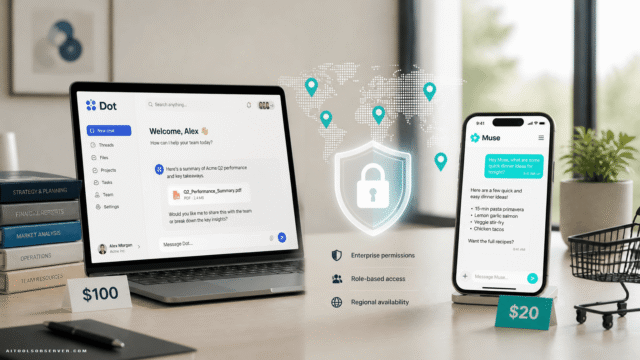
- Does it support role-based access and policy enforcement?
- Can it fit into existing security operations?
- Is it realistic for your team’s budget and complexity level?
- Does it reduce risk, or quietly add more of it?
In other words, “works” now includes “works safely.”
The larger industry takeaway
This call for action suggests the AI industry is entering a more serious phase of cybersecurity coordination. The concern is no longer theoretical. It’s about whether defenders can keep pace as AI capabilities spread across both legitimate and malicious use cases.
That does not mean every AI deployment is unsafe. It means security can no longer be treated as an add-on once tools are already embedded in critical workflows.
What to do next
If you’re adopting AI tools this year, treat cybersecurity as part of product evaluation from day one. Prioritize vendors and workflows that make oversight, access control, and incident response easier, not harder.
The useful takeaway is simple: as agentic threats rise, the smartest AI choice may not be the most powerful tool. It may be the one your team can actually defend.










Comments (0) No comments yet
Want to join this discussion? Login or Register.
No comments yet. Be the first to share your thoughts!