



What GPT-Synopsys Actually Does
The distinction here matters. Most AI coding or engineering assistants work alongside tools. GPT-Synopsys is being trained to use the tools as an expert engineer would—executing EDA workflows, reading results, and making iterative adjustments.
Engineers would delegate specific design objectives to the AI system. Those objectives include:
- PPA optimization — balancing power, performance, and area tradeoffs
- Timing closure — resolving timing violations across complex design hierarchies
- Verification closure — confirming that the design behaves as specified before tape-out
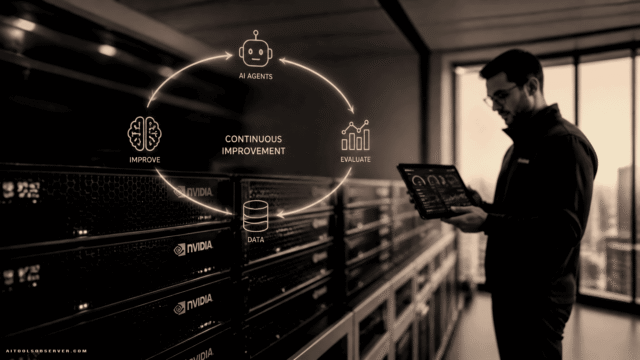
The agents handle the iterative tool-running loop. Engineers review outcomes rather than manage every step of the process manually.
The Infrastructure and Security Model
GPT-Synopsys will run on OpenAI-hosted infrastructure and is designed to integrate with Synopsys.ai and the Synopsys Autopilot agentic AI platform. It will also interoperate with customer agent harness systems, meaning teams can embed it into existing workflows rather than rebuilding around it.
For semiconductor companies, IP protection is non-negotiable. The partnership addresses this directly:
- Customer design data is not used to train the model
- Data is encrypted at rest and in transit
- Configurable retention, audit, and permission controls are included
- Enterprise-grade governance and access controls are built in
This is a meaningful commitment. Semiconductor IP is among the most sensitive proprietary data in any industry, and any agentic system touching live design files needs a credible security posture.
Why This Partnership Makes Structural Sense
OpenAI has a direct incentive to improve the chips that run its own infrastructure. As Greg Brockman noted in the announcement, better chips enable better AI—and broader access to it. Synopsys, for its part, holds deep domain expertise in EDA and already operates an agentic AI platform. The combination of frontier model capability with ground-truth engineering tooling is the core logic of the deal.
Synopsys CEO Sassine Ghazi framed the goal as accelerating chip development without compromising the rigor required for manufacturing success. That framing is precise and appropriate—speed without first-time-right silicon is not a useful outcome in this industry.
Early Engagements Are Already Underway
The partnership is not purely forward-looking. Early technology engagements are reportedly underway with leading semiconductor customers, which suggests the system is being tested against real design workloads rather than benchmarks alone.
The joint service offering bundles compute, model access, and licenses into a single package—reducing procurement friction for enterprise customers evaluating the system.
What to Watch
The practical test for GPT-Synopsys will be whether it reduces meaningful cycle time on real tapeouts, not just on isolated optimization tasks. Chip design involves deeply interdependent constraints, and agentic systems that optimize one dimension while degrading another create more work, not less.
If the system can genuinely close verification loops and handle PPA tradeoffs with the consistency of an experienced engineer, it represents a significant shift in how semiconductor teams are structured and staffed. If it handles the routine iteration reliably while escalating edge cases to human engineers, that alone would be a substantial productivity gain.
For teams evaluating AI tooling in hardware design, this partnership signals that agentic AI is moving into one of the most technically demanding domains in engineering—and that the major EDA vendors are not waiting on the sideline.












Comments (0) No comments yet
Want to join this discussion? Login or Register.
No comments yet. Be the first to share your thoughts!