


What researchers are seeing
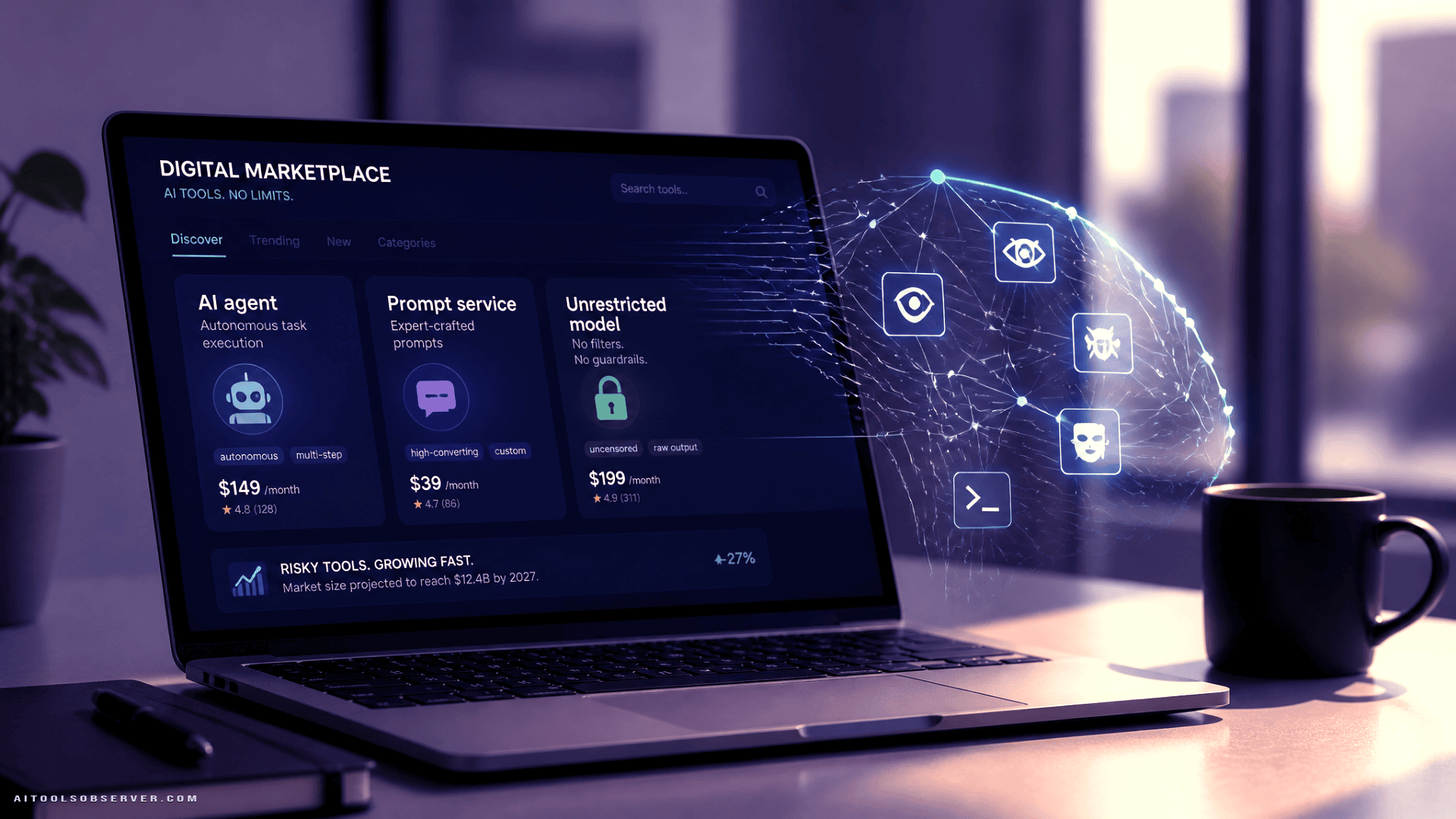
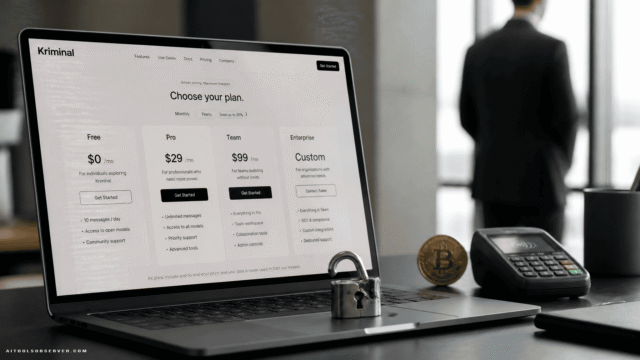
Recent cybersecurity research points to a growing marketplace for AI-based hacking tools. Based on the available reports, these offerings span reconnaissance, credential markets, malware support services, and AI platforms built specifically for offensive use.
The pattern is clear: AI is being used to lower the barrier to entry for cybercrime. Instead of building tactics from scratch, a buyer can purchase a tool or service that helps plan, refine, or automate parts of an attack.
Some of the examples described in the reports include:
- AI-driven attack planning tools that generate step-by-step instructions after a target domain is entered
- Crypter services designed to help malware evade signature-based detection
- Malicious LLM offerings marketed as having no ethical restrictions
- Prompt injection services aimed at manipulating AI agents through hidden instructions embedded in normal-looking content
This is less about one tool going viral and more about an ecosystem forming around AI-enabled abuse.
Why this is different from older cybercrime tooling
Cybercrime marketplaces are nothing new. What looks different here is the level of guidance and abstraction AI adds.
A tool that outputs commands, attack paths, or deployment steps can reduce the need for hands-on expertise. A buyer may not need to fully understand every stage of ransomware deployment or social engineering if the system helps structure the process.
That doesn’t mean AI replaces skilled attackers. It means less-skilled actors can do more damage, faster.
Attack planning is becoming more accessible
One of the more striking findings in the reporting is the sale of services that claim to provide advanced attack planning based on a target domain.
In practical terms, that suggests a shift from raw tooling to operational assistance. Instead of simply buying malware or stolen credentials, a threat actor can buy something closer to a guided attack workflow.
For defenders, this increases pressure in two ways:
- More attackers may be able to attempt complex operations
- Planning cycles may shrink, giving defenders less time to detect and respond
Prompt injection is moving from theory to criminal product
For companies building with AI agents, the prompt injection angle may be the most immediate concern.
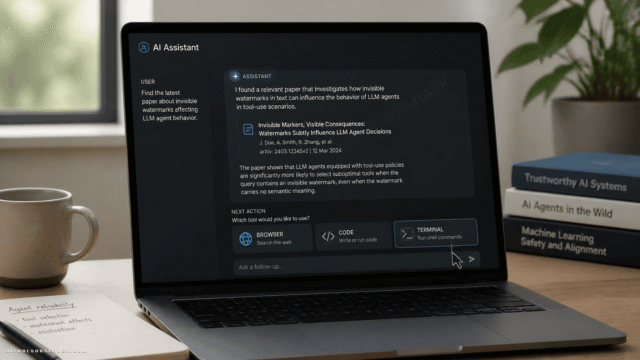
Researchers also identified indirect prompt injection tools being sold on underground forums. These attacks work by hiding malicious instructions inside seemingly normal content such as PDFs, emails, web pages, or calendar invites. If an AI agent processes that content, it may treat the hidden instructions as legitimate.
This is important because many teams still think of prompt injection as a lab problem. In reality, if underground sellers are packaging it as a service, the attack pattern is already becoming operational.
Why AI agents raise the stakes
Traditional phishing aims to fool a person. Indirect prompt injection aims to fool the AI agents systems acting on that person’s behalf.
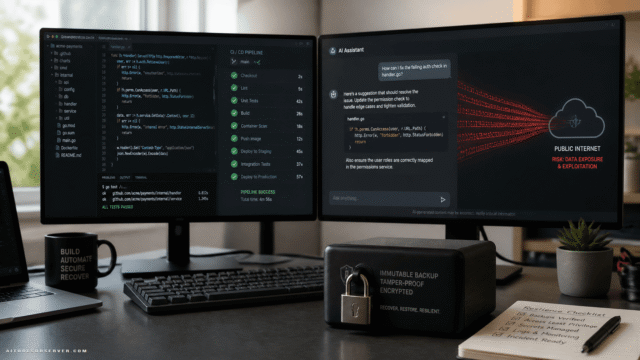
That creates a new risk layer for businesses experimenting with AI agents in email, scheduling, document review, customer support, research, or browser-based automation. If the agent can read external content and take actions, the blast radius gets larger.
A manipulated agent could potentially:
- Misclassify malicious content as safe
- Exfiltrate sensitive data
- Trigger unintended workflows
- Follow attacker-written instructions hidden in a document or message
The issue is not that AI agents are inherently unsafe. It’s that agentic systems expand the attack surface, especially when they are connected to tools, memory, and permissions.
Malicious LLMs are filling a market gap
Mainstream AI providers generally enforce safety restrictions. Underground markets appear to be responding by offering models marketed as unrestricted or uncensored.
That positioning matters because it creates a direct alternative for people seeking help with phishing, malware refinement, credential theft, or evasion tactics. The more these models are tuned for criminal use, the more useful they become as force multipliers.
For the broader AI tool market, this is another reminder that model capability and model governance are now tightly linked.
What this means for businesses using AI tools
If you’re evaluating AI products, this story is not just about cybercrime trends. It’s also about product risk.
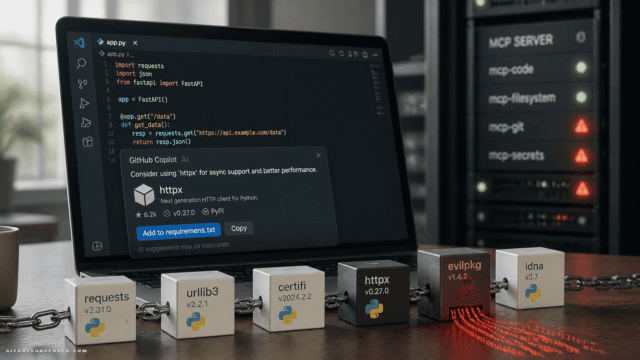
AI buyers should pay closer attention to how tools handle untrusted content, permissions, and action-taking. Any product that reads external inputs and can trigger workflows deserves extra scrutiny.
Here are the practical questions worth asking vendors:
- How does the product defend against direct and indirect prompt injection?
- What happens when the system encounters hidden or conflicting instructions in external content?
- Can the agent access email, documents, browsers, calendars, or internal systems?
- What approval steps exist before sensitive actions are taken?
- Are there guardrails around memory, tool use, and data exfiltration?
- How are logs, monitoring, and human review handled?
These are no longer edge-case questions for security teams alone. They’re now part of basic AI tool due diligence.
Businesses experimenting with AI agents should treat these controls as core requirements, not optional add-ons.
The real market signal behind this news
The most useful way to read this development is as a market signal: AI is compressing the gap between intent and execution.
That affects both sides. Attackers get easier access to planning, evasion, and automation. Defenders need to secure not only networks and endpoints, but also AI layers, agent workflows, and model-facing inputs.
For AI adopters, the takeaway is simple: if a tool can read, reason, and act, it can also be manipulated. Choose AI products with clear security design, limited permissions, and strong human controls before convenience turns into exposure.



Comments (0) No comments yet
Want to join this discussion? Login or Register.
No comments yet. Be the first to share your thoughts!