


The Problem This Tool Is Built to Solve
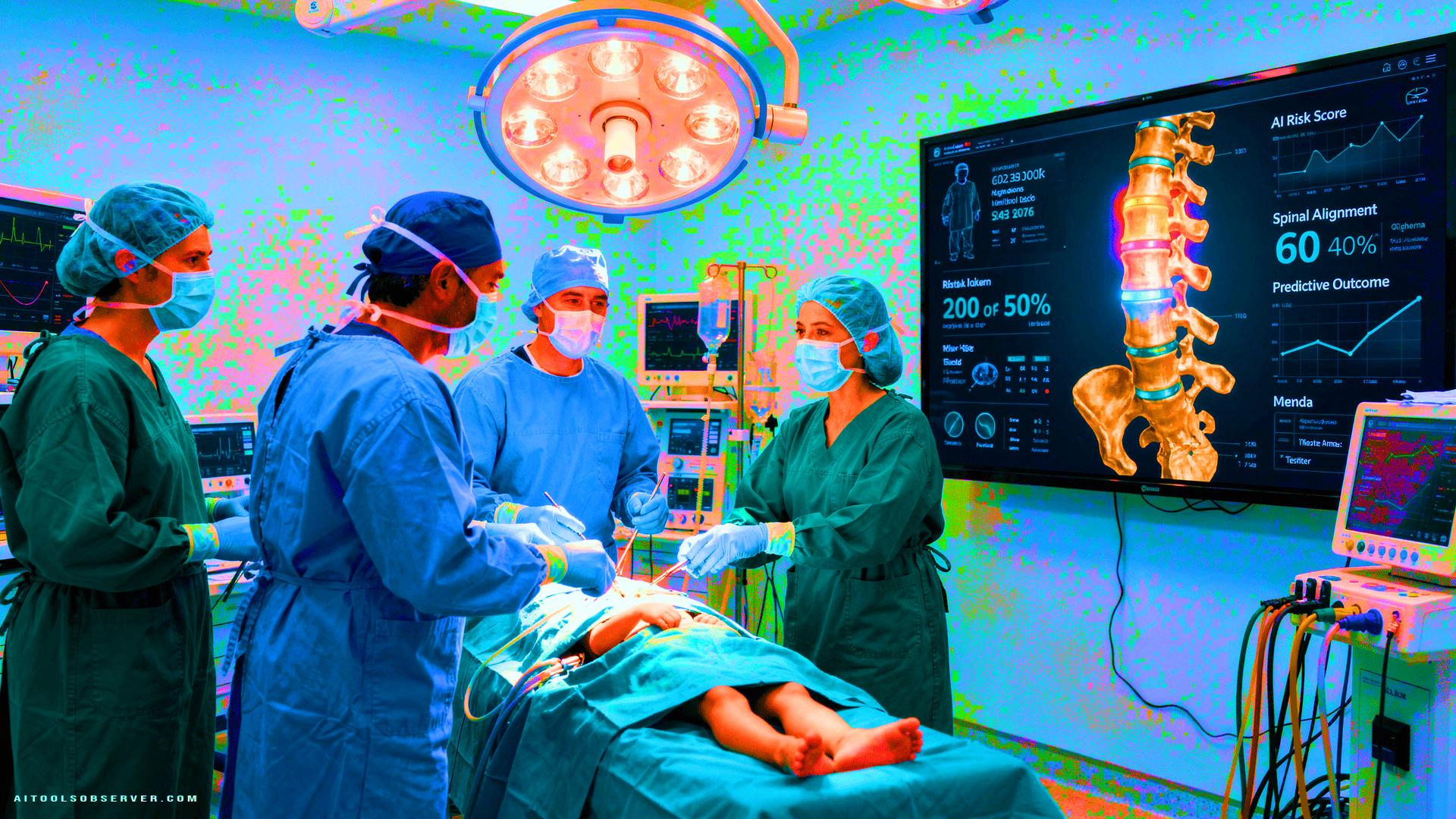
Pediatric spinal surgery carries unique risks. Children’s bodies respond differently than adults, surgical conditions can shift rapidly, and the spinal cord is unforgiving when things go wrong.
Historically, surgical decision-making has relied on the experience of individual surgeons or small teams. That’s valuable — but it’s also limited. No single surgeon has seen every pattern across thousands of cases. That’s exactly the gap AI is designed to fill.
Dr. Bruce Brenn, chief of anesthesiology at Shriners Philadelphia and lead researcher on the project, put it plainly: the goal is to use data from a large pool of patients to inform decisions, rather than relying solely on the experience of one or a handful of surgeons.
How the Predictive Analytics Tool Actually Works

The tool ingests data from multiple sources — surgical procedure records, clinical notes, X-rays, and patient histories. It then analyzes that data to predict potentially dangerous changes occurring in the spinal cord during surgery.
Think of it as a pattern recognition engine running in the background while the surgical team operates. It flags warning signals before they become critical events.
Practically, this means the tool could help doctors make real-time calls like:
- When to raise or lower a patient’s blood pressure
- Whether a complex surgery should be split across multiple days rather than completed in a single session
- When conditions are trending toward a dangerous threshold that warrants immediate intervention
These aren’t small decisions. Getting them right — or wrong — directly affects patient outcomes.
Why AI Is Uniquely Suited for This
AI doesn’t get fatigued. It doesn’t have blind spots shaped by a limited case history. And it’s exceptionally good at detecting trends buried inside large, complex datasets.
As one researcher on the project noted, AI excels at “seeing trends, number crunching, figuring things out that we might miss.” In a surgical environment where milliseconds and subtle physiological shifts matter, that capability is genuinely transformative.
The tool isn’t replacing clinical judgment. It’s augmenting it — giving surgeons a data-backed layer of insight that complements their expertise rather than competing with it.
The Dual Impact: Patients and Clinicians
The obvious beneficiary here is the patient. Fewer complications during surgery means better recovery outcomes, shorter hospital stays, and reduced long-term risk for children who are already navigating serious medical challenges.
But there’s a second beneficiary worth noting: the surgical team itself.
When clinicians have a reliable, data-driven system backing their decisions, it reduces the cognitive burden they carry into the operating room. Confidence grounded in evidence isn’t just good for morale — it’s good for performance. A surgeon who feels supported by real-time predictive intelligence can focus more clearly on execution.
As one researcher on the project framed it, preventing negative outcomes during a procedure is always a win — and it also helps clinicians feel more confident in what they’re doing.
Where the Tool Stands Right Now

The tool is still in active development. Georgia Tech and Shriners Children’s are in the research and refinement phase, working to ensure the system is accurate, reliable, and ready for clinical environments.
Shriners Children’s is also building a dedicated research institute in Atlanta in partnership with Georgia Tech, slated to open later this year. That facility will likely accelerate the development and validation of tools like this one.
The timeline to full deployment isn’t confirmed yet, but the foundation — the data infrastructure, the research partnership, and the clinical use case — is already in place.
What This Means for AI in Healthcare
This project is a strong example of how AI in healthcare moves from buzzword to genuine clinical utility. It’s not AI for the sake of AI. It’s a targeted application solving a specific, high-stakes problem with measurable consequences.
The broader pattern here is worth paying attention to. Predictive analytics in surgical settings — whether in pediatric spine surgery or other complex procedures — represents one of the most defensible and impactful use cases for AI in medicine. The data is rich, the decisions are time-sensitive, and the cost of getting it wrong is enormous.
Healthcare institutions that invest in this kind of applied AI research now are building infrastructure that will compound in value as datasets grow and models improve.
The Georgia Tech and Shriners Children’s collaboration isn’t just a research story. It’s a preview of what surgical decision-making looks like when human expertise and machine intelligence work together. For children facing complex spinal procedures, that combination could make all the difference.








Comments (0) No comments yet
Want to join this discussion? Login or Register.
No comments yet. Be the first to share your thoughts!