



The Policy Gap Is Already a Red Flag

Due diligence questionnaires are asking about AI governance. Formal regulatory reviews are flagging its absence. For registered investment advisers (RIAs), Rule 206(4)-7 under the Investment Advisers Act of 1940 requires written compliance policies that evolve with your actual business practices — and AI is now squarely inside that perimeter.
Exempt reporting advisers (ERAs) aren’t technically bound by Rule 206(4)-7, but that’s a narrow technical comfort. A documented AI policy still functions as practical risk management — the same way you’d treat data privacy or business continuity. The absence of one is a gap that sophisticated LPs and regulators will notice.
Responsible AI adoption has quietly shifted from “nice to have” to competitive necessity.
Why Generic Templates Make Things Worse
The internet is full of AI policy templates. Most of them are architecturally sound and operationally useless — full of phrases like “responsible use,” “ongoing oversight,” and “transparency commitments” that don’t tell anyone what to actually do on a Tuesday afternoon.
A policy borrowed from another firm, or worse, generated by an AI tool without reference to your specific environment, creates its own category of risk. The SEC expects policies to be “reasonably designed” for your firm’s actual operations. Vague intentions don’t meet that bar.
Tool Inventory and Approval

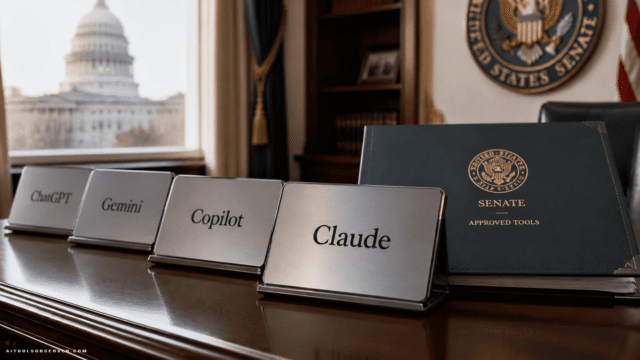
You can’t supervise what you haven’t mapped. Start with a full inventory of every AI tool in use across the firm — including the ones quietly embedded in document editors, email platforms, and productivity suites that nobody formally approved.
The approval process for new tools should be documented, repeatable, and regularly updated. Shadow AI adoption is common. Your policy needs to account for the full picture, not just the official list.
Permitted and Prohibited Uses
Spell it out. Which tools can supervised personnel use? For what purposes? What data or information is off-limits for input into any AI system?
Ambiguity here isn’t neutral — it’s an invitation for inconsistent behavior and compliance exposure.
Human Review Controls
Every AI-assisted output heading toward a client, investor, or counterparty needs a human checkpoint before it leaves the building. The policy should define what that review actually looks like — distinguishing between a cursory read and a substantive review — and how errors get flagged and corrected.
“A human looked at it” is not a control. A defined process is.
Disclosure Accuracy

This is arguably the most pervasive compliance gap in the industry right now. AI-generated content intersects directly with SEC Rule 206(4)-1 — the Marketing Rule — and the distance between what firms actually do with AI and what their disclosures say is often significant.
Designate a specific person responsible for keeping AI-related disclosures accurate and current. “AI washing” — overstating or misrepresenting your firm’s AI capabilities — is an active SEC enforcement priority. Pitch decks, offering documents, social media posts, and website copy all fall within scope.
Vendor Due Diligence

Many advisers are using AI without fully realizing it, through SaaS tools that have quietly added AI features. Before adopting any third-party AI tool, evaluate how it handles your data, who owns it, what happens to it at contract termination, and what notification obligations exist if the vendor materially changes the underlying model.
Understanding your vendors’ AI is part of understanding your own risk.
Recordkeeping
For RIAs, Rule 204-2 requires reliable recordkeeping and retrieval. Your AI policy needs to define which AI outputs qualify as records and how they’re retained and produced.
ERAs aren’t subject to the same rule, but the practical question remains: if a regulator or LP asks for documentation during an inquiry, can you produce it cleanly?
Training
Employees need specific, operational guidance — not a slide deck that ends with “use AI responsibly.” Training should cover what data can and cannot be entered into tools, when AI output requires verification, and how to recognize red flags like hallucinations or fabricated citations.
Train at adoption. Retrain when the policy materially changes.
Policy Review Cadence
RIAs are required to assess compliance policies during the annual review under Rule 206(4)-7. Given how quickly AI capabilities and regulatory expectations are shifting, more frequent reviews are worth building in — covering new tools adopted, incidents or near-misses, control effectiveness, and regulatory developments.
Annual is the floor. Quarterly is smarter.
Where to Start

The practical starting point is a gap analysis: inventory how AI is actually being used across the firm, then compare that reality to what your current policies say. Define the delta. Then close it — with specificity around approved tools, prohibited uses, human review requirements, disclosure controls, vendor due diligence, recordkeeping, and training.
For anything touching legal interpretation or regulatory exposure, loop in qualified legal counsel. An AI policy is a compliance document, not just an operational one.
And one more thing worth keeping front of mind: an AI policy doesn’t stand alone. It’s a component of a broader AI governance program. The policy is the foundation. The program is what makes it real.
Conclusion
The SEC isn’t waiting for the industry to figure this out at its own pace. Neither should you. A well-built AI governance policy isn’t just a regulatory checkbox — it’s how you demonstrate that your firm is running AI, not the other way around.














Comments (0) No comments yet
Want to join this discussion? Login or Register.
No comments yet. Be the first to share your thoughts!