



The Signal Worth Reading Carefully

Todd Mann, cofounder of Flawless, appeared at the Members Club beach wearing a pin reading “Fuck AI” — while simultaneously promoting tools his company says protect actors and filmmakers from unauthorized likeness use. The apparent contradiction is actually a precise statement of where the industry stands.
The resistance is not to AI as a category. It is to AI deployed without consent, without traceability, and without control mechanisms. When a company can market rights-protection tools under an anti-AI slogan and generate genuine interest, the ecosystem has entered a new phase.
For production teams and postproduction vendors, this kind of public signaling at a high-profile festival functions as a directional marker. Creators and rights holders are foregrounding consent and control — and the supply chain tends to follow.
Two Parallel Tool Classes Now Running Through Media Production

Understanding what is actually being adopted requires separating two distinct categories of AI tooling that have entered media workflows simultaneously.
Rights-Management and Provenance Tools

This class includes consent-recording systems, cryptographic provenance standards, watermarking formats, and API-based access controls. Their function is to establish a verifiable chain of custody for likenesses, performances, and creative assets — documenting who authorized what, under which conditions, and at which point in the production process.
Flawless operates in this space. So do a growing number of startups packaging rights-management as integrations for edit and postproduction suites. The commercial logic is straightforward: as synthetic likeness capabilities become more accessible, the demand for enforceable consent infrastructure rises in parallel.
Generative-Capability Tools

The second class covers synthetic audio, visual dubbing, face replacement, and related generative functions. These tools have received the most public attention — and the most public criticism. Their capabilities are advancing rapidly, and their potential for misuse without consent frameworks is precisely what has driven demand for the first class of tools.
The two categories are not in opposition. They are increasingly interdependent. Generative tools without provenance infrastructure create liability exposure. Provenance infrastructure without generative capability has limited commercial surface area. The production workflows that will scale are those that integrate both.
What This Means for Practitioners

If you are working in VFX, postproduction, or media rights management, the Cannes conversation points toward several concrete workflow considerations.
Consent recording is becoming a production-stage requirement, not a legal afterthought. Systems that capture and store consent at the point of performance — with structured, queryable records — are moving from nice-to-have to expected infrastructure. Waiting until distribution to address likeness rights creates compounding risk.
Cryptographic provenance and watermarking are gaining traction as vendor differentiators. Formats that embed verifiable origin data into assets — and that survive transcoding and format conversion — are increasingly referenced in vendor positioning. Watch for uptake among VFX houses and postproduction platforms as a signal of standardization momentum.
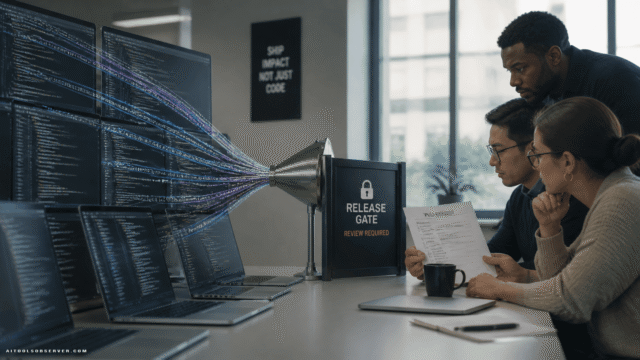
API-based rights gates are the integration surface to monitor. The most scalable approach to consent management in complex productions is not manual documentation — it is machine-readable rights data that can be queried at each stage of the pipeline. Startups building these integrations for existing edit and postproduction suites are positioned to move quickly if guild or festival guidance accelerates adoption.
What to Watch in the Months Ahead

Several developments will indicate whether the Cannes signal translates into durable workflow change or remains a festival-circuit conversation.
Announcements of standardized consent-recording APIs — particularly those developed in coordination with guilds or industry bodies — would represent a meaningful acceleration. Guild guidance on synthetic likenesses is already in motion in several jurisdictions; formal recommendations tied to production contracts would create immediate adoption pressure.
Uptake of cryptographic provenance formats by major VFX vendors is the clearest technical indicator to track. If leading postproduction platforms begin shipping watermarking and provenance features as defaults rather than add-ons, the infrastructure layer is consolidating.
Finally, watch whether other festivals and distributors replicate the public conversations TheWrap described at Cannes. A single festival is a signal. A pattern across Sundance, Berlin, and major streaming distributor announcements is a structural shift.
The Practical Takeaway

The film industry is not embracing AI wholesale. It is selectively adopting the tools that extend control — and building the infrastructure to make that control enforceable at scale.
For founders building in this space, the opportunity is in the integration layer: consent APIs, provenance formats, and rights-gate tooling that slots into existing production workflows without requiring teams to rebuild from scratch. For practitioners evaluating tools, the question is no longer whether AI belongs in production — it is which tools carry verifiable consent and traceability, and which do not.
Cannes 2026 did not resolve the tension between generative capability and rights protection. It made clear that the industry intends to hold both simultaneously — and is actively building the infrastructure to do so.
















Comments (0) No comments yet
Want to join this discussion? Login or Register.
No comments yet. Be the first to share your thoughts!