


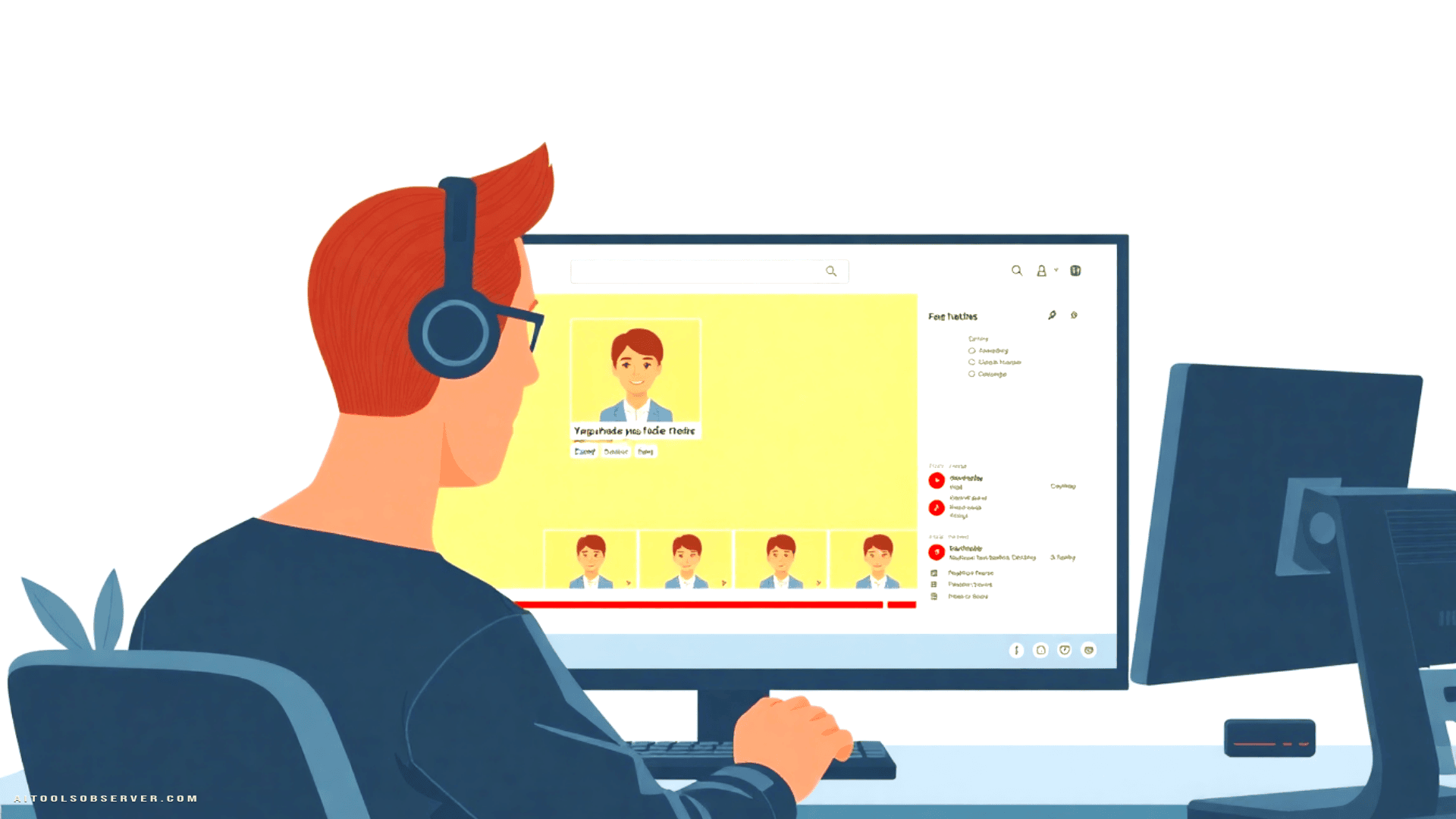
What the Tool Actually Does

The core function is straightforward: YouTube scans uploaded videos for matches to your face and surfaces any potential hits in a dedicated “Likeness” tab inside YouTube Studio.
If you spot something suspicious — say, a brand using your AI-generated face to hawk supplements you’ve never touched — you can submit a removal request directly from that tab. YouTube will ask you to describe how your likeness was used and whether your voice was cloned too, though the tool can’t detect voice on its own. That last part is worth noting: this is a face-first system.
How to Get Set Up

The enrollment process is a few steps, but it’s designed to be thorough for good reason.
- Head to YouTube Studio on desktop
- Navigate to Content Detection → Likeness
- Scan a QR code with your phone
- Submit a government ID and complete a selfie video verification
Once verified, YouTube’s system runs continuously in the background — flagging videos that potentially use your likeness without you lifting a finger.
Why This Expansion Actually Matters

When the tool launched in late 2025, it was a perk for monetized creators. Now it’s a baseline protection — and that’s a meaningful shift.
YouTube spokesperson Jack Malon put it plainly: whether you’ve been uploading for a decade or just posted your first video, you get the same level of protection. That’s the right instinct. Deepfake risk doesn’t scale with subscriber count.
The practical upside for creators is catching unauthorized brand usage — companies generating AI versions of your face to promote products you never agreed to endorse. That’s not a hypothetical scenario anymore. It’s a live problem, and this tool is one of the first platform-level responses that actually has teeth.
The Bigger Picture

YouTube first previewed this technology back in 2024. The two-year arc from preview to broad availability tells you something about how carefully — or cautiously — platforms are moving on identity protection.
The fact that YouTube’s own spokesperson confirmed anyone can technically use the tool (not just creators) is quietly significant. It suggests the platform is aware that deepfake harm isn’t limited to influencers and journalists. Ordinary people can end up in AI-generated videos too, and now they have a path to do something about it.
What to Watch
The tool’s effectiveness will ultimately depend on how YouTube handles removal requests once they’re submitted. Detection is step one. Enforcement is the harder part.
For now, if you’re a creator — or honestly, just someone with a YouTube account and a face — it’s worth spending five minutes enrolling. The verification process is a small friction for a meaningful layer of protection.
Your likeness is part of your brand. Treat it like one.







Comments (0) No comments yet
Want to join this discussion? Login or Register.
No comments yet. Be the first to share your thoughts!