


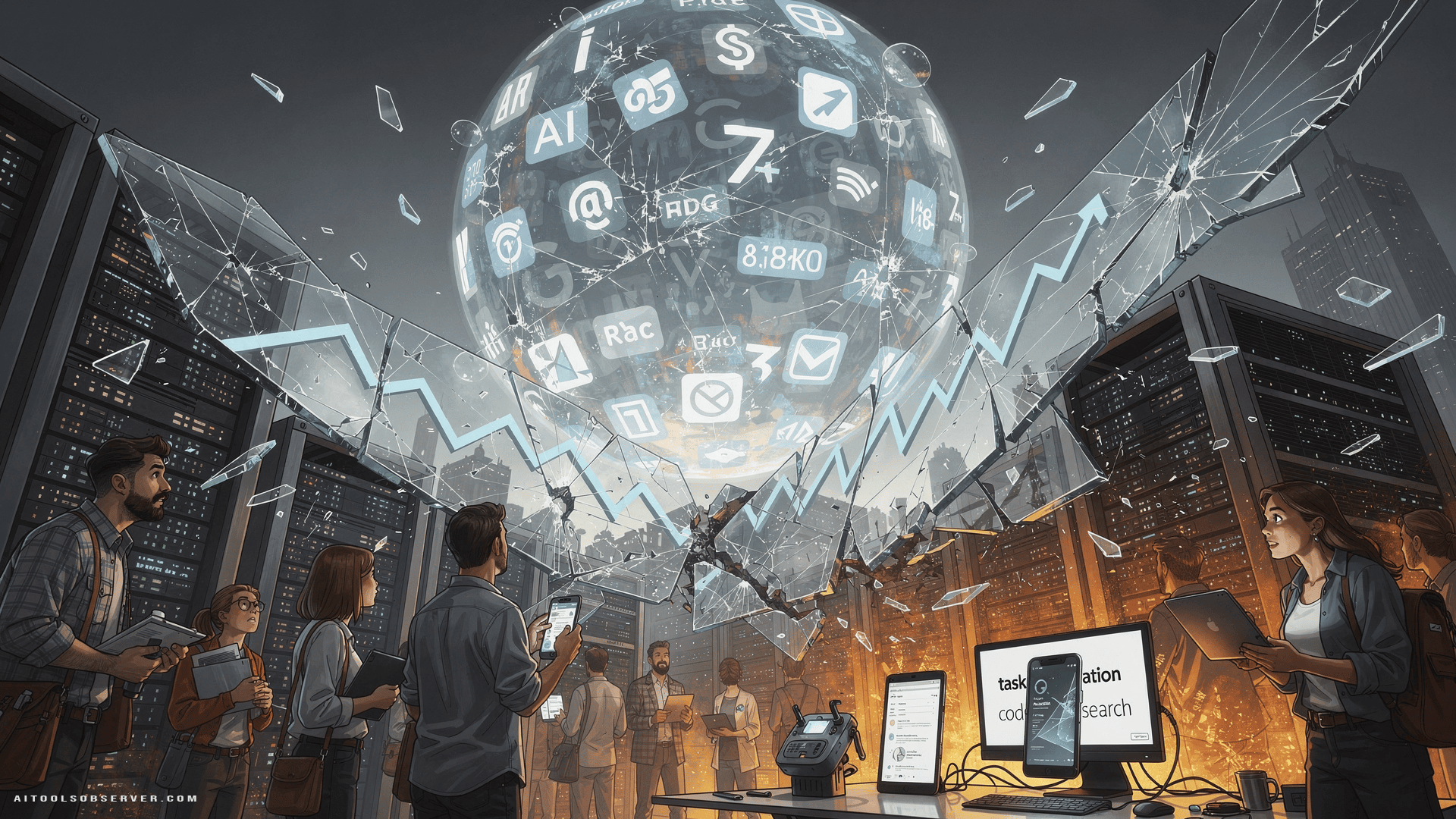
The Bubble Is Real — and It’s Bigger Than You Think

Doctorow doesn’t hedge on this. He calls AI
the biggest bubble our species has ever produced.
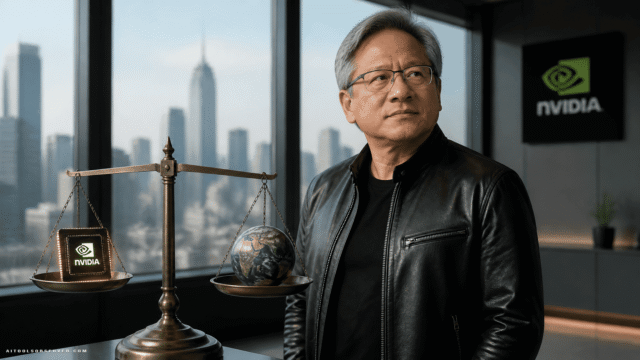
When he wrote the book, global AI capital expenditure sat at $700 billion. It’s now $1.4 trillion. Meta alone spent $150 billion on AI over three years and plans to spend another $150 billion this year. For context, they wasted $60 billion on the metaverse — and that felt catastrophic at the time.
The math doesn’t work. The sector generates roughly $50 billion a year in revenue while burning through infrastructure that needs replacing every 24 to 30 months. Seven AI companies now account for more than a third of the entire stock market. As Doctorow puts it, they’re endlessly passing around the same $100 billion IOU.
His verdict is blunt:
AI is the asbestos in the walls of our technological society. We will be excavating it for a generation or more.
Why the Hype Keeps Growing Anyway
Here’s where Doctorow’s analysis gets genuinely interesting — and useful for anyone trying to understand why rational actors keep pouring money into something that doesn’t pencil out.
It starts with market saturation. When a tech firm hits 90% market share, it can no longer grow organically. But growth stocks trade at dramatically higher multiples than mature stocks, and those multiples are the fuel that lets companies acquire, expand, and dominate using shares instead of cash. Lose the growth narrative, and you lose the engine.
So firms invent new markets. Metaverse. Crypto. Web3. The capital markets, as Doctorow puts it, have the object permanence of a toddler. They’ll forgive you for pivoting — as long as you do it fast enough.
AI is different only in scale. There’s genuine computer science underneath it. The early returns on investment were real and somewhat linear, which is rare. That gave the narrative legs. But the low-hanging fruit is gone, and the returns are tapering. What remains is a story being told at $1.4 trillion in volume.
The second driver is ideological. AI sells a fantasy — specifically, the fantasy of a world without difficult people in it. For executives haunted by the suspicion that the company runs fine without them but shuts down without the workers, AI offers a seductive answer: replace the workers, keep the vision. DOGE’s mass government firings played into the same fantasy. A government without employees. A business without workers. A toy steering wheel wired directly into the drivetrain.
The Reverse Centaur Problem

Doctorow borrows a term from automation theory to frame the core tension.
A centaur is a human augmented by technology — a radiologist using AI to catch tumors they might otherwise miss, a writer using autocomplete to move faster. The human is still driving. The tool amplifies their judgment.
A reverse centaur is the inversion: a machine with a human attached as a squishy meat appendage. Think of an Amazon delivery driver surrounded by AI cameras, essentially serving as a peripheral to the van. The machine sets the pace. The human absorbs the blame.
The AI industry, Doctorow argues, is structurally incentivized to create more reverse centaurs — not because it produces better outcomes, but because it produces cheaper labor and cleaner accountability sinks. Fire nine out of ten radiologists. Let the AI diagnose. Keep one human to sign off and take the fall when something goes wrong.
This is why worker reception to AI looks so different from earlier technological waves. In the late ’90s, business press was full of hand-wringing about workers smuggling the web into the workplace. Today, the same outlets run pieces asking why workers refuse to use AI — alongside ads for surveillance tools to punish those who don’t.
Workers aren’t irrational. They can tell the difference between a tool that helps them and a tool that’s being used against them.
Not Anti-AI — Anti-Hype
Doctorow is careful here, and it matters for how you read everything else he says.
He uses AI tools. He sees genuine value in many of them. He doesn’t think statistical inference using deep neural networks is inherently bad. He doesn’t think scraping the web to train models is theft — in fact, he argues the opposite: scraping is how we preserve the historical record, and making it illegal would be catastrophic for everyone except the large platforms that can afford licensing deals.
His critique isn’t about the technology. It’s about the capital structure around it, the labor dynamics it’s being used to enforce, and the unrealistic expectations being sold to pension funds and retail investors who have no choice but to be in the market.
He’s also clear that the workers who say AI is genuinely helping them aren’t wrong or naive. They’re centaurs — people who retained control over how the tool fits into their work. The workers who hate it are being turned into reverse centaurs. Both experiences are real. The difference isn’t the technology. It’s the power relationship.
What Survives the Bust
This is where Doctorow’s argument becomes directly actionable for anyone building or choosing AI tools right now.
He draws a distinction between bubbles with productive residue and bubbles that leave nothing behind. The dot-com crash was brutal — it wiped out pension funds and ordinary investors — but it left behind cheap servers, a generation of developers, affordable rent in tech hubs, and the creative conditions that produced Web 2.0. The carnage cleared the field for people with actual ideas.
Enron left behind a pad of stationery.
When the AI bubble bursts — and Doctorow is confident it will — here’s what he expects to survive:
- Cheap GPUs. Data center hardware will flood the secondary market. The economics of running models will shift dramatically.
- Available talent. Applied statisticians and ML engineers currently stuck building what their employers want will be free to build what’s actually interesting. Many of them have ideas they haven’t been able to pursue.
- Open source models. These have barely been optimized. DeepSeek — spun out of a Chinese hedge fund with $6 million — demonstrated that open source models running on commodity hardware could be competitive enough to trigger a $600 billion single-day market decapitalization of Nvidia. That was a preview of what’s coming.
- A better signal-to-noise ratio. The bubble wants expensive, disruptive, foundational models that lose billions. After the bust, what remains will be the tools that actually work — the plugins, the narrow applications, the things that make a specific job measurably easier without requiring a data center.
The Labor Question Nobody Wants to Answer
Doctorow has a challenge he wants someone to put directly to Sam Altman or Dario Amodei.
When you’re old and can no longer care for yourself, do you want a person or an AI wiping your ass and keeping you alive?
It’s deliberately provocative. But the point underneath it is serious. The jobspocalypse narrative — the idea that AI is about to replace most human work — is self-serving. It’s the story you tell investors to justify $1.4 trillion in CapEx. It requires you to believe the chatbot can do anyone’s job.
The evidence, when you actually interrogate it, is thin. Amazon’s cashier-free Go stores weren’t powered by AI. They were powered by three people in India watching ceiling cameras and guessing what customers put in their bags.
Doctorow’s distinction is worth keeping: there’s a difference between AI doing your job and your boss being gullible enough to fire you and replace you with AI anyway. The second one is happening. The first one is mostly a pitch deck.
What This Means for How You Choose AI Tools
If you’re a founder, marketer, or operator trying to make smart decisions about AI right now, Doctorow’s framework cuts through a lot of noise.
- Avoid tools built on the bubble’s logic. Anything that requires massive ongoing compute, promises to replace entire teams, or depends on a foundational model that’s losing money at scale is exposed to the bust. The economics don’t survive a funding pullback.
- Look for centaur tools, not reverse centaur tools. The question to ask: does this tool amplify my judgment, or does it replace it and hand me the liability? Tools that make skilled people faster and sharper have durable value. Tools that deskill workers to cut costs are a liability dressed as a feature.
- Watch the open source space closely. The post-bubble environment Doctorow describes — cheap hardware, available talent, underoptimized open source models — is exactly where the next generation of genuinely useful AI tools will emerge. The interesting stuff won’t come from the companies currently burning billions. It’ll come from people who finally have the space and resources to build what actually works.
- Don’t confuse hype volume with signal. The loudest AI narratives right now are being amplified by the people with the most to lose if the narrative stops. That doesn’t mean AI isn’t useful. It means the usefulness is buried under a lot of noise that’s being generated for financial, not practical, reasons.
The Takeaway
Doctorow’s core argument isn’t that AI is bad. It’s that the current AI economy is structurally broken — and that when it corrects, the correction will be severe enough to reshape the entire tech landscape.
The tools that survive will be the ones that were actually useful to begin with: narrow, efficient, worker-controlled, and honest about what they can and can’t do.
That’s the version of AI worth paying attention to. Not the $1.4 trillion story. The $6 million DeepSeek story. Not the foundational model that loses money on every query. The plugin that makes one specific job meaningfully better.
The bubble will pop. The question worth asking now is: which tools are you betting on that would still make sense the morning after?








Comments (0) No comments yet
Want to join this discussion? Login or Register.
No comments yet. Be the first to share your thoughts!