



The Visibility Gap at the Heart of Agentic AI

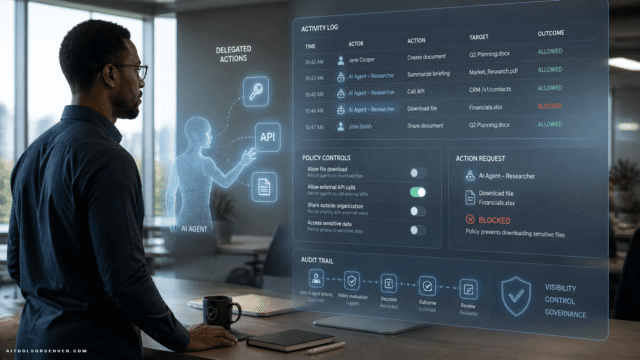
When an employee uses a chat application, a developer works inside an IDE with an AI coding assistant, or a custom agent executes a workflow in the cloud, each interaction may involve tool invocations, MCP (Model Context Protocol) server calls, and downstream system access. Legacy security tools inspect HTTP traffic, endpoint behavior, and application logs. They do not inspect MCP communications. They do not track which tools an agent invoked, which data it accessed, or whether it was manipulated mid-session.
This creates a structural blind spot. A compromised or misconfigured agent can exfiltrate sensitive data, escalate privileges, or execute unauthorized actions — and the security team may never know it happened.
The risk is not theoretical. As agentic frameworks proliferate and MCP adoption accelerates, the attack surface expands faster than most security programs can track.
What WitnessAI Agentic Control Actually Does
WitnessAI Agentic Control is a runtime governance platform purpose-built for the agentic layer. Rather than retrofitting existing security tooling, it introduces a dedicated control plane that operates at the level where agents actually function — across tool calls, MCP server interactions, and agent-to-agent workflows.
The platform addresses three distinct operational requirements: visibility, policy enforcement, and real-time protection.
Agent Discovery and the MCP Catalog

Before an organization can govern its AI agents, it needs to know what those agents are doing. WitnessAI automatically discovers agents operating across enterprise environments — IDEs, SaaS applications, agent frameworks, and custom-built agents deployed in public cloud infrastructure.
For each discovered agent, the platform identifies the specific MCP servers, tools, and downstream systems it reaches. This alone represents a significant capability gap filled. Most enterprises currently have no reliable inventory of which agents are active, let alone which external tools they are authorized to use.
WitnessAI adds a risk-scoring layer through its MCP Catalog, which evaluates known tools against OWASP risk classes and CVE vulnerability data. Security teams can assess the risk profile of a tool before approving it — a structured, evidence-based approach to tool governance that mirrors how mature organizations manage software dependencies.
Approved-Tool and MCP Server Governance
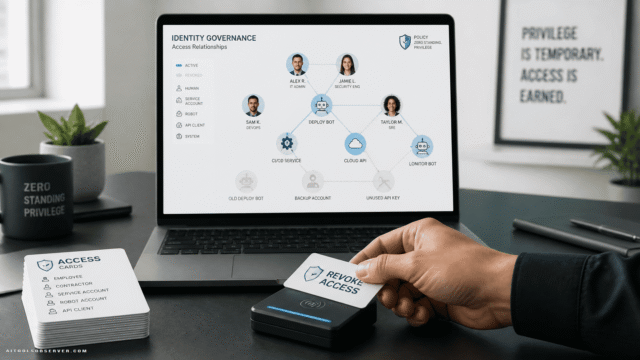
Discovery without enforcement is just monitoring. WitnessAI enables organizations to define organization-wide allow lists of approved MCP servers and tools, then enforce those lists consistently across every agentic environment.
This matters because the alternative — managing tool access application by application, agent by agent — does not scale. A policy written once in WitnessAI propagates across all applications, model providers, and custom agents. The governance surface becomes unified rather than fragmented.
The practical implication is significant: a CISO can define what is permissible at the organizational level, and that definition holds regardless of whether the agent is running inside a developer’s IDE, a customer-facing chat application, or an automated backend workflow.
Runtime Enforcement and AI Firewall Integration
The third capability layer operates at runtime — inspecting conversations and tool invocations as they happen. WitnessAI can restrict unauthorized prompts and responses, enforce approved policies in real time, and block interactions that fall outside defined boundaries.
This runtime enforcement integrates with WitnessAI’s existing AI Firewall capabilities, extending protections against prompt injection, jailbreak attempts, and malicious response manipulation to the agentic context. The same guardrails that govern human AI usage now apply to agents operating autonomously.
The platform reports a 99.3% true positive rate on employee AI guardrails — a figure that reflects the underlying detection precision the agentic enforcement layer is built upon.
The Single Control Plane Argument
One of the more substantive claims WitnessAI makes is architectural: rather than offering separate products for employee AI governance, application security, and agent control, the platform provides a single control plane across all three.
This is not merely a product positioning choice. It reflects a genuine operational challenge. When governance is fragmented across multiple tools, policies diverge, audit trails fragment, and enforcement gaps emerge at the boundaries between systems. A rule that applies to human users in a chat application may not apply to an agent running the same workflow programmatically.
WitnessAI’s approach — write a rule once, enforce it everywhere — addresses this boundary problem directly. The platform already governs AI usage across more than 4,000 AI applications and over 100 supported model types. Agentic Control extends that foundation rather than replacing it.
Who This Is For
WitnessAI Agentic Control is positioned for enterprise security teams — specifically CISOs, security architects, and AI governance leads who are responsible for managing risk as their organizations scale agentic AI agents deployments.
It is particularly relevant for organizations that have already deployed AI coding assistants in developer environments, are building or procuring custom AI agents with access to internal systems, or are navigating compliance requirements that demand audit trails for AI-driven actions.
For smaller organizations or teams in early AI exploration, the platform’s depth may exceed immediate needs. But for enterprises where AI agents are already operating at scale — or are about to — the absence of runtime governance is a liability that grows with every deployment.
Aligning with CIS Benchmarks and Emerging Standards
The March 2026 CIS Benchmarks update reflects a broader industry recognition that AI systems require dedicated security controls. WitnessAI’s approach — tool allowlisting, runtime inspection, OWASP-aligned risk scoring, and comprehensive audit trails — maps naturally to the control categories emerging in these frameworks.
This alignment matters for enterprises operating in regulated industries or subject to third-party security assessments. Governance that can be documented, audited, and mapped to recognized benchmarks is governance that survives scrutiny.
The Governance Imperative
AI agents are not a future consideration. They are running in enterprise environments today, and in many cases, security teams have limited visibility into what those agents are doing or what they can access.
WitnessAI Agentic Control represents a substantive response to that problem — not by slowing down AI adoption, but by making it governable. The platform’s value is not in restriction for its own sake. It is in giving organizations the confidence to deploy AI agents at scale, knowing that the boundaries they define will actually hold.
In a domain where most security tooling is still catching up to the threat model, that kind of runtime certainty is worth examining carefully.











Comments (0) No comments yet
Want to join this discussion? Login or Register.
No comments yet. Be the first to share your thoughts!