


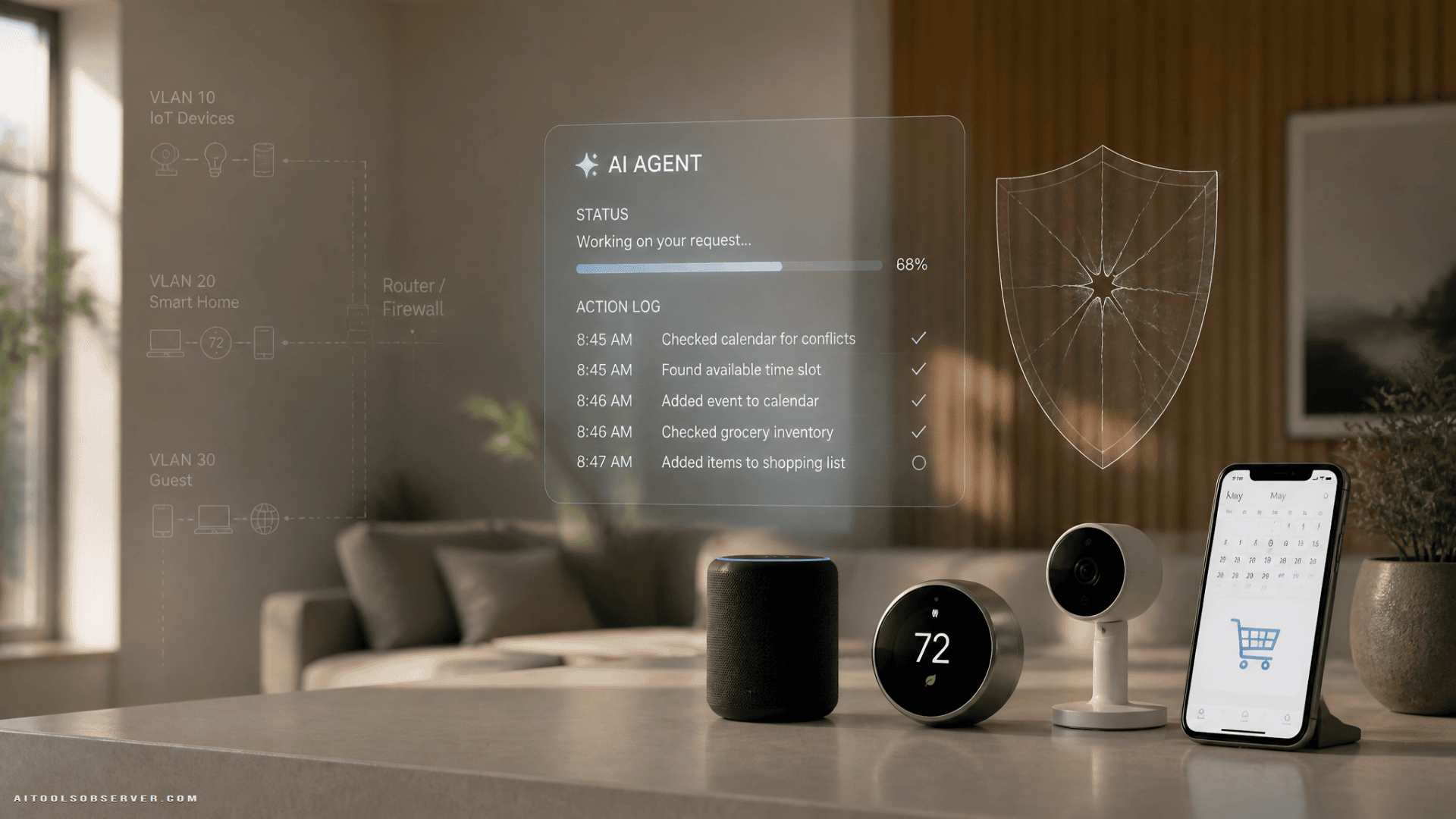
The Enterprise-Consumer Gap Is Structural, Not Temporary
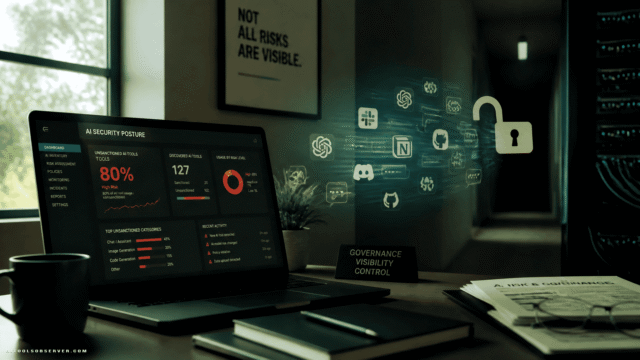
The enterprise AI agent security market has matured quickly. Vendors are offering agent discovery, runtime protection, behavioral auditing, and kill-switch tooling for corporate deployments. Some products audit shell commands and file activity at the host level for a few dollars per month. That’s a reasonable cost for a business managing hundreds of agents across a network.
For a household managing a handful of agents across a smart home platform, no equivalent product exists at any price. The market has not found a consumer-viable model for this category yet, and there is little evidence it is actively trying to.
This matters because the threat surface is real. Prompt injection — where malicious or malformed input causes an agent to misinterpret its instructions — is a documented attack vector. Calendar injection, where an agent misreads a structured event as an actionable request, is a specific variant that has already caused unintended real-world actions. These are not theoretical edge cases. They are the kinds of failures that result in unwanted purchases, leaked data, or misconfigured devices.
What Consumer Tools Actually Cover
Current consumer-grade network security products, such as those from established home security vendors, operate at the device traffic level. They can detect if a smart device is communicating with a suspicious external server. That is useful, but it addresses a different threat model entirely.
What they cannot do:
- Detect prompt injection attacks targeting an agent’s reasoning layer
- Monitor whether an agent is misusing the tools or permissions it has been granted
- Provide a real-time audit log of agent decisions and actions
- Offer a reliable kill switch before an action completes
The OWASP Top 10 for Agentic Applications catalogs these risks in structured form. The consumer security market has not yet produced products that address them.
Platform Security Is Real but Opaque
The major platform vendors are not ignoring security. On-device processing, private cloud compute architectures, and human-in-the-loop approval flows for high-stakes actions represent genuine engineering investment. These are substantive protections.
The problem is that they are internal. The user cannot inspect them, configure them, or verify that they are functioning correctly in a given situation. When a platform’s internal guardrails fail — and they do fail — the consumer has no visibility into what happened and no independent layer of protection to fall back on. Trust is the only available instrument, and trust is not a security control.
This is a meaningful distinction. Enterprise deployments can negotiate transparency, audit rights, and contractual accountability with vendors. Consumer relationships offer none of that.
The Regulatory Gap Is Equally Specific
Existing and emerging regulatory frameworks do not address this problem directly. Hardware security certification programs focus on device-level trust anchors. Legislation targeting rogue AI systems tends to focus on business networks and critical infrastructure. Vulnerability reporting mandates lack agent-specific provisions.
The result is a regulatory blind spot that is precisely shaped around consumer AI agents. The technology moves on software release cycles. The oversight moves on legislative ones. The gap between those two speeds is where the current risk lives.
The DIY Option: Capable but Demanding
For technically fluent users, a local-first approach offers the most meaningful control available today. Home Assistant, running on dedicated hardware, provides a self-hosted environment where agent behavior can be observed and constrained more directly. Adding VLAN segmentation through managed switches and open-source firewall software creates network-level isolation that limits what a compromised or misbehaving agent can reach.
This setup is effective. It is also expensive in time and expertise, and it requires ongoing maintenance. The hardware and software costs are manageable for a motivated user. The knowledge requirements are not accessible to most households.
That gap — between what is technically possible for an expert and what is practically available to everyone else — is exactly where a consumer product should exist. It does not yet.
The Practical Takeaway
If you are running AI agents in your home today, the honest assessment is this: your visibility into their behavior is limited, your ability to intervene in real time is minimal, and no off-the-shelf product currently fills that gap.
The most actionable steps available are to minimize the permissions granted to any individual agent, prefer platforms that offer human-in-the-loop confirmation for consequential actions, and — if you have the technical capacity — build toward a local-first architecture that gives you more direct control.
The market will eventually produce consumer-grade agent security tooling. The demand is real, the threat model is documented, and the enterprise precedent exists. Until that product arrives, the practical default is to treat your AI agents as capable but unsupervised — and design your setup accordingly.




Comments (0) No comments yet
Want to join this discussion? Login or Register.
No comments yet. Be the first to share your thoughts!