



The Buildout Is Real. The Returns Are Not Yet.
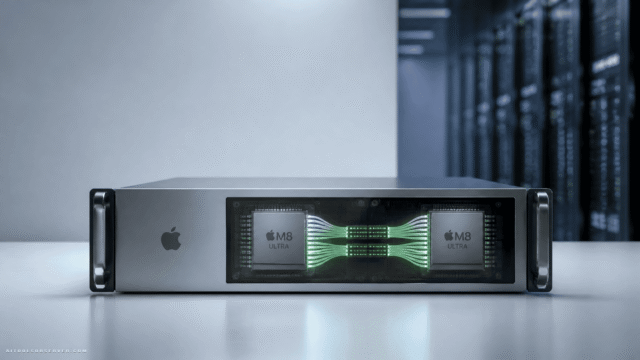
Capital expenditure on AI infrastructure is expected to reach roughly $581 billion in the U.S. this year, with global spending approaching $1 trillion, according to Goldman Sachs Research estimates. That amounts to approximately 1.8% of U.S. GDP—a share projected to climb to 2.8% by 2028.
The spending is concentrated and visible. Data centers are consuming power at scale. Chip supply chains are under sustained pressure. And the costs are flowing downstream to consumers and businesses before the productivity benefits have materialized in any statistically clear way.
A Census Bureau survey published in May found that between 17% and 20% of U.S. businesses reported using AI at all. Adoption is heavily skewed toward large firms. For most of the economy, the buildout is something that raises costs rather than lowers them.
Where Prices Are Rising
The inflationary pressure from AI infrastructure is showing up in specific, measurable categories.
Electricity. Household electricity prices rose 10% in the two years leading up to July 2026—faster than the overall 6.2% increase in consumer prices over the same period. The rush to build power-hungry data centers is a contributing factor, as Minneapolis Fed President Neel Kashkari noted explicitly when he dissented in favor of a higher interest rate in July.
DRAM. The cost of dynamic random access memory is estimated to have risen approximately 400% by end of 2026 compared to 2024, according to JPMorgan Chase estimates. AI companies buying up chip supply as fast as it can be produced has created sustained pressure that chipmakers have not been able to relieve quickly enough.
Software and accessories. CPI data shows the cost of computer software and accessories has risen 22.4% since July 2024—a category that would normally be expected to deflate over time.
These are not abstract supply-chain dynamics. They are showing up in enterprise procurement budgets and household utility bills simultaneously.
The Adoption Gap Is the Core Problem
Even where AI tools are available and capable, deployment inside large organizations is proving slower and more complicated than the infrastructure buildout implies.
Julie Averill, Lululemon’s former chief information officer, put it plainly: the technology is there, but the hype is around the ease of deploying it inside a large organization. Getting people to change workflows, trust model outputs, and reorganize around new tools is the hard part—and that part has not changed because the underlying model improved.
Economists studying AI adoption use the term “weak links” to describe tasks within jobs that resist automation. A radiologist does more than read scans. A marketer does more than generate copy. The tasks that AI handles well are bundled with tasks it handles poorly, and the overall productivity effect depends on how that bundle is structured—which varies enormously by role, firm, and sector.
OpenAI’s own data, as described by its chief economist Ronnie Chatterji, shows a widening gap between power users and average companies. The firms reorganizing workflows around AI are seeing results. The majority are not there yet.
The Fed’s Uncomfortable Position
Fed Chair Kevin Warsh entered his role arguing that AI would be a significant disinflationary force and that the Fed needed to raise its growth forecasts accordingly. That view helped his standing with an administration lobbying for lower interest rates.
His colleagues are less certain. The Fed voted in July to hold rates in the 3.5%–3.75% range, with at least one dissent in favor of a hike specifically citing AI-driven price pressures. Warsh himself has adopted a more cautious tone, acknowledging that the timing and magnitude of AI’s supply-side effects remain hard to predict.
The structural problem is straightforward: the Fed cannot cut rates in anticipation of productivity gains that have not yet appeared in the data. It can only respond to the inflation that is measurable now—and right now, AI infrastructure spending is contributing to it.
What This Means for AI Tool Buyers
For founders, operators, and teams evaluating AI tools in this environment, the macro picture has practical implications.
- Software pricing is not stabilizing. The 22% rise in software and accessories costs reflects real input pressure. Expect AI tool pricing to remain elevated or increase, particularly for compute-intensive applications.
- The gap between power users and average adopters is widening fast. If your organization has not yet restructured workflows around AI, the productivity gap relative to competitors who have is growing—not shrinking.
- Adoption complexity is the bottleneck, not capability. The tools are generally ahead of the organizations using them. Choosing a tool that fits existing workflows and has clear change-management support matters more than choosing the most technically capable option.
- Infrastructure costs are upstream of everything. Rising electricity and chip prices will eventually be reflected in the pricing of cloud-based AI services. Budget assumptions made in 2024 may not hold through 2027.
The deflationary AI future may still arrive. But the inflationary AI present is already here, and it is running on a different timeline than the one Silicon Valley has been selling. For anyone making decisions about AI tools and infrastructure today, that distinction is worth keeping clearly in view.













Comments (0) No comments yet
Want to join this discussion? Login or Register.
No comments yet. Be the first to share your thoughts!