



From Chip Seller to AI Kingmaker
Nvidia’s core business is still selling GPUs. Data centers alone account for more than 90% of its quarterly revenue. But the company has quietly expanded into a role that goes far beyond hardware manufacturing.
Nvidia is now involved in more than $750 billion worth of AI investments, financing deals, and partnerships. CEO Jensen Huang has also helped mobilize more than $500 billion in outside capital for AI infrastructure through Wall Street relationships. That’s an enormous financial footprint for a company whose original job was making chips.
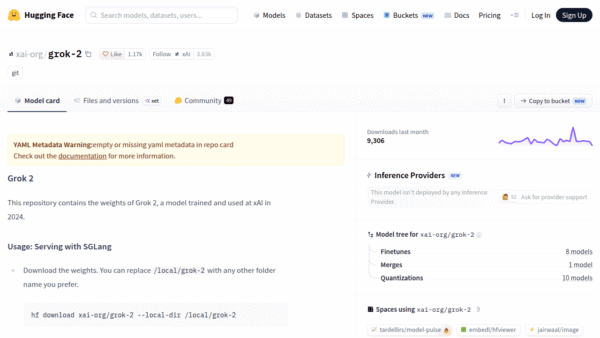
A reported $13 billion acquisition of Hugging Face — one of the most important model-distribution platforms in the industry — would extend that reach even further, giving Nvidia a direct stake in how AI models are shared, accessed, and deployed at scale.
The Flywheel Explained
The logic behind Nvidia’s strategy is straightforward once you see it:
- Nvidia sells chips and generates massive profits.
- Those profits fund investments in AI companies, infrastructure, and partnerships.
- That investment accelerates AI buildout across the industry.
- More AI infrastructure means more compute demand.
- More compute demand means more chip sales.
Huang has described Nvidia’s position as “singular,” arguing the company is the only one offering a complete AI factory platform. Whether or not that claim holds up over time, the structural advantage is real: Nvidia profits regardless of which AI model wins, which startup succeeds, or which use case dominates.
The Circular Demand Problem
Not everyone is convinced the flywheel is as clean as it looks.
Critics point out that Nvidia is helping finance the very customers and infrastructure projects that then turn around and spend heavily on Nvidia hardware. That raises a legitimate question: how much of the current compute demand is organic, and how much is being propped up by Nvidia’s own balance sheet?
Huang has pushed back on this framing, arguing the investments will generate strong returns and that the risk is low. But the concern isn’t going away, especially as the scale of Nvidia’s financial involvement in the ecosystem becomes clearer.
The Competitive Pressure Building Underneath
Here’s the tension that makes this ecosystem genuinely complicated to navigate.
Nvidia’s biggest customers — OpenAI, Google, Amazon, Microsoft — are all actively developing custom chips designed to reduce their dependence on Nvidia hardware. OpenAI’s Jalapeno chip reportedly outperforms Nvidia on certain workloads. That’s not a minor footnote. These are the companies driving the bulk of current GPU demand.
At the same time, Nvidia is moving into AI model development itself, spending to build open-source models and positioning as a platform player rather than just a hardware vendor. That puts it in direct competition with the same companies it supplies and invests in.
The result is an ecosystem where the relationships between supplier, customer, investor, and competitor are genuinely blurred.
What This Means for AI Tool Buyers and Builders
If you’re evaluating AI tools or building on top of AI infrastructure, Nvidia’s flywheel has practical implications worth tracking:
- Compute costs are tied to Nvidia’s market position. As long as Nvidia dominates GPU supply, the cost structure of AI tools — especially those relying on large model inference — flows through Nvidia’s pricing power.
- Custom chip development will shift the landscape. If hyperscalers successfully reduce Nvidia dependence, compute costs could drop and new infrastructure providers could emerge. That changes the economics for AI tool builders downstream.
- Platform consolidation is accelerating. Nvidia’s push into model distribution (via Hugging Face) and infrastructure financing means the company is shaping which tools get built, which get funded, and which get distribution. That’s worth watching when comparing AI platforms.
- The open-source model push matters. Nvidia developing its own AI models isn’t just a competitive move — it signals that the chip layer and the model layer are converging. Tools built on Nvidia’s stack may get tighter integration, but also more lock-in.
The Practical Takeaway
Nvidia has engineered a position where it benefits from nearly every outcome in the AI buildout — more spending, more models, more infrastructure, more competition. That’s a structurally powerful place to be.
But the same entanglement that makes Nvidia’s flywheel so effective also makes the ecosystem more fragile than it appears. When a single company is simultaneously your supplier, your investor, and your emerging competitor, the dependencies run deep in ways that aren’t always visible until something shifts.
For anyone choosing AI tools or planning infrastructure investments right now, the smart move is to track not just which tools perform best — but which ones are building on foundations that could get more expensive, more restricted, or more competitive as Nvidia’s platform ambitions expand.
The chip profits are real. The flywheel is real. The question is how long it spins before the friction shows up.


















Comments (0) No comments yet
Want to join this discussion? Login or Register.
No comments yet. Be the first to share your thoughts!