


What Amazon just launched
Amazon introduced two new Bee devices:
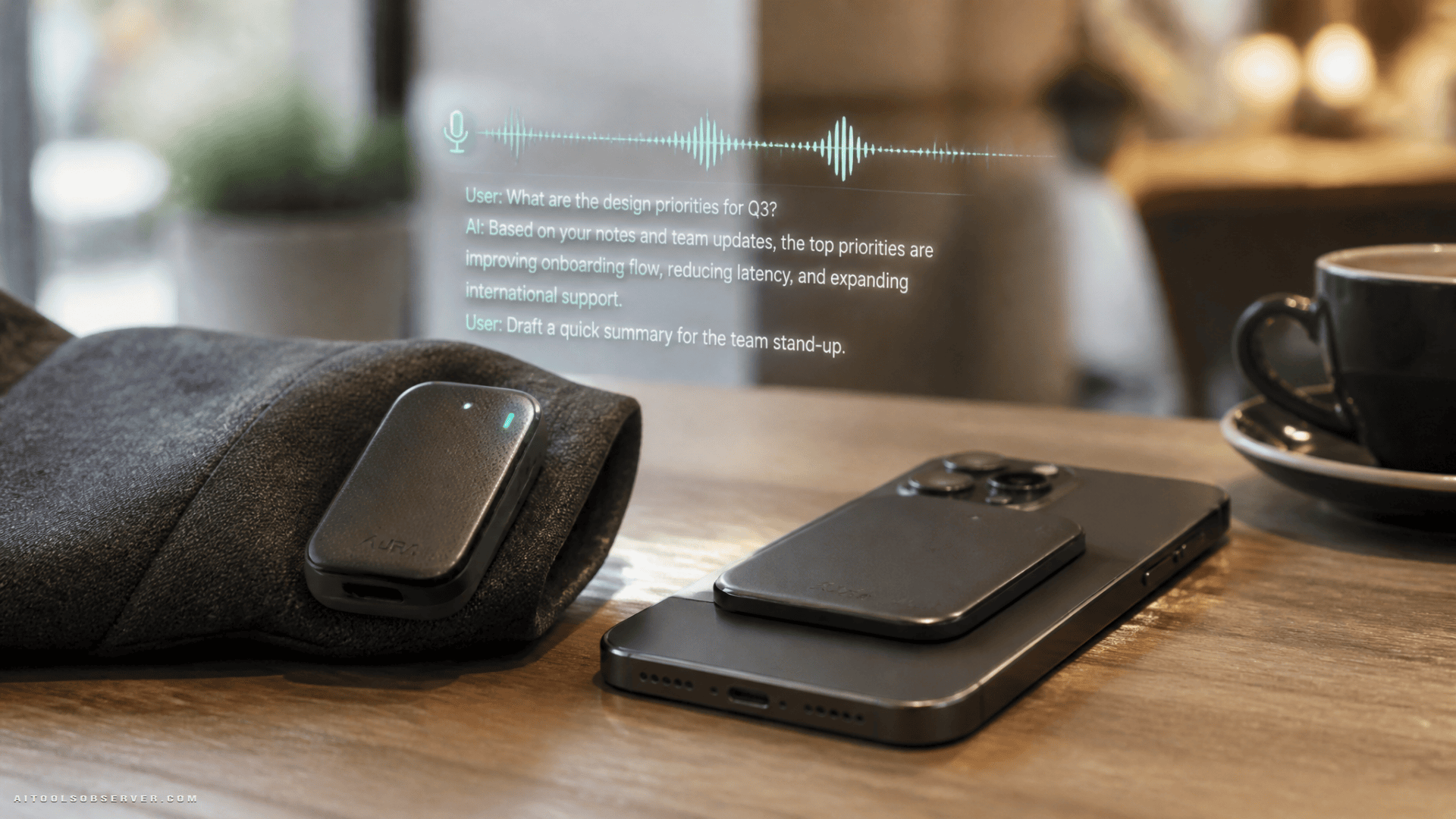
- Bee Frontier: a wearable device that can be worn on the wrist or clipped to clothing
- Bee Eclipse: a credit card-sized device that magnetically attaches to the back of a smartphone
The Bee Frontier is priced at $75 and is positioned as an upgraded version of the existing Bee wearable. Amazon says it keeps the same up to seven days of battery life while adding improved noise filtering through dual microphones.
The Bee Eclipse costs $100 and takes the same core idea in a different direction. Instead of asking people to wear another gadget, it turns a phone into the anchor device for conversation capture.
Why this launch matters
This is the first Bee lineup update since Amazon acquired Bee in 2025. That alone makes the launch worth watching.
More importantly, it shows Amazon wants a place in the AI hardware category that sits between smart speakers, smartphones, and wearables. The company already helped normalize voice interaction through Echo and Alexa, but Bee takes a much more aggressive approach: it listens continuously when turned on, rather than waiting for a wake word.
That shift changes the product from a voice assistant into something closer to an external memory layer.
What Bee devices are designed to do
Based on the available details, Bee devices focus on three core jobs:
- Conversation capture
- Transcription and summarization
- Memory recall and pattern spotting
Amazon says the always-listening setup enables features like conversation summaries and the ability to review memories from recent days. The system can also identify recurring themes or trends and use them to suggest goals or actions.
That makes Bee less about single commands and more about passive assistance. Instead of asking a device a question, you let it observe what’s happening and surface useful context later.
Bee Frontier vs. Bee Eclipse
The two devices appear to target different habits more than different use cases.
Bee Frontier
Bee Frontier is for people comfortable wearing a dedicated AI device. It can sit on the wrist like a bracelet or clip onto clothing, which gives it flexibility for users who want continuous capture without relying on their phone.
Amazon says its upgraded noise filtering helps it focus on relevant speech in louder settings like open offices or crowded restaurants. That matters because ambient AI only becomes useful if it can separate signal from noise.
Bee Eclipse
Bee Eclipse looks more like a practical compromise. It snaps onto a phone, which means users do not have to adopt a new wearable behavior.
That could make it easier for mainstream buyers to try. Plenty of people may not want an AI bracelet, but they may accept a thin recording device attached to a phone they already carry everywhere.
The subscription layer is a big part of the product
The hardware is only part of the story. Amazon is also tying Bee into a subscription model called Bee Pro, priced at $12 per month.
With Bee Pro, users get:
- Unlimited conversation summaries
- Daily memories
- Integrations with Amazon’s webstore
- Integrations with Alexa+
- Integrations with third-party apps
This is where Bee starts to look less like a gadget and more like a data and assistant platform. If you mention needing dish soap, for example, Amazon may use that signal to surface a recommendation on its homepage or inside Bee apps.
For users, that can be useful. For privacy-conscious buyers, it also raises the obvious question: where does memory assistance end and commercial intent begin?
Privacy is the real adoption test
Amazon says Bee devices are designed so that no one, including Amazon, can access user data. It also says users can delete transcripts and summaries at any time, and that no audio is stored.
Those are important design claims, especially for devices that are always recording when enabled. The company also says an LED light signals when recording is happening.
Still, this category has a trust problem built in. Even if the technical safeguards are strong, always-listening hardware changes the social rules of everyday conversation. People may be less concerned about their own device listening than about being recorded by someone else’s.
That is a major reason AI wearables have triggered criticism from privacy advocates, civil rights groups, and lawmakers across the broader market.
How Bee fits into the growing AI hardware race
Amazon is not entering an empty category. It is entering a messy one.
AI hardware makers are experimenting with glasses, pendants, note-taking devices, necklaces, and phone attachments. Some products focus on capturing context. Others focus on real-time assistance. The common pitch is simple: AI should be with you all day, not trapped in a browser tab.
Bee fits squarely into that trend, but it also has one advantage: Amazon already has experience getting consumers comfortable with voice-first products. Echo made voice assistants familiar, even if it relied on a wake word model rather than continuous listening.
The challenge now is whether consumers want the next step.
Who Bee may appeal to first
These devices are unlikely to be for everyone right away. The clearest early audiences are probably:
- People who regularly forget follow-ups, ideas, or commitments from conversations
- Professionals who want searchable memory support across meetings and daily interactions
- Early adopters already comfortable with wearable AI
- Users interested in deeper Alexa+ and Amazon ecosystem integrations
For these groups, the value proposition is straightforward: less manual note-taking, better memory recall, and more passive organization.
For everyone else, the tradeoff may still feel too steep.
The practical tradeoff: convenience vs. comfort
Bee’s promise is easy to understand. If a device can remember what you discussed, summarize it, and help you act on it later, that saves mental energy.
But always-listening products create friction in three places:
- Personal privacy
- Social acceptance
- Data trust
A device does not need to fail technically to struggle commercially. If users feel awkward wearing it around friends, family, coworkers, or clients, adoption can slow fast.
That makes Bee Frontier and Bee Eclipse less of a pure hardware launch and more of a live test of how far people are willing to go with ambient AI.
What to watch next
The most important signal will not be whether Amazon can ship AI hardware. It already can.
What matters is whether Bee becomes a real habit. Watch for three things:
- Whether users prefer a wearable format like Frontier or a phone-based format like Eclipse
- Whether privacy protections are clear enough to reduce social resistance
- Whether Bee Pro’s summaries, memories, and integrations feel genuinely useful rather than simply novel
If you’re comparing AI devices, Bee is worth watching because it points to where personal AI is heading: less prompt-based, more passive, and much more embedded in daily life. The smart move is to focus less on the hardware shape and more on the tradeoff it asks you to accept.










Comments (0) No comments yet
Want to join this discussion? Login or Register.
No comments yet. Be the first to share your thoughts!